
The world’s energy lifeline just turned into a battlefield where tankers, tariffs, and ceasefire papers collide with live fire.
Story Snapshot
- Three commercial ships were hit near the Strait of Hormuz, triggering new U.S. strikes on Iran.
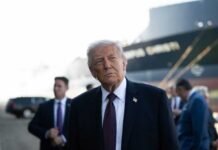
- President Trump has reimposed a naval blockade on Iranian ports, calling it a response to Iran’s “unwarranted aggression.”
- Iran says the real breach is the U.S. blockade itself and has moved to close the strait again.
- Behind the legal jargon and military jargon, global trade and American credibility hang in the balance.
How Three Struck Ships Restarted a War of Blockades
Three merchant vessels crossing one narrow waterway set off the latest shock wave. U.S. Central Command said Iranian forces attacked three commercial ships transiting the Strait of Hormuz, calling it a dangerous and “unwarranted” violation of the ceasefire deal that had paused open fighting.
One of those ships was a Qatari liquefied natural gas tanker that reported a drone strike and fire in its engine room, and Qatar publicly blamed Iran for the attack.
A U.S. official said early indications pointed to Iranian missiles or drones hitting all three ships. That was enough for Washington to treat the incident not as a one-off event, but as a direct challenge to freedom of navigation in one of the world’s most important sea lanes.
The U.S. answer came fast and heavy. American forces launched new strikes against Iranian targets, describing the mission as a way to “impose heavy costs” on Tehran for targeting civilian shipping in an international waterway.
Central Command said U.S. forces hit over 80 targets, including air defense systems, command and control sites, and anti-ship missile units, and destroyed more than 60 small boats linked to the Islamic Revolutionary Guard Corps to reduce Iran’s ability to threaten commerce.
At the same time, the Trump administration revoked a key license that had allowed Iran to sell oil under the interim ceasefire deal, turning the military response into economic punishment as well. On paper, this looked like a classic deterrence move: hit the attackers, choke off their cash, and warn the next tanker strike will be even more costly.
Trump’s Blockade Returns And The Legal Fog Thickens
Those strikes did not happen in a vacuum. They landed on top of a much bigger step: Trump’s decision to reimpose a naval blockade on Iranian ports. That blockade first began in April 2026, when U.S. Central Command announced it would intercept and divert any ships going to and from Iran along the entire Iranian coastline.
The policy costs Iran hundreds of millions of dollars per day in lost export revenue, and it turns the Gulf into a choke point where U.S. warships decide who moves and who stops.
After the Islamabad talks produced a ceasefire and a memorandum of understanding, Trump briefly lifted parts of the blockade, saying vessels stuck near the strait could resume movement once Iran opened Hormuz without tolls and removed mines.
The three-ship attack changed that calculus. Trump signaled the blockade would now “remain in full force” until a new deal is reached, tying Iran’s economic survival to its behavior at sea.
President Trump says military strikes against Iran will continue "until I say it's enough."
In an exclusive interview with FOX News chief foreign correspondent @TreyYingst on @SpecialReport, Trump was asked whether his objectives in Iran would require U.S. ground forces.
"The… pic.twitter.com/rlvHFgkvZj
— Fox News (@FoxNews) July 14, 2026
The trouble is, the legal ground beneath this move is anything but solid. International legal experts and shipping authorities point out that an international strait is meant to be open to all peaceful traffic, and there is no clear legal basis for Washington to charge tolls or impose a unilateral blockade absent a formal war authorized by Congress or the United Nations.
Even within the U.S. system, officials have raised doubts about how long such a blockade can stand without a clear plan to end the conflict. From a common-sense view, defending American interests and sea lanes matters, but so does respecting the rule of law.
A policy that looks improvised, legally shaky, and open-ended risks turning strength into a quagmire. Power without a clear lawful framework invites backlash, both abroad and at home.
Iran’s Counter-Story: Warnings, Closure, And A Ceasefire It Says Is Broken
Iran, for its part, does not just deny blame; it flips the story. Iranian officials say the real violation of the ceasefire is the U.S. naval blockade itself, arguing that Washington is “holding the global economy hostage” by choking off Iran’s ports.
The Iranian Revolutionary Guard announced that control of the Strait of Hormuz has “reverted to its previous state” under strict military management and warned that any vessel approaching the strait would be treated as cooperating with the enemy.
Iranian state media claimed the Qatari gas tanker was attacked only after ignoring warnings, hinting that ships using what Tehran calls unapproved routes would face “forceful response” from its armed forces. Yet Iran has stopped short of openly claiming responsibility for every strike, keeping its official line cloudy while its navy and missiles do the talking.
Trump reviewing plans for devastating attacks against Iran beyond Hormuz strikes
——
US President Donald Trump convened a Situation Room meeting on Tuesday to consider a far broader offensive against Iran, with plans reportedly extending beyond current strikes around the Strait of… pic.twitter.com/8Z0ANeXEet— The Cradle (@TheCradleMedia) July 15, 2026
Iran’s foreign minister has already said Tehran does not recognize commitments under the Islamabad memorandum of understanding, which undercuts Washington’s claim that Tehran clearly broke the deal. That matters because a ceasefire only holds if both sides accept the same rules. Here, each side argues the other shot first.
The U.S. says Iran violated the ceasefire by attacking three commercial vessels in a vital strait. Iran says the U.S. violated it by continuing a naval blockade during a supposed pause in hostilities and trying to open new shipping routes without Iran’s consent.
This mutual blame game creates a perfect excuse for each new strike, each new closure notice, and each new oil price spike. In that environment, facts get buried under talking points while tankers keep sailing into a live-fire zone.
What Is Really At Stake For Americans And The Global Economy
For most readers, this sounds distant and technical. Yet the stakes could show up in the price at the gas pump and the stability of the broader economy. The Strait of Hormuz carries a huge share of the world’s oil and gas exports, and data shows dozens of vessels have already been attacked since the conflict began, with no clear pattern beyond disruption.
When the U.S. escalates strikes and tightens the blockade, markets react with sharp jumps in crude prices, and allies worry about getting dragged into a conflict that lacks a clear end state. Critics say the earlier nuclear deal, while flawed, at least kept this kind of escalation in check and that the current path piles up military and economic costs without a visible off-ramp.
From a security-first perspective, the key question is simple: does this blockade and strike strategy actually make Americans safer and energy supplies steadier, or are we trading long-term stability for short-term shows of force? That answer will not come from press releases alone; it will show up in tanker traffic, prices, and whether the guns around Hormuz ever fall quiet.
Sources:
apnews.com, npr.org, cnn.com, aljazeera.com, cnbc.com, youtube.com, usnews.com, nytimes.com, scrippsnews.com, bbc.com, en.wikipedia.org