

A nearly 30‑year‑old accusation, a president, and now a court‑ordered $5.8 million cash transfer tell a blunt story about what happens when powerful speech crosses the legal line.
Story Snapshot
- A federal jury found President Trump liable for sexually abusing and defaming writer E. Jean Carroll.
- The jury awarded Carroll $5 million; with interest, a judge has now ordered $5.8 million released to her.
- Trump fought the case through appeals, but the Second Circuit and then the Supreme Court refused to overturn the verdict.
- The case shows how decades‑old sex abuse claims and modern defamation rules can still bite a powerful public figure.
How A 1996 Dressing Room Encounter Turned Into A 2026 Payday
E. Jean Carroll said President Donald Trump assaulted her in a Bergdorf Goodman dressing room in the mid‑1990s, long before he entered the White House. She went public in 2019 and then sued, claiming both sexual battery and defamation after Trump called her story a hoax and attacked her character.
In 2023, a federal jury in New York heard her testimony, Trump’s denials, and a mountain of context, then ruled that Trump sexually abused and defamed her and owed $5 million in damages.
The jury drew a sharp legal line. Under New York law, “rape” means penile penetration. Jurors did not find that. They instead found that Trump forcibly penetrated Carroll with his fingers, which still counts as sexual abuse and supported a sexual battery verdict.
In plain language, they decided something serious and criminal‑like happened, even if it did not meet the narrow legal definition of rape, and they held Trump financially responsible for that conduct and for his later public statements.
Why The Jury Believed Carroll Without Physical Evidence
The incident was alleged to have happened about 30 years ago. There were no medical records, no security video, no police report, and no third‑party eyewitness from 1996.
The case turned on credibility: did the jury believe Carroll’s account when weighed against Trump’s blanket denials. They also heard two other women who said Trump assaulted them and saw the old Access Hollywood recording where he bragged about grabbing women without consent. That pattern evidence mattered a lot.
Writer E. Jean Carroll can collect $5.8 million awarded to her after a jury found that President Donald Trump sexually abused and defamed her, a federal judge ruled Wednesday. MORE: https://t.co/ixCAMJ46kg pic.twitter.com/3hgyli7kQ8
— NEWSMAX (@NEWSMAX) July 8, 2026
Trump’s legal team argued the judge let in unfair “propensity” evidence that painted him as a bad man based on prior behavior rather than this specific event. They said the jury was swayed by emotion and past allegations, not hard proof.
But the appeals court noted federal rules allow other sexual assault evidence in cases like this and decided the judge stayed within the rules. Put simply, the court said, “You may not like it, but the law lets jurors see this, and they used it properly.”
How Defamation Law Turned Trump’s Words Into A Million‑Dollar Problem
The sexual abuse finding drove part of the award, but the bigger money came from defamation. Carroll argued Trump’s statements that she was lying and that her claim was a political hoax damaged her career and reputation.
As a national media figure, she had to clear a high bar: for public figures, defamation law demands proof that false statements were made with “actual malice,” meaning the speaker knew they were false or acted with reckless disregard.
The jury found that Trump’s 2022 statements met that standard and awarded about $2.7 million for defamation plus punitive damages meant to punish and deter. That is not a slap on the wrist; it is the legal system saying there is a point where political counterpunching and branding your accuser a liar stops being free speech and becomes a costly tort.
Appeals, Supreme Court Rejection, And The Escrow Cash Unlock
Trump did not shrug and move on. He appealed, attacking the judge’s evidence rulings and saying the trial was unfair and biased.
In late 2024, the United States Court of Appeals for the Second Circuit reviewed the record and backed the trial judge, upholding the entire $5 million award. That left Trump’s team with one last, familiar card to play: ask the Supreme Court of the United States to step in and reverse everything.
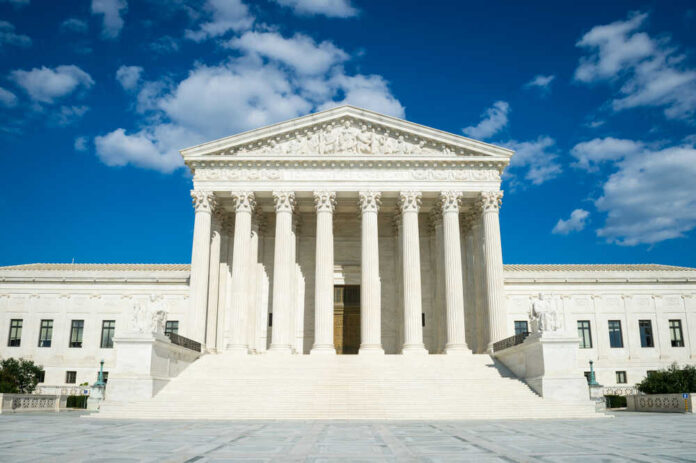
On June 29, 2026, the Supreme Court declined to hear the case. That simple “no” carried huge weight. It left the jury verdict and the appeals court decision fully in place and ended Trump’s legal road in this case.
Carroll’s lawyers quickly moved to unlock the money that had been sitting in escrow while the appeals played out. A federal judge in New York then ordered the release of about $5.8 million, accounting for interest on the original $5 million judgment.
What This Case Signals For Powerful Speech And Old Allegations
This case lands in the middle of a broader trend. Many high‑profile sex abuse claims against powerful men rely mainly on testimony rather than physical proof, especially when events are decades old.
Juries have to make hard calls on credibility, and defendants often argue politics or media bias stacked the deck against them. Trump’s supporters say the Carroll case shows how blue‑city juries and courts can be weaponized against a conservative leader.
The facts in the record cut both ways. There was no forensic evidence, and the rape claim under New York law was rejected. Yet a jury, a trial judge, an appeals court, and now the Supreme Court all lined up behind the findings of sexual abuse and defamation.
For everyday Americans, the real takeaway is simple but uncomfortable: what you do in private can haunt you decades later, and what you say in public, especially when you hold great power, can cost you millions.
Sources:
apnews.com, en.wikipedia.org, law.justia.com, caselaw.findlaw.com, instagram.com, facebook.com, rainn.org, latimes.com, pbs.org, firstamendmentwatch.org