
A 43-year-old security guard lay buried in a mall basement for eight days, yet walked out alive and talking.
Story Snapshot
- A Venezuelan security guard survived eight days trapped under a collapsed shopping center after twin earthquakes.
- His tiny security booth formed an air pocket, while rescuers fed him water and oxygen through tubes.
- Teams from seven countries worked around the clock for roughly 100 hours to free him.
- The media calls it a “miracle,” but the real story is hard skills, grit, and broken systems colliding.
The man who should not be alive
When the twin earthquakes hit Venezuela’s coast on June 24, the Galerias Playa Grande shopping center in La Guaira collapsed like a stack of cards.
In the basement, security guard Hernán Alberto Gil Flores was on duty in a small booth when concrete and steel collapsed around him. The booth held. That tiny cabin became a survivable pocket, the kind experts say is the difference between life and death under rubble.
Flores was trapped underground for eight days as the disaster’s death toll climbed into the thousands and tens of thousands went missing.
While much of the country dug through ruins with bare hands and broken machinery, he lay in darkness, pinned below a collapsed mall that most assumed held only bodies.
Yet he was conscious. He could speak. He could move one arm. And that thin thread of contact would drive one of the most complex rescue missions of the quakes.
How seven nations tunneled to one man
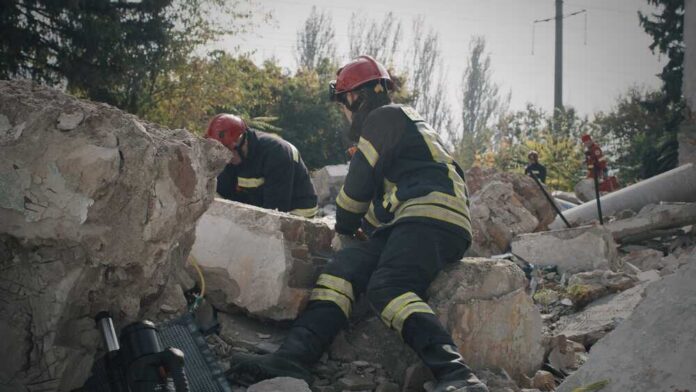
Once rescuers found signs of life under the mall, the operation shifted from recovery to a surgical rescue. Chile’s urban search and rescue team took the lead, coordinating crews from the United States, Portugal, Mexico, Costa Rica, El Salvador, and Venezuela itself.
For more than 100 hours, they crawled, drilled, and cut through tangled concrete, rebar, and twisted cars while listening for the voice below. That level of cooperation shows what happens when politics briefly bow to human life.
Rescue teams used a telescopic camera to see Flores and talk to him through the rubble. They threaded a hose down to deliver water, then pushed a tube through debris to send oxygen into the cramped void that kept him alive.
This was not lucky chaos; it was methodical work by people trained for the worst day a city can face. From a conservative, common-sense viewpoint, calling this only a “miracle” misses the truth: skilled responders, not wishes, kept a trapped man breathing.
Inside the air pocket that saved him
Reports describe Flores’ basement security booth as the key that shielded him from the building’s full collapse. When upper floors pancaked, that small structure resisted just enough to keep space around his body and maintain an air pocket.
Earthquake researchers call this kind of gap a survivable void space, and it appears again and again in long-term survival stories about people trapped under rubble. Without that booth, he would almost certainly have suffocated or been crushed in the first seconds.
Miracle Rescue: Venezuelan Security Guard Pulled Alive After Eight Days Beneath Earthquake Rubble https://t.co/IVOqFh6JM9 #News
— The Right News, Right Now. (@BradPorcellato) July 6, 2026
Medical studies on earthquake entrapment show people can survive more than a week when they have air and limited injuries, with rare cases stretching to two weeks or more. Flores had something even more unusual: active support while trapped.
He was not simply hoping for discovery; he was talking to rescuers, receiving water and oxygen, and told to stay calm and conserve strength. That combination of shelter, air, and human contact turns a statistical long shot into a real fight for survival.
Miracle headlines and uncomfortable questions
Major outlets branded the rescue a “miracle,” splashing emotional clips across television and social media. That framing draws clicks, but it also conveniently blurs hard questions for Venezuela’s leaders.
Citizens were already blasting the government online for slow aid, fuel shortages that sidelined heavy machinery, and broken communications that left communities on their own. Calling Flores’ survival miraculous risks portraying systemic failure as drama rather than a fixable problem.
The scale of the disaster makes that tension sharper: more than 2,000 dead, tens of thousands displaced, and around 50,000 missing by some counts. International groups warned that humanitarian funding cuts before the quake left response systems weak and exposed.
From this lens, that looks like a textbook case of government neglect and misplaced priorities. Ordinary people and foreign teams rushed in to do what the state should have been prepared to do on day one.
Why this one rescue still matters
In a tragedy this large, one survivor story can vanish in the numbers. Yet Hernán Alberto Gil Flores’ rescue does more than tug at heartstrings. It proves that trained teams, basic equipment, and stubborn will can snatch life back from scenes most people would write off as hopeless.
It also shows how much is lost when infrastructure breaks down, fuel runs dry in an oil-rich nation, and politics slows help from crossing borders.
For readers who value personal responsibility and competent institutions, the lesson is clear. Survival under rubble is not magic. It is physics, medicine, and logistics, backed by people who take their duty seriously. The media may keep calling it a miracle.
The real tribute is making sure the next security guard, father, or child buried under concrete has the same chance Flores had — not because of luck, but because the systems around them finally work.
Sources:
apnews.com, ndtv.com, timesofindia.indiatimes.com, instagram.com, dw.com, tiktok.com, reuters.com, aljazeera.com, news.un.org, youtube.com