
Another American city is grieving after a late-night crash killed three and injured several, while officials offer fragments of facts and leave families waiting for answers that should be routine in a nation with billion-dollar transportation agencies and police budgets.
Story Snapshot
- Police say a driver struck cars and pedestrians in Oakland, leaving three dead and several injured [1][4][5].
- Authorities report the driver is among the injured; the investigation remains preliminary [1][4].
- Public claims about speed and fault outpace verified reconstruction data, a common pattern in fatal crashes [1][4][5].
- Key evidence—toxicology, event data, and surveillance video—has not been publicly released [1][4][5].
What Authorities Confirm So Far
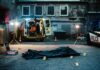
Oakland authorities reported that late Saturday night a vehicle struck multiple cars and pedestrians, killing three people and injuring several others, including the driver. Initial accounts place the incident near a busy intersection and emphasize the scale of harm rather than a final determination of cause.
Local outlets and national wires echoed police statements, underscoring that the investigation is active and details remain limited pending forensic review, interviews, and the release of official documents [1][4][5].
Three people were killed as a vehicle struck pedestrians in Oakland, California, according to fire officials, who said the driver and several other people were injured. https://t.co/PGAZr1pkSm
— ABC News (@ABC) May 17, 2026
Police communications referenced the driver’s involvement and the crowded scene but stopped short of assigning definitive fault. Early reporting cycles often condense complex collisions into simple narratives—driver, speed, impact—before investigators analyze skid marks, roadway geometry, lighting, and vehicle data.
That sequencing explains why headlines can sound categorical even as detectives and crash technicians continue work that typically takes weeks, not hours, to complete [1][4][5].
Evidence Needed To Establish Causation
Establishing what caused this crash requires tangible records. Investigators commonly pull event data from vehicle systems to review speed, braking, steering inputs, and throttle position just before impact. Toxicology screens can clarify whether impairment or a sudden medical event affected the driver.
Corroborating footage from traffic and business cameras can time-stamp approach speed and lane position. Without these materials in public view, any firm conclusion about negligence, recklessness, or mechanical failure would be premature [1][4][5].
Witness interviews and first-responder reports will matter as well. Sworn statements can describe whether the vehicle swerved to avoid a hazard, appeared to lose control, or showed signs of a mechanical problem.
Scene measurements—such as debris fields, point of impact, and final rest positions—help reconstruct the sequence. If investigators find evidence of excessive speed, distraction, or impairment, prosecutors may pursue criminal charges; if they find a mechanical or medical cause, the legal path changes significantly [1][4][5].
Why Early Narratives So Often Outrun The Facts
Fatal crash coverage in the first 24 to 72 hours frequently hardens around a driver-blame frame before the science is complete. That pattern shows up because officials must communicate quickly, reporters face deadlines, and communities demand certainty.
Transportation-safety researchers have long observed that early accounts can miss multi-factor causation, such as poor lighting, confusing road design, or vehicle defects. The Oakland case fits that template: stark outcomes, sparse public evidence, and strong emotions [1][4][5].
This information gap fuels public frustration across the political spectrum. People on the right see familiar signs of government systems that talk tough but deliver slowly.
People on the left see yet another example of preventable deaths on roads that remain dangerous despite decades of spending. Both sides share a core complaint: agencies are quick with press lines but slow with data, leaving families and communities to navigate rumor and grief without transparent timelines for verified answers [1][4][5].
Accountability, Transparency, and Next Steps
Authorities can rebuild trust by releasing, on a defined timeline, the crash report, event-data findings, toxicology results, and synchronized video stills that show the vehicle’s approach and impact sequence.
Publishing a plain-language reconstruction summary—alongside technical appendices—would help residents understand not only who bears responsibility, but also what roadway or vehicle changes could prevent a repeat. Clear updates reduce speculation and align the public narrative with the evidence as it matures [1][4][5].
For now, the public record supports only the essentials: a driver struck vehicles and pedestrians in Oakland, three people died, and several others—including the driver—were injured. Everything beyond that hinges on evidence not yet available for independent review. The stakes are human and immediate.
Transparent disclosure and disciplined analysis are not luxuries; they are the minimum owed to the victims, their families, and a community that wants safety, not slogans, from the institutions funded to protect them [1][4][5].
Sources:
[1] YouTube – 3 killed, more injured after driver crashes into crowd in Oakland
[4] Web – 3 dead, others injured after vehicle strikes cars and pedestrians in …
[5] Web – Three people killed, several hospitalized after driver drove vehicle …