
An immigration raid that began with a broom-and-shovel “ambush” story has flipped so hard that the officer who pulled the trigger now faces assault and false-reporting charges.
Story Snapshot
- A U.S. Immigration and Customs Enforcement agent now stands accused of assault and falsely reporting a crime after a Minneapolis shooting. [1]
- Prosecutors dropped their original case against the Venezuelan men once video evidence undercut the officers’ account. [1]
- Federal authorities opened a perjury probe into the officers whose testimony clashed with the footage. [2]
- Immigration enforcement, political messaging, and basic rule-of-law questions now collide in one North Minneapolis duplex. [2]
From “Ambushed Agent” To Officer In The Defendant’s Chair
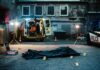
Federal officials initially told the public that an Immigration and Customs Enforcement officer serving an arrest warrant in North Minneapolis was ambushed by Venezuelan men wielding a broom and a snow shovel, forcing the officer to fire and hit one man in the leg. That narrative carried real weight; many people instinctively give the benefit of the doubt to officers confronting chaotic scenes.
State prosecutors now allege something far more troubling: that agent Christian Castro committed second-degree assault and falsely reported a crime tied to that same encounter. [1]
An ICE agent who shot a Minneapolis man in the leg has been charged with 4 counts of assault. pic.twitter.com/wyWp0XtQml
— FactPost (@factpostnews) May 18, 2026
Reporters describe charging documents that accuse Castro of four counts of assault and one count of falsely reporting a crime connected to the January 14, 2026 shooting during Operation Metro Surge, a large immigration sweep in Minneapolis. [1]
This is not a trivial paperwork dispute; second-degree assault charges signal prosecutors believe the use of force crossed a clear legal line. For a federal officer to be charged at the state level, local authorities must think the evidence can survive real scrutiny.
Video Evidence That Turned A Case Upside Down
The legal tables turned when prosecutors reviewed new surveillance video and other evidence from the duplex. The men originally charged with assaulting the officer faced a narrative that they attacked first, justifying a defensive shot.
After comparing that story to the footage, the United States Attorney’s Office moved to dismiss the assault charges, writing that the new evidence did not match the original allegations and was “materially inconsistent” with the case theory they had presented to the court. [1]
Local reporting describes video that undercuts key pieces of the officers’ account of what happened at the apartment door. The family of the wounded man has long claimed the agent shot through a closed door into their home, rather than firing in the middle of a close-quarters struggle in the open doorway.
Prosecutors appear to see enough in the footage and related evidence to walk away from their initial case and, instead, place the officer under the microscope. This reversal raises a hard question: how often do initial official stories get it badly wrong when no camera exists?
Perjury Probe And An Agency Forced To Admit Its Own Rot
Once video and testimony collided, the story expanded beyond one state criminal file. The Los Angeles Times reports that federal authorities opened a perjury investigation into two Immigration and Customs Enforcement officers whose sworn testimony about the Minneapolis shooting was contradicted by the video evidence. [2]
That means investigators are examining whether officers lied under oath, not just whether they misremembered a chaotic event. Perjury is the line where courtroom narrative turns into potential felony.
The director of Immigration and Customs Enforcement, Todd Lyons, publicly acknowledged that sworn testimony from two officers “appears to have made untruthful statements” about the shooting. [2] For a sitting agency head to say that about his own people is remarkable. It likely reflects how damning the discrepancies look on tape.
From a rule-of-law standpoint, this is exactly the kind of institutional honesty Americans should demand: if officers lie, leadership must say so plainly. At the same time, such statements harden the narrative before any jury sees the full record.
When Political Theater Hijacks A Serious Case
The Minneapolis shooting did not unfold in a vacuum; it occurred during what officials promoted as one of the largest immigration operations ever in the city, and it quickly became symbolic ammunition in the national fight over border security. [2] Some politicians and commentators rushed to highlight the alleged “ambush” on a federal agent, using it to argue for tougher crackdowns.
Others seized on the later revelations to attack the entire immigration enforcement apparatus as corrupt and racist. That is how a specific use-of-force case becomes a proxy war.
Breaking news: Minnesota prosecutors issued a warrant for the arrest of an ICE agent who allegedly shot a Venezuelan immigrant during the federal government’s enforcement surge in Minneapolis this year.
The agent faces multiple felony assault charges. https://t.co/smgKPeHvmx
— The Washington Post (@washingtonpost) May 18, 2026
Americans face a balancing act in cases like this. Respect for law enforcement and for the dangers officers face is non-negotiable; no serious person doubts that knocking on unknown doors during a high-stakes operation is dangerous work.
But limited government also means demanding that government agents, armed and shielded by federal authority, tell the truth and face consequences when they do not. The same skepticism applied to bureaucrats at the Internal Revenue Service or the Department of Education should apply to armed agencies as well.
Why This One Duplex Matters Far Beyond Minneapolis
Researchers who study police accountability describe a familiar pattern: an official version of events is announced, often quickly; then video or new witnesses emerge; then a second narrative fights to replace the first. [1]
Immigration enforcement magnifies this pattern because officers work in politically charged environments, often without body cameras, and any controversial incident instantly feeds national talking points. This Minnesota case fits that playbook almost too neatly, which is exactly why it deserves patience rather than instant tribal conclusions.
The Castro prosecution will ultimately turn on details that the public has only glimpsed so far: angles of bullet trajectories, door positions, timestamps, exact wording in reports and testimony. Those facts will sort out whether this was an honest but tragic split-second decision or a criminal assault wrapped in a false report. Until then, one lesson is already clear.
Sources:
[1] YouTube – DOJ drops charges against men accused of assaulting ICE agent …
[2] Web – Feds open a perjury probe into ICE officers’ testimony … – LA Times