

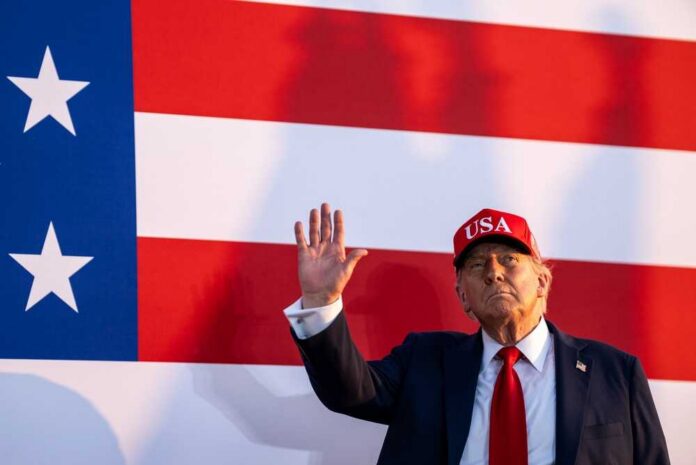
President Trump said he would become “Mr. Veto” if Democrats seize Congress—and he explained exactly how that would force them to deal with him.
Story Snapshot
- Trump vowed to veto Democratic bills to drive talks after the midterms.
- The Constitution gives presidents a veto that stands unless two-thirds of Congress overrides it.
- Democrats could lean on must-pass spending bills to gain leverage, strategists say.
- History shows vetoes are hard to override and rise under divided government.
Trump’s stated plan: veto first, negotiate second
President Trump told the New York Post, aired on Fox News, “I’ll probably become Mr. Veto” if Democrats control Congress after the midterms. He described a cycle: Democrats send bills, he vetoes them, and after a month or two of “getting all vetoed,” they come to make a deal. He repeated the theme days earlier, saying “veto, veto, veto,” then talks. The message framed stalemate not as defeat but as leverage to reset terms toward his priorities.
The legal math backs the threat. The Constitution says a vetoed bill only becomes law if two-thirds of both chambers vote to override after reconsideration. That threshold is steep and rare, which makes the presidential veto a real brake on an opposition Congress. The Congressional Research Service explains that normal bills pass by a simple majority, but overrides demand two-thirds in the House and Senate with a quorum present. In practice, that is a high wall to climb.
Why the veto is real power, and where it stops
Records show Congress almost never overrides vetoes. Across American history, only a small share get reversed, which turns the veto into a strong defensive weapon. That aligns with common sense and conservative instincts: force clarity, stop bad bills, and only bargain when the other side moves. But a veto cannot pass Trump’s agenda by itself. It blocks laws he opposes; it does not write new ones. For new statutes, he would still need votes in both chambers or must turn to executive action where lawful.
Trump’s “veto everything” line sits next to his promise that deals would follow. That tension raises fair questions. Which bills get the ax? What are the asks in a trade? The public comments name no specific bills or red lines. The threat is clear. The blueprint for the deals is not. That does not gut the plan, but it shows the tactic is mostly about pressure, pace, and patience rather than a list of policy trades.
Democratic leverage: must-pass spending and public pressure
Democratic strategists outline a counter. They could move their bills, dare Republicans in the Senate to stall them, and use must-pass spending to force talks. CNN reported that if Democrats win Congress, their strongest hand is over taxpayer dollars. Any top priority would likely ride on annual appropriations that the White House needs to keep the government open. That means fights over funding levels, policy riders, and deadlines would shape the real bargaining.
🚨 BREAKING: President Trump announces his plans if Democrats win the midterms
"I'll become — MR. VETO."
"They will send stuff up?"
"And I'll VETO IT."
"But hopefully, we don't have to worry about that!" 🔥
Vote red anyway so it doesn't happen!
A Democrat House means two… pic.twitter.com/q7PgoCaqfu
— Eric Daugherty (@EricLDaugh) November 1, 2026
Jim Manley, a longtime Democratic aide, urged passing bills to test the Senate and using leverage on issues like foreign conflicts and benefits programs, while warning against show votes that invite a guaranteed veto. His view boils down to this: pick the terrain that matters and build pressure where the president needs a signature to avoid shutdown drama. That is a mirror image of Trump’s plan—each side tries to make the other blink first on the calendar.
What divided government usually delivers
History says vetoes surge when the other party runs Congress, and overrides stay rare. That pattern favors a president who is willing to say no, hold the line, and wait for talks on his terms. The public may hear “gridlock,” but markets and families often prefer a hard brake to reckless laws. The risk is simple. If both sides overplay their hand near deadlines, the pain lands on voters. Smart leaders avoid that by trading late but cleanly.
Here is the likely path if Democrats take the Hill. First month: a stack of bills heads to the White House and hits the veto pen. Weeks later: Democrats fold their top asks into spending packages. The White House decides which riders are acceptable and which are poison pills. If Democrats lack two-thirds to override—and they almost always do—Trump holds the stronger card. He can keep saying no until must-pass deadlines force a narrow deal closer to his line.
Bottom line for readers who hate drama
Trump’s plan is not mystery theater. The Constitution gives him the tool. He says he will use it to force deals. Democrats can answer with spending leverage and public heat. The side with clearer asks, tighter discipline, and a cooler head near deadlines will shape the outcome. On the facts, the veto makes Trump’s promise credible as a negotiating stance. Whether it yields big wins or just blocks bad bills will depend on how both sides play the clock.
Sources:
nypost.com, bloomberg.com, senate.gov, constitution.congress.gov, archives.gov, forbes.com, congress.gov, politicalwire.com, thestatesman.com