

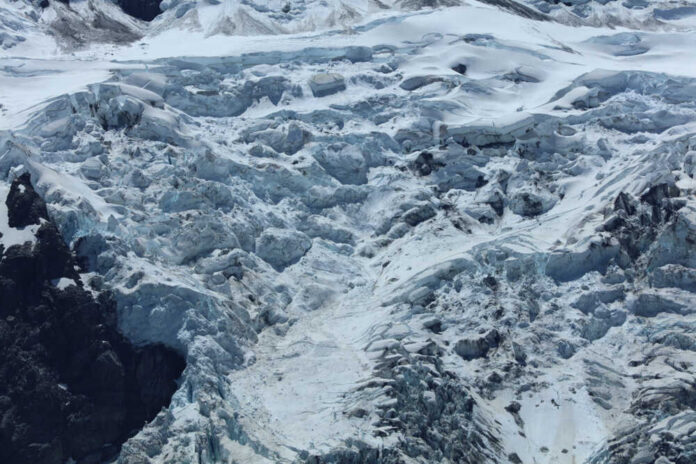
Colorado’s signature glaciers shed years’ worth of ice in a single brutal season, and the numbers are stark.
Story Snapshot
- Andrews, Arapaho, and Isabelle glaciers lost 6.5–12+ feet of thickness in 2026.
- Losses ran about twice as fast as in the prior five years, according to field reports.
- Colorado logged its warmest water year on record, 4.5°F above normal.
- State snowpack peaked at about 51% of average and vanished early under March heat.
What Happened On The Ice, In Feet Not Feelings
Field measurements in 2026 showed three well-known Colorado glaciers thinned fast. Andrews Glacier in Rocky Mountain National Park lost more than 12 feet of surface thickness. Arapaho Glacier near Nederland lost nearly 10 feet. Isabelle Glacier lost about 6.5 feet. Colorado State University glaciologist Dan McGrath reported these numbers. It said the one-year loss about doubled the recent five-year thinning rate, which had averaged near a foot or less per year.
These are not distant ice sheets. These are the Front Range’s last, storied ice bodies, the ones hikers see from ridge lines and anglers spot from high lakes. Big one-year drops like these do not happen in a vacuum. Glaciers are snow banks on a time delay. When winter load runs light and summer runs hot, the ice loses its shield and starts to waste away from the top down. That is what the 2026 data captured in plain units people grasp: feet.
The Year Colorado’s Winter Blinked
Colorado’s 2026 water year, which runs October through September, broke the statewide heat record. Researchers reported temperatures 4.5 degrees Fahrenheit above the 1991–2020 average, and more than 2 degrees above the previous warmest water year. Heat arrived early and stayed stubborn. That matters for ice because warm air boosts melt and speeds the loss of spring snow that protects glacier ice from direct sun and wind.
Snow did not save the day. The statewide snowpack peaked at roughly 51 percent of average and did so about a month early. Manual snow-course records back that up. On April 1, sixty of sixty-four long-running sites recorded record-low snow-water equivalent. March heat then chewed through the meager snow cover, pushing melt weeks ahead of a normal calendar and leaving alpine ice exposed before high summer.
Why Those Feet Disappeared So Fast
Glaciers gain mass in winter and lose mass in summer. When winter fails and summer bakes, loss wins. The 2026 setup hit both sides of the ledger at once: thin snow and peak warmth. Thin snow means lower albedo, letting darker surfaces absorb more sunlight. Early melt strips the seasonal blanket sooner, letting the strong June and July sun work on bare ice for longer. That cocktail pushes surface lowering to outsized levels compared with cooler, snowier years.
Reports also flagged a telling nearby signpost. The well-known St. Mary’s feature, often called a glacier, is better classified as a semi-permanent snowfield. It peaked at only 8.5 inches of snow-water equivalent in its basin, about half its norm, and disappeared by June 6, far earlier than many remember. That rapid loss does not equal glacier retreat, but it tracks with the same weather pattern that drove the 2026 glacier thinning.
What To Make Of One Brutal Year
One year does not set a trend by itself, but this year did line up the drivers in the same direction. The measurements show large surface losses. Statewide climate records show record warmth and very little snow. Those facts point to a simple chain: less winter armor and more summer energy produced more melt. Common sense, and American conservative values of stewardship and straight talk, both say measure carefully, do not exaggerate, and prepare for repeats when the same setup returns.
Three clear takeaways follow. First, these glaciers are sensitive. A single hot, low-snow year can erase multiple “normal” years of modest thinning. Second, water planning cannot count on late spring snow to bail out summer. The calendar shifted in 2026, and runoff timing followed. Third, management should focus on resilient basics: track snow with simple, proven tools; keep long records clean; and separate seasonal snow stories from hard glacier mass loss. Good records make good policy.
Sources:
youtube.com, chicagotribune.com, atmos.colostate.edu, aspentimes.com