

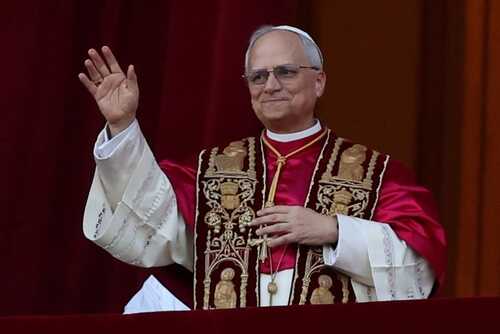
The Vatican says Pope Leo XIV has lung adenocarcinoma after surgeons removed the lower lobe of his right lung.
Story Snapshot
- The Holy See confirmed lung adenocarcinoma after intraoperative testing.
- Surgeons removed the lower lobe of the right lung; surgery had no complications.
- The operation at Rome’s Gemelli Hospital lasted about 90 minutes within a three-hour visit.
- Pre-surgery tests raised suspicion; the Pope disclosed a small, localized nodule days earlier.
What Happened And What Doctors Found
The Vatican reported that intraoperative histology confirmed lung adenocarcinoma during Pope Leo XIV’s surgery on October 13. Surgeons removed the lower lobe of his right lung. The Holy See said the operation was successful and complication-free. The Pope was in the operating room for about three hours, with the procedure itself taking roughly 90 minutes. Multiple outlets matched the account of the lower-lobe resection and cancer confirmation, citing the Vatican bulletin.
Days before the operation, the Pope told the faithful that doctors found a small, well-defined nodule in his lung. He said they caught it very early and advised surgery. Vatican News had stated he would be admitted to Rome’s Gemelli Hospital on October 13, with a planned recovery in the hospital of about one week. The path from a “suspicious nodule” to “cancer confirmed” follows standard medical steps, where tissue review seals the diagnosis.
What Confirmation Means And What It Does Not
Confirmation of adenocarcinoma means pathologists saw cancer cells under the microscope. That anchors the diagnosis and guides next steps. It does not, by itself, reveal the full picture. The bulletins did not share tumor size, stage, lymph node results, or margins. Those details usually come from a complete pathology report and imaging review, which define long-term outlook and whether more treatment is needed. A successful surgery without complications is good news, but prognosis depends on staging.
Standard care for a small, localized lung cancer often centers on surgery with lymph node sampling. When doctors suspect early disease, they may proceed to removal and confirm the type and stage from the specimen. Clinical guidelines explain that final planning relies on pathology, including features like margin status and node involvement. Those elements help predict cure rates and whether surveillance alone or added therapy makes sense. The Vatican has not released those specifics.
Why Early Detection And Lobar Resection Matter
Early detection raises the chance of cure for lung adenocarcinoma. Removing the lobe that contains the tumor is a common, time-tested approach for operable cases. Lobar resection aims to clear the cancer with healthy margins while preserving lung function. Pathologists then examine the tumor and nearby lymph nodes to assign a pathologic stage. That stage informs risk of recurrence and the value of extra treatment. The Vatican’s account of a lower-lobe removal aligns with that standard playbook.
Pope Leo XIV spent a peaceful night in Rome’s Gemelli hospital after doctors removed the lower lobe of his right lung and confirmed he has cancer, the Vatican said Wednesday. https://t.co/RGg3xq7TjW pic.twitter.com/kJNGCnqlaT
— FOX4 News Kansas City (@fox4kc) October 14, 2026
Clear communication helps in a moment like this. The Holy See gave prompt facts: the site of the surgery, its success, and the confirmed cancer type. That level of detail respects public interest without crossing medical privacy lines. If more medical data is shared later, it should come from the surgeons and pathologists who handled the case, and it should be precise, not speculative. Straight facts, early action, and accountable follow-up reflect both common sense and good stewardship.
Sources:
lifesitenews.com, abcnews.com, abc13.com, apnews.com, pbs.org, bbc.co.uk, pmc.ncbi.nlm.nih.gov, ncbi.nlm.nih.gov, rm.coe.int