

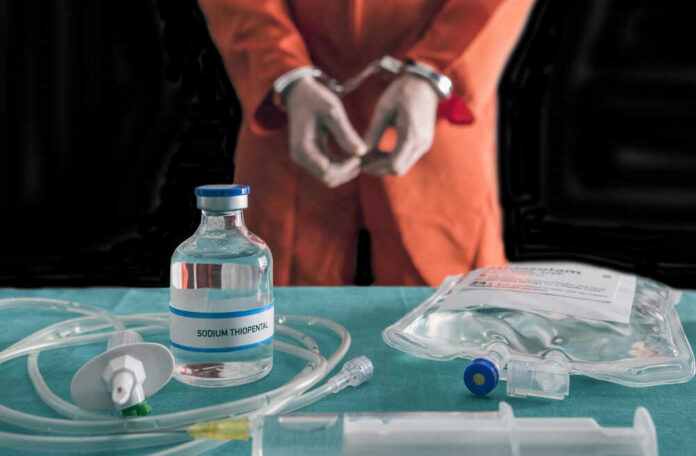
After Tennessee’s execution attempt left Christa Pike in critical care, her lawyers want the state to take death off the table now.
Story Snapshot
- Defense says Pike remains hospitalized in critical condition and seeks commutation to life.
- Officials paused after a failed lethal injection; Pike reportedly suffered arm injuries.
- Court rulings before the date rejected medical-risk claims and allowed the execution to proceed.
- Governor ordered a pause and outside review, creating a narrow window for clemency debate.
What happened inside the execution chamber and after
State officials tried to execute Pike by lethal injection. The attempt failed. Reporters cited her lawyers saying she was unconscious, on a ventilator, and treated for significant injuries to both arms after receiving pentobarbital. Her attorney, Stephen Ferrell, publicly urged the governor to commute the sentence, saying the state should take death off the table while she remains in critical condition. The Department of Correction said staff followed the approved protocol, signaling no admission of error while the review proceeds.
Governor Bill Lee paused further executions through year-end and ordered an independent review. That action gives investigators time to determine what broke down and whether the protocol or its use needs changes. The pause also creates a live path for clemency talks before any second attempt. Commutation here would not free Pike; it would convert her sentence to life, which clemency most often does in capital cases when conditions change late.
The legal road that brought Tennessee to the brink
Courts had cleared the way. The Tennessee Supreme Court declined to stop the execution after a special-master process. Judge Mark Ward found Pike’s team had not proved the state’s method created a substantial risk of needless suffering. He also concluded the Department of Correction had minimized the potential for significant suffering under the protocol. The United States Supreme Court filings show the execution date and the late-stage litigation timeline that ended without a stay.
Defense lawyers had raised medical concerns months earlier. They argued Pike’s thrombocytosis and difficult vein access could cause clotting, pain, and problems placing lines for lethal injection. Media summaries of the August hearing show the court rejected those claims as insufficient to block the execution. From a common-sense view, that rejection matters now because the same medical themes are back on the table, but this time tied to a failed attempt and a hospitalized prisoner.
Why the commutation push has a window—and hurdles
The defense argues present condition, not past mitigation. Their claim focuses on Pike’s current medical risk after the failed injection and the humanitarian logic against a second try while she remains fragile. That is a narrow, practical ask that many conservatives might see as basic decency: the state should not proceed until it is certain it can carry out a lawful sentence without causing gratuitous harm. That said, officials have not released hospital charts or a prognosis, so much of the detail still rests on lawyer statements rather than public medical records.
Tennessee botched the lethal injection so badly that Christa Pike is on a ventilator while her lawyer argues for a commutation. A state this careless with one needle should not be handed another.
— Edward D. Maier🇺🇸 (@EdwarddMaier) October 5, 2026
The state’s position leans on process. Correctional leaders say the team followed every step of the protocol, and earlier courts agreed the method passed legal tests. That aligns with the core conservative value that laws and judgments deserve respect. But the governor’s pause acknowledges something went wrong in practice. The review can answer key questions: Did the intravenous line fail? Did Pike’s veins or clotting disorder make access unworkable? Or did staff error, not protocol, cause the breakdown? Those answers will shape whether clemency, a revised method, or a rescheduled date comes next.
What to watch next—and why timing matters
Three records could settle the debate fast. First, a treating-physician prognosis on Pike’s condition and any lasting arm damage would show real medical risk, not conjecture. Second, the Department of Correction incident file and line-placement logs could show whether the intravenous line infiltrated or the team deviated from the checklist. Third, the governor’s independent review could recommend protocol changes or training fixes. If those documents point to high risk on a second attempt, commutation to life becomes a credible, conservative path to end the case with finality and without more harm.
Sources:
yahoo.com, cnn.com, thehill.com, supremecourt.gov, bbc.com, usatoday.com, tennessean.com