
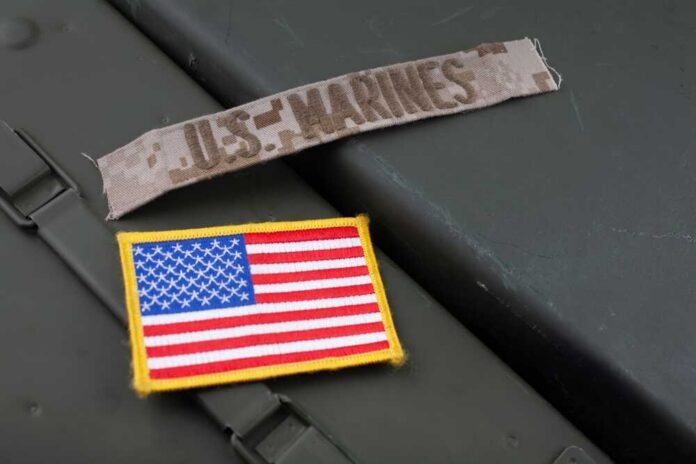
Japan’s leadership called the Okinawa hotel killing “extremely brutal and heinous,” and reacted within hours with a formal protest to the United States.
Story Snapshot
- Okinawa police arrested 20-year-old U.S. Marine Devin Jacob Ballard on suspicion of murder and robbery in Naha.
- Officials identified the victim as 39-year-old Naha resident Anna Yagi; police said her wallet and backpack were taken.
- Prime Minister Sanae Takaichi condemned the crime and lodged a strong protest with the U.S. side.
- The Marine Corps and U.S. Embassy said they are cooperating with Japanese authorities.
What Police Say Happened In Naha
Okinawa Prefectural Police arrested U.S. Marine Devin Jacob Ballard, age 20, on suspicion of killing a 39-year-old woman in a Naha hotel and robbing her. Police said the victim, identified as Naha resident Anna Yagi, was found after the alleged Saturday attack. The arrest followed on Sunday. Reports cite police statements that they took her wallet and backpack. Ballard denied wrongdoing when questioned, according to summaries carried by major outlets.
Authorities have not released a charging document to the public. Japan’s “suspicion of” standard allows arrests as evidence is gathered. Police and press accounts describe surveillance material and timeline details, but those materials have not been made public in full. The case remains in Japanese custody. That aligns with the U.S.-Japan Status of Forces Agreement, which gives Japan primary jurisdiction for serious off-base crimes by service members.
Tokyo’s Swift Condemnation And Diplomatic Protest
Prime Minister Sanae Takaichi called the killing “extremely brutal and heinous” and said Japan lodged a strong protest with the United States. The Ministry of Defense used the same language and said it was “deeply outraged.” Japan’s Foreign Ministry summoned the U.S. ambassador to convey the protest. This sequence—prime ministerial statement, defense outrage, and a formal summons—signals a high-level response in Tokyo and a demand for accountability from Washington.
The United States Embassy in Tokyo said it is cooperating with Japanese authorities. The Marine Corps’ III Marine Expeditionary Force also acknowledged the arrest and pledged support for the investigation. These statements match the standard U.S. approach in Japan: acknowledge custody status, promise cooperation, and avoid comment on evidence while local police lead the case.
Okinawa’s Long Shadow Of Base Tensions
This arrest lands in a fraught local context. Okinawa hosts a heavy share of U.S. forces in Japan and has a record of high-profile crimes tied to service members across decades. That history shapes public reaction. Reports and prior statistics show why tempers run hot after incidents like this one. Local leaders often frame such crimes as tests of discipline and respect for the community. When trust frays, the policy debate returns to prevention, curfews, training, and command accountability.
Conservative common sense applies here: individual responsibility must come first, swift justice must follow facts, and allies must honor local law. The alliance depends on strict discipline off-base as much as it does on deterrence at sea and in the air. One alleged crime cannot define thousands of troops, but one failure can damage hard-earned trust. Leaders on both sides know that, which explains the fast official messages and the pressure to be transparent and decisive.
What Comes Next In The Case And The Alliance
Japanese investigators will build a case file that can withstand court review. Key items likely include hotel surveillance, key-card logs, phone data, and forensic reports. The autopsy and pathology findings will establish the cause and manner of death. If prosecutors file formal charges, court schedules will follow under Japan’s system. During that process, the Marine Corps will maintain discipline control on base while honoring Japan’s lead in criminal proceedings.
4 AM Bottom-of-the-Hour News
A U-S service member was arrested on suspicion of murder and robbery after a Japanese woman's body was discovered in a hotel in Okinawa. Here's Ken Rhodes:: “Local officials are calling the alleged killing heinous, so much so that the Japanese… pic.twitter.com/r7YzHkUoj0
— Worldwide News Network (@WorldwideNNX) October 5, 2026
Policy questions will not wait for a verdict. Tokyo will seek assurances on prevention and discipline. U.S. commanders will face renewed calls for stronger liberty rules, alcohol limits, and off-base briefings. Those steps have cut incidents in the past, but spikes reopen wounds. The test for both governments is steady: protect the victim’s dignity, respect due process, and show that justice moves faster than outrage. That is how alliances stay strong when headlines are at their worst.
Sources:
nbcnews.com, bbc.com, reuters.com, usnews.com