

South Carolina agents arrested three men named by Rep. Nancy Mace, and the charges track the core claims she made from the House floor.
Story Snapshot
- State agents charged Brendan Bryant, John Osborne, and Eric Bowman in Charleston County.
- The charges overlap with conduct Mace described in her 2025 House speech.
- Affidavits point to an October 26, 2018 incident at a Sullivan’s Island home.
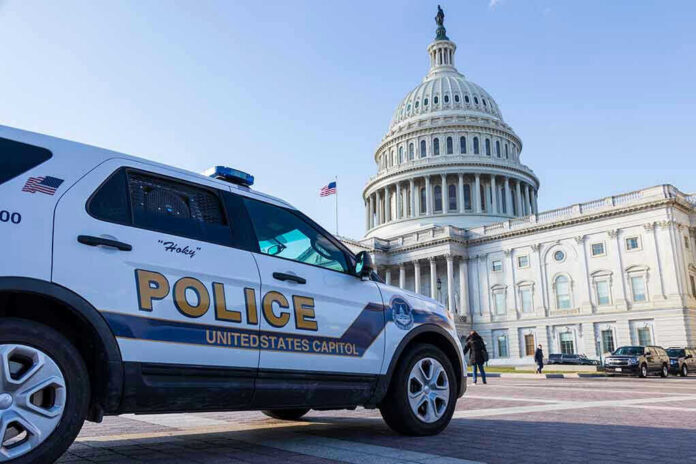
- SLED opened the case after a U.S. Capitol Police referral in December 2023.
Three Arrests After a Capitol-to-Columbia Trail
The South Carolina Law Enforcement Division announced charges against three men Mace named: Brendan Patrick Bryant for voyeurism; John Douglas Osborne for first-degree assault and battery and two counts of third-degree criminal sexual conduct; and Eric Bernard Bowman for voyeurism, obstruction of justice, and publishing the name of a victim of criminal sexual conduct. All three were booked in Charleston County. Each man previously denied wrongdoing, and defense lawyers said they will contest the allegations in court.
Affidavits described a specific case. Reports say investigators detailed an early-morning incident on October 26, 2018, at a Sullivan’s Island home. The documents reportedly identify a 23-year-old woman and allege she was incapacitated during part of the conduct. The charging theory reaches beyond direct assault to alleged recording and concealment. That helps explain why counts include voyeurism and obstruction, not only the sexual assault charges against Osborne.
How a House Speech Brought State Action
The timeline shows a path from Congress to state court. The South Carolina Law Enforcement Division said it opened the investigation on December 14, 2023, after contact from the United States Capitol Police. Agents said they conducted multiple interviews and served search warrants. They also said they would release the investigative file after the case concludes, consistent with state practice to protect victims and active work.
The substance aligns with Mace’s February 10, 2025 address. Coverage at the time reported that she accused several men of rape, sexual assault, voyeurism, and related acts. The later charges match that core pattern, especially the alleged assault of a 23-year-old and the claimed recording of sexual activity. The overlap does not prove every part of her wider claims, but it places the state’s case on the same field she marked in that speech.
What Is Charged, What Is Not
Prosecutors focused the filing on the Sullivan’s Island incident and on related recording and secrecy counts. Reports note that one person Mace named was not charged. Mace spoke more broadly about multiple women and underage material, while the current docket targets specific acts tied to the 2018 event. That choice tracks how criminal cases work: charge what you can prove beyond a reasonable doubt, and leave broader allegations for further inquiry if evidence develops.
Defense statements preview a hard fight. Bryant’s attorney called the speech false and said the case belongs in court. Osborne’s lawyer said his client is innocent and will defend himself. Bowman also denied the claims. Those positions are expected in serious felonies and linked offenses. American conservative values put due process and individual rights at the center. Courts must test the evidence, not the politics, and juries must hear facts, not headlines.
The Constitution, the Courtroom, and the Court of Public Opinion
Legislative speech can spark investigations without exposing a lawmaker to defamation for the words spoken on the floor. The Speech or Debate Clause shields Members for legislative acts, a principle the Supreme Court has read broadly to guard the work of Congress. That protection concerns the lawmaker’s immunity, not the truth of the allegations. Criminal investigators still have to build proof through witnesses, warrants, and forensic work.
Ex-fiance of US Rep. Nancy Mace and 2 others charged with sex crimes she detailed in a House speech https://t.co/HsPwxHzoYN
— Sentinel&Enterprise (@SentandEnt) October 15, 2026
The path ahead is simple to state and hard to walk. The state will have to authenticate any media it seized, line up witness accounts, and establish capacity, consent, and identification with clarity. The defense will probe every gap and challenge chain of custody and intent. One caveat applies: an arrest is not a conviction, and these are still allegations until resolved in court. The stakes are high because justice demands both compassion for victims and fairness for the accused.
Sources:
cnn.com, thehill.com, courthousenews.com, washingtonpost.com, nbcnews.com, congress.gov