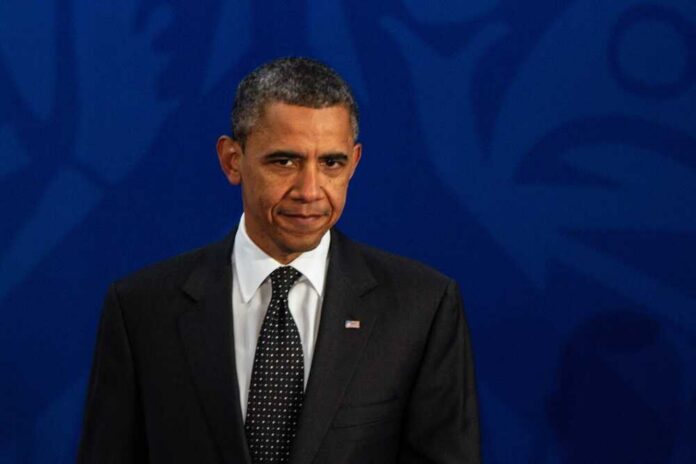
Two days before Kentuckians voted, Barack Obama said he was “proud to support” Charles Booker for the United States Senate, and the race’s final weekend snapped to attention.
Story Snapshot
- Obama endorsed Democrat Charles Booker on November 1, 2026, in Kentucky’s Senate race.
- The seat opened with Senator Mitch McConnell’s retirement; Republican Andy Barr opposed Booker.
- Obama said Booker understands working families and can deliver “real change”.
- Booker’s campaign welcomed the boost and pushed momentum into Election Day.
Obama Drops A Late, Targeted Boost
Barack Obama endorsed Charles Booker on Sunday, November 1, 2026, in a statement first shared with a national outlet. He said, “I’m proud to support Charles Booker for the U.S. Senate,” and framed Booker as a fighter for working families in Kentucky. Multiple Kentucky and national outlets carried the same language and timing. The move arrived with the clock almost out, a classic last-weekend surge play by a party heavyweight.
Booker’s team leaned in at once. The campaign said he was “humbled and honored,” and that supporters were “fired up” and “ready to go.” That rally cry set the tone for a two-day sprint into polls opening. The endorsement also gave local newscasts and statewide radio a clean story peg for closing coverage, which matters in a state where quick cues can shape late decisions.
Why Kentucky, Why Now
The race carried outsized stakes. Senator Mitch McConnell’s retirement turned a long-held seat into an open contest. Democrat Charles Booker, a former state lawmaker known for economic-populist themes, faced Republican Representative Andy Barr, a well-funded House veteran. Obama’s boost aimed to harden the Democratic base, reassure undecided moderates, and punch up turnout in Louisville and Lexington, where late media hits can still move bodies and dollars.
Newsrooms framed the move as part of the last national push before Election Day. The timing fit a pattern: leaders reserve high-profile nods for maximum weekend impact, when audiences are tuned to election coverage and campaigns are closing arguments with sharp contrasts. That window also drives small-dollar donations and volunteer sign-ups, especially when a recognizable voice makes the ask.
What An Obama Endorsement Actually Does
Endorsements work as shortcuts for busy voters. They validate a candidate’s character and agenda in one line. Academic research shows these cues can shape how people rate candidates and whether they take action, like donating or voting. The size of the effect depends on who endorses, who hears it, and when. A late-breaking nod from a known figure can lift enthusiasm and press attention, even if it does not flip a flood of votes by itself.
CBS News: Former President Obama endorses Charles Booker in Kentucky Senate race
"I'm proud to support Charles Booker for the U.S. Senate," former President Barack Obama said in a statement shared first with CBS News.
"Charles cares deeply about the people of Kentucky, and by…
— Politics & Poll Tracker 📡 (@PollTracker2024) November 1, 2026
Obama’s message centered on work and family, which signals a bread-and-butter close rather than a culture-war spike. That choice matters in a state with deep conservative roots and a tradition of ticket-splitting at the margins. Voters 40 and older often ask a basic question near the end: who will pay attention to my costs and my kids’ chances? Obama’s line tried to answer that fast, with a familiar voice staking his name on Booker’s promise.
The Tactical Upside And The Risk
The upside was speed. Sunday endorsements land on prime weekend newscasts and roll into Monday’s drive-time. That can juice turnout operations and frame final-day coverage. The risk was runway. With only two days to go, there was limited time to convert a media spark into durable vote gains. Campaigns often bank on digital amplification—texts, emails, and targeted ads—to stretch the echo and harvest small-dollar fuel on short notice.
Conservatives will view this as standard nationalization. Obama’s appearance on the stage, even by statement, turns a Kentucky race into a national fight over direction and control. That lens can help Republicans fire up their own base by arguing that Louisville and Washington elites want to steer a rural state. Voters care about practical outcomes: energy costs, jobs, public safety, and health care access. The side that talks pocketbook details with clarity usually wins the last 48 hours of minds.
What To Watch In The Final Stretch
Three levers decide whether endorsements matter this late. First, earned media volume: how many local segments, headlines, and radio mentions keep the story alive into Tuesday. Second, grassroots lift: door knocks, ride-to-poll programs, and church and union reminders that use the endorsement as permission to act. Third, small-dollar surges: late cash buys gas for get-out-the-vote, which can matter in a tight race with split turnout patterns.
Obama’s statement gave Booker a clear closing message and a marquee validator. The contest still turned on Kentucky math and who showed up. Endorsements do not replace ground game; they unlock it. When a well-known figure says, “I vouch for this person,” it frees supporters to speak up and makes undecideds take a second look. In a race born from a retirement and shaped by national attention, that second look in the final hours can be the whole ballgame.
Sources:
cbsnews.com, cincinnati.com, fox56news.com, wlky.com, whas11.com