
One of President Donald Trump’s biggest “wins” from his first term is now on the chopping block, and this time it is Trump himself swinging the axe.
Story Snapshot
- United States refuses to grant USMCA the long, 16-year extension it was designed to get.
- Trump’s own trade team now calls his signature deal flawed and full of “substantial issues.”
- North American trade keeps running, but under a cloud of year‑to‑year uncertainty.
- Workers and manufacturers face a fork in the road: fix the deal, or live with chaos.
How Trump’s “best deal ever” ended up on review instead of renewal
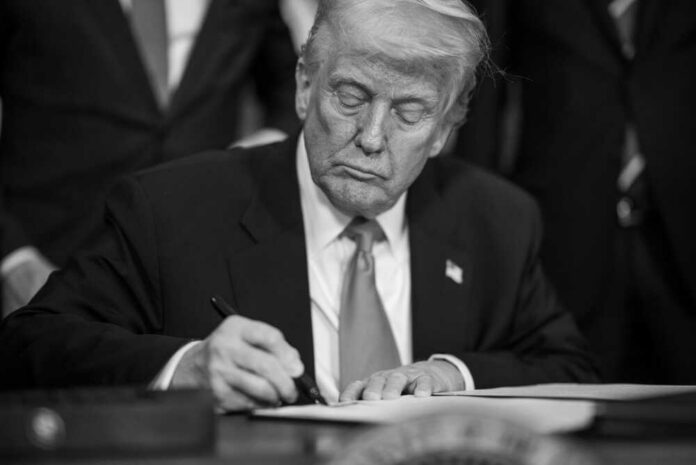
President Donald Trump signed the United States–Mexico–Canada Agreement to replace the North American Free Trade Agreement and bragged it was the “best and most important trade deal” America ever made.
The agreement took effect in 2020 with a simple idea baked into it: after six years, all three countries would sit down, review how it was working, and then decide whether to lock in a 16‑year extension.
That review arrived on July 1, 2026. Instead of giving the deal a green light, the United States said no to renewal “in its current form” and pushed the whole pact into a long negotiation tunnel.
The Trump administration declined to extend the US-Mexico-Canada Agreement, starting to wind down the trade deal as it seeks changes to try to reshore manufacturing jobs and reduce US trade deficits with its North American neighbors https://t.co/22T3vlcnl0 pic.twitter.com/VGCFFpzffX
— Reuters (@Reuters) July 2, 2026
United States Trade Representative Jamieson Greer told Congress and the public he would not “rubber stamp” the agreement because of “substantial issues” that needed changes. That language matters. It signals the Trump team is not trying to blow up North American trade overnight. It is using the threat of no renewal as leverage.
The agreement stays in force, tariffs stay at zero for most goods, and cross‑border supply chains keep moving. But every company now knows the rules could change year by year until 2036 if the three countries never reach a new deal.
What USMCA was supposed to do for American workers and factories
The original pitch for USMCA hit all the right notes for conservatives who care about working Americans first. The United States Trade Representative said the deal would create “more balanced, reciprocal trade” and support high‑paying jobs in the United States by fixing the flaws of the old NAFTA.
Trump’s team tightened auto rules so more North American parts, especially American parts, had to go into cars to get tariff‑free treatment. Business groups like Business Roundtable praised USMCA for new rules on manufacturing, intellectual property, and digital trade, claiming it strengthened domestic production and made the region more competitive.
One major piece focused on Mexican labor. The Rapid Response Labor Mechanism lets the United States challenge specific factories in Mexico that block unions or abuse workers.
The Economic Policy Institute notes this mechanism has improved wages and working conditions for roughly 60,000 workers so far, a real gain for people on the shop floor.
For many Republicans, this looked like smart pressure: raise Mexican wages, narrow the gap with U.S. workers, and make it harder for companies to chase rock‑bottom labor costs by moving plants south.
The harsh verdict from worker advocates and policy analysts
When independent economists took stock, the story grew far less shiny. The Economic Policy Institute’s deep review of USMCA concluded there is “no evidence that things have improved” for workers overall in the three countries. Their argument is simple and blunt. Yes, the Rapid Response tool helped tens of thousands of Mexican workers.
But the deal did not fix the core problem of intense downward pressure on jobs and wages in U.S. manufacturing. Companies can still use the pact as a back door to bring in unfairly traded or low‑wage products, and the labor gains are narrow compared with the size of North American industry.
The same report says USMCA “failed working people in all three countries” and needs dramatic reform. That is a serious charge. It fits a long pattern: big trade agreements promise protection and prosperity, then leave many blue‑collar workers feeling exposed.
Groups like the Economic Policy Institute focus on the fact that lower‑cost producers can still flood the U.S. market. They warn this keeps pressure on wages in factories from Michigan to Ohio, even while Wall Street and big multinationals enjoy smoother trade and higher profits.
Why the United States blocked the 16‑year extension instead of walking away
The structure of USMCA gives Washington a powerful tool at the six‑year mark. If all three countries confirm they want the extension, the agreement can run to 2036, with another review in 2032 and even a possible renewal to 2042.
If even one says no, the deal stays alive but moves into annual reviews starting in 2027. That is exactly the path the Trump administration chose. Greer’s decision locked in ongoing talks with Mexico and Canada, while keeping the threat of future tariffs and extra rules close at hand.
USMCA REVIEW 2026: TRUMP SAYS NO — AND PUTS CANADA AND MEXICO ON NOTICE
On July 1, 2026, the United States officially refused to renew the USMCA.
U.S. Trade Representative Jamieson Greer issued the statement that will reverberate across North America for the next decade:
"The… pic.twitter.com/TvBRZOSNKR
— U.S. & Middle East News 🇺🇸 🇮🇱 🇵🇪 🇨🇴🇬🇧 (@Carlisitus) July 2, 2026
Policy outfits like the Center for Strategic and International Studies and the Baker Institute expect the United States to push hard on autos, energy, China‑related issues, and enforcement.
They list likely U.S. demands that line up with common‑sense conservative goals: stronger blocks on Chinese companies using Canada or Mexico as back doors, clearer rules of origin for electric vehicles, tougher forced‑labor bans, and better tools to police state‑run energy sectors.
Canada and Mexico, for their part, are expected to offer concessions to keep tariffs down and certainty high.
The bigger pattern: trade, leverage, and the worker promise
This fight over USMCA renewal fits a pattern that has run through U.S. trade policy since the 1930s. Washington signs large trade deals that open markets and drop tariffs. Supporters claim these agreements boost exports and lift living standards.
Critics point out that, again and again, workers in key industries feel left behind when companies chase the lowest global costs. NAFTA went through this cycle. USMCA is now in its own version of it, with both praise and anger focused on the same text.
For conservatives, the core test is simple: does a trade deal serve American workers and national strength, or does it mainly help corporate balance sheets? Blocking USMCA’s automatic renewal without wrecking the entire pact is a way to force that test. Trump’s team now uses the threat of future tariffs and rules as leverage to demand changes.
If they push for tougher enforcement, fewer loopholes for unfair trade, and stronger protections for domestic manufacturing, they move the deal closer to what many Americans thought they were getting in 2018. If they do not, workers will know it, because the wage pressure and plant closures will keep telling the real story.
Sources:
abcnews.com, nbcnews.com, epi.org, csis.org, bhfs.com, cfr.org, ustr.gov, en.wikipedia.org, cato.org, usitc.gov, historians.org