

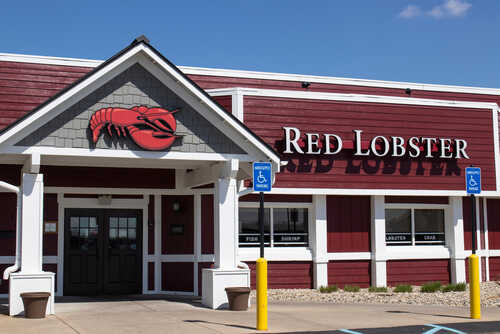
The most famous seafood chain in America is walking away from one of the most valuable corners on earth, and the official explanation says as much about modern cities and corporate spin as it does about shrimp and cheddar biscuits.
Story Snapshot
- Red Lobster is shutting its Times Square flagship on June 14 after more than 20 years of operation at 5 Times Square.
- The company blames prolonged construction, blocked access, and a planned residential conversion of the building.
- The closure lands after more than 100 other locations have shut down around a bankruptcy restructuring.
- The story exposes how “construction” often becomes the polite label for deeper economic and political choices in big cities.
The end of a garish, lucrative, very American landmark
New Yorkers joked about it, tourists photographed it, and theatergoers used it as a bright red landmark to meet under: the three-story Red Lobster at 5 Times Square, on Seventh Avenue between 41st and 42nd Streets.[2]
For 23 years, that corner married chain-restaurant comfort to one of the most aggressively commercial spaces on earth.[3][4] On June 14, that marriage ends. The company calls the restaurant’s final day “a difficult decision,” which is corporate code for “the math finally broke.”[4]
The numbers behind that broken math are not imaginary. Red Lobster says “extensive and prolonged construction at the building has significantly impacted access, visibility and foot traffic,” language that appears word-for-word in its public statement.[4] Scaffolding wraps the exterior, obscuring signage.[2]
Banners pleading “open during construction” hang on the plywood like apologies no one reads.[2] When a restaurant sells convenience and familiarity, hiding the front door behind a maze of barriers is not a minor annoyance. It is a direct hit to revenue.
Red Lobster to close Times Square restaurant after more than 20 years https://t.co/1XYXrwVQOm
— FOX Business (@FoxBusiness) June 1, 2026
Construction disruption, or polite cover for a deeper problem?
The company insists this is a site-specific issue, not part of a broader round of shutdowns, and technically that is true of this particular lease.[1] Yet industry reporting openly notes that more than 100 Red Lobster locations have closed in recent years around its Chapter 11 bankruptcy filing in 2024.[3]
That pattern matters. Corporate communications almost always emphasize the local, concrete cause—here, scaffolding and jackhammers—while investors and skeptics see another tile in a national contraction.[3]
Retrenching chains routinely describe closures as “no longer economically sustainable,” and Red Lobster uses exactly that phrase for Times Square.[4] American common sense hears that line and mentally adds the missing clause: at this rent, under this business model, with this management track record.
Reports point out the landlord sought more than two million dollars a year in rent at one point, a level that demands relentless volume and high-margin sales.[1] Once construction and tourism shifts eat into that volume, the location stops being a trophy and becomes a liability.
From office tower to apartments: who really wins that trade?
Red Lobster also cites the building’s “planned conversion to residential use” as a key reason to walk away.[2][3][4] New York state’s Empire State Development agency is working with the city to transform vacant offices at 5 Times Square into hundreds of apartments.[2]
On paper, that sounds like a civic win: fewer empty offices, more housing, and some life in a corridor hollowed out by work-from-home patterns. But follow the incentives, and the picture sharpens.
🚨 END OF AN ERA:
The Red Lobster in Times Square is closing after 23 years in operation.
The iconic Midtown location will reportedly shut its doors due to ongoing construction impacts in the area.#NYC #TimesSquare #RedLobster #Manhattan #UnfiltNY pic.twitter.com/b6fUSCzEhw
— UnfiltNY | NYC News (@UNFILTNY1) June 1, 2026
Office-to-residential conversions often rely on subsidies, tax breaks, or regulatory favors that benefit property owners far more than workers or diners.[2]
When a profitable chain in a prime tourist zone decides staying is “no longer viable” under those conditions, it quietly confirms who the new Times Square is being redesigned for.[4] You do not need to love chain seafood to see the message: big city planners, allied with deep-pocketed landlords, will happily reshape entire blocks while pretending nothing essential is lost.
What disappears when a chain restaurant dies
This particular restaurant has been a punchline for coastal snobs for two decades, but those jokes skip over the real human impact. Red Lobster says all affected employees will be offered transfers to other locations and “additional pay” to ease the transition.[1][4]
That offer is better than the mass layoffs Americans have watched in other industries, but it still uproots commutes, schedules, and support networks that formed around a single, central workplace. For many staff, that corner was a career, not a meme.
There is also the cultural oddity that disappears. Times Square has long sold visitors a cartoon version of New York: bright lights, Broadway, and familiar logos from home. A giant Red Lobster in the middle of it was perfectly on-brand for the twenty-first century city, a mash-up of global tourism and suburban comfort.[1][3]
Its disappearance is not a tragedy, but it is a data point. When even mass-market chains struggle in the supposed crossroads of the world, something in the economic model of these mega-downtowns is out of tune.
What this says about the next decade of American cities
Red Lobster’s official explanation is straightforward: long construction, blocked access, shrinking foot traffic, and a building headed for apartments made staying impossible.[2][3][4]
The facts back that up. Yet the story also underscores a broader pattern: policy makers and developers keep treating retail and restaurants as disposable scenery around their real project, which is financial engineering of real estate.
Sources:
[1] Web – Red Lobster to close Times Square restaurant after more than 20 years
[2] Web – Red Lobster’s Flagship Times Square Restaurant Is Closing After 23 …
[3] Web – Red Lobster to close Times Square location, citing construction
[4] Web – Red Lobster reveals why its iconic Times Square location is closing …