

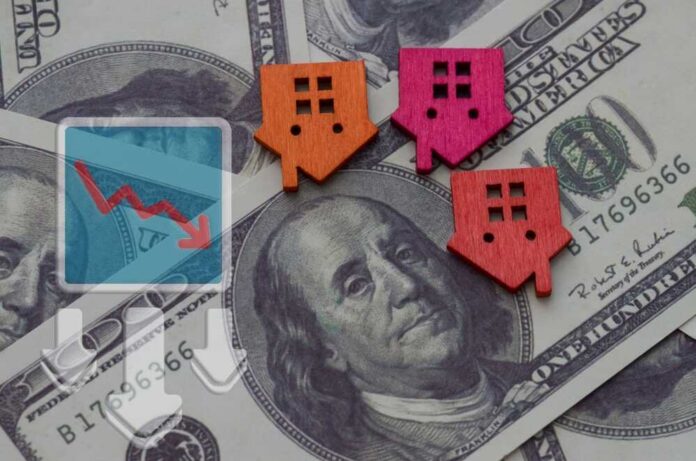
Mortgage demand just fell off a cliff—another reminder that “higher for longer” rates punish families trying to buy a home while Washington keeps running up bills.
Story Snapshot
- U.S. mortgage applications dropped 10.9% in the week ending March 13, 2026, the sharpest weekly decline since September 2025.
- Mortgage rates climbed to their highest level since late 2025, squeezing both new buyers and would-be refinancers.
- Housing affordability remains boxed in by the one-two punch of elevated home prices and elevated interest rates.
- Inventory remains constrained, in part because many owners with sub-4% mortgages are reluctant to sell into today’s higher-rate market.
Mortgage applications slide as rates climb again
U.S. mortgage applications fell 10.9% for the week ending March 13, 2026, a sudden pullback that lined up with mortgage rates hitting their highest level since late 2025.
That weekly decline was the biggest since September 2025, signaling that demand remains extremely sensitive to borrowing costs.
The drop also fits a pattern borrowers have learned the hard way: when rates pop higher, many households pause decisions immediately, especially on purchase loans.
The data matters because application volume is an early indicator—often flashing trouble before closed sales show up in official counts. When applications shrink, lenders see thinner pipelines, real-estate professionals see fewer transactions ahead, and buyers lose negotiating power in markets where supply is still tight.
Available reporting also indicates refinance activity has been particularly dampened as rates rise again, undercutting a financial relief valve many homeowners rely on when money gets tight.
Affordability stays trapped between high prices and high rates
Economists have warned for years that the housing market can stay frozen even when one variable improves, because affordability depends on both price and financing.
Fannie Mae’s chief economist has pointed to “dual affordability constraints” from high home prices and elevated interest rates, a problem that persisted through 2024 and has continued into 2026.
For households trying to budget responsibly, the math is simple: a higher payment crowds out savings, childcare, and retirement.
Mortgage demand drops more than 10% as rates hit the highest level since October https://t.co/vKLVSFMn9Y
— CNBC (@CNBC) March 25, 2026
That affordability squeeze shows up in the broader market history leading into 2026. Existing-home sales fell to multi-year lows across 2023 and 2024 despite periods when rates eased, suggesting that lower rates alone were not enough to restore normal turnover.
National Association of Realtors analysis also described the rebound in application activity as modest even during better stretches, reinforcing the idea that this is not a quick “bounce-back” cycle but a longer grind driven by structural constraints.
The “rate lock-in” effect keeps inventory tight and mobility low
Freddie Mac has highlighted the “rate lock-in effect” as a key structural problem: millions of homeowners who locked in mortgages below 4% have a strong incentive to stay put rather than trade up—or even move laterally—at today’s rates.
That reluctance to sell restricts supply, which in turn keeps prices elevated even when demand cools. The outcome is a market that feels stuck: fewer listings, fewer transactions, and fewer opportunities for families to relocate for work or to care for aging parents.
Limited inventory also hits first-time buyers hardest because they cannot “bring” equity from a prior home to soften higher monthly payments.
Research summarized in the available materials indicates that inventory remains below pre-pandemic levels, despite increases in unsold homes from earlier years.
The political takeaway for a constitutional, limited-government audience is practical rather than partisan: when basic necessities like housing become artificially scarce, families lose autonomy, and local communities strain under higher rents and reduced stability.
What comes next: pressure on builders, lenders, and household balance sheets
The near-term effects of a sharp drop in applications are typically felt across housing-related jobs and services. Lenders face weaker origination volumes, and builders often lean more heavily on incentives to move inventory when demand softens.
Freddie Mac’s outlook has described a challenging environment for purchase activity and refinancing when rates rise again, and builder sentiment has remained depressed in prior readings. For working families, the danger is that high shelter costs become a permanent tax—one that never needed a vote.
Mortgage demand drops more than 10% as rates hit the highest level since October https://t.co/3ncdLr4Yp1 #residential #RealEstate #housing
— DeSota (@desota) March 25, 2026
Policy signals are mixed in the available data, and recent materials do not include new March 2026 statements from Federal Reserve officials reacting to this specific drop.
What is clear is the feedback loop: higher borrowing costs chill demand, low turnover constrains supply, and the result can be a prolonged period where homeownership drifts farther out of reach.
With Americans also watching wartime spending pressures and ongoing cost-of-living stress, voters are likely to demand fiscal discipline and pro-growth supply solutions—not more gimmicks.
Sources:
https://208.properties/real-estate-insights/2024-housing-market-trends
https://tradingeconomics.com/united-states/mortgage-applications
https://nationalmortgageprofessional.com/news/rate-decline-not-enough-spark-more-purchase-activity
https://www.jpmorgan.com/insights/global-research/real-estate/us-housing-market-outlook