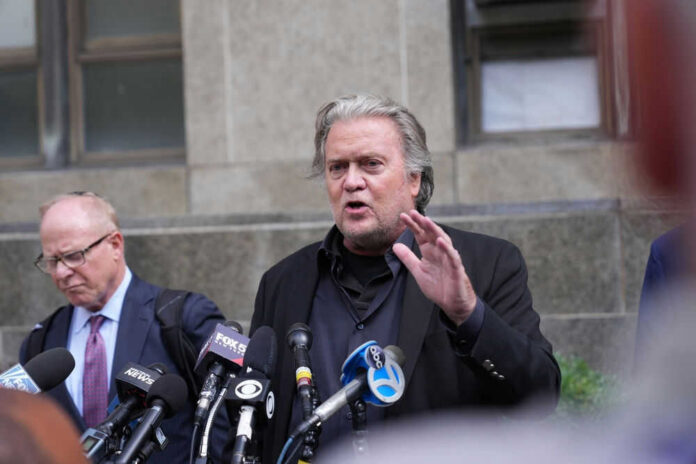
A federal judge told the Justice Department to come back with real reasons if it wants Steve Bannon’s contempt conviction wiped away.
Story Snapshot
- Judge Carl Nichols denied the Justice Department’s bid to dismiss Bannon’s conviction without prejudice.
- Prosecutors offered only a one-sentence claim that dismissal served “the interests of justice”.
- The court said the motion did not explain the government’s motivations as rules require.
- The door remains open for a fuller, compliant filing from prosecutors.
Judge Says “Explain It” Before You Erase It
U.S. District Judge Carl Nichols declined to dismiss Steve Bannon’s contempt of Congress conviction after the Department of Justice filed a sparse motion. The government’s filing said only that dropping the case served “the interests of justice,” without any detail.
Nichols ruled that such a bare claim does not meet legal standards that ask prosecutors to explain their motivations. He denied the request without prejudice, which allows a new motion with a fuller explanation.
A Trump-appointed judge has declined a request from the Justice Department to dismiss the contempt of Congress conviction for Trump ally Steve Bannon. https://t.co/ETJIqZJJCl
— ABC News (@ABC) August 26, 2026
The Justice Department sought dismissal months after higher courts cleared a path for it. The Supreme Court vacated an appellate ruling upholding Bannon’s conviction and remanded the case, signaling the department could seek dismissal.
The government then moved to toss the case. The judge’s message was narrow and procedural: if the department wants to unwind a conviction, it must tell the court why in more than a single line.
What Prosecutors Said, And Why That Fell Short
The government relied on prosecutorial discretion and asserted that ending the case served justice. That might be enough for routine charging decisions. It is not enough when asking a court to erase a conviction after trial, appeal, and prison time.
Nichols said the motion failed to explain the timing, the reasons, or the public interest behind the request. Courts expect reasons, not slogans, when they bless a post-conviction dismissal.
The question is simple: if the Justice Department wants special relief, what facts or policies drive that choice? The court did not accuse anyone of bad faith; it asked for reasons that the public can weigh and that the law can test.
How This Fits A Long, Messy History Of Contempt Fights
Congressional contempt cases live at the edge of politics and law. The Department of Justice chooses when to charge and when to stand down. Since 2008, the House has referred several people for criminal contempt, but the department has pursued indictments in only a small fraction of those cases.
That record shows uneven enforcement shaped by policy, precedent, and separation-of-powers concerns, not a simple rule that every referral becomes a crime.
Bannon’s case and the separate case of Peter Navarro, who was convicted after ignoring a House subpoena, were rare examples where the department did prosecute. A court filing from 2023 and Justice Department releases underscored how unusual such charges are.
The same rarity is why undoing a conviction later draws scrutiny from the bench. If prosecution is uncommon, reversal after conviction demands a solid, written rationale the public can see.
What Comes Next, And What To Watch For
The Justice Department can refile a motion that complies with the rule and answers the court’s questions. Expect the judge to look for a clear, specific account. That means the policy basis, the factual triggers, and why dismissal serves justice now.
If the government explains those points, the court can weigh the request on the merits. If it does not, the conviction remains on the books and the public gets no better answer than before.
One tension will hang over the next filing. Prosecutors hold broad discretion, but courts safeguard the integrity of convictions. The judge’s standard is not political; it is procedural.
Put the reasons on paper. Align them with law and fairness. Show that the same rules would apply to allies and foes alike. That is how faith in the system grows—through reasons that stand up in daylight, not hints behind closed doors.
Sources:
abcnews.com, nytimes.com, foxnews.com, justice.gov, www-cdn.abcnews.com, politico.com