
The Supreme Court cleared the runway for President Trump’s mail-voting order right before ballots go out.
Story Snapshot
- The Court lifted an injunction, saying the suing states lacked standing.
- The order lets the administration move forward for now before midterms.
- Lower courts earlier said key parts of the order were unlawful.
- The White House framed the order as mail security and election integrity.
What The Supreme Court Actually Did
The Supreme Court issued an unsigned order that stayed a lower-court block as to the states that sued. The Court said those states lacked standing to challenge a key section because it did not regulate them directly.
The ruling does not settle whether the executive order is constitutional. It does allow the administration to start implementing portions while lawsuits continue. That timing matters with early voting weeks away and mail operations already ramping up.
Practical impact arrives fast. When the Court lifts a broad injunction so close to an election, agencies move to lock in procedures that are hard to unwind. States and activists can still litigate, but process changes in the mail stream tend to set the default. Courts know this.
That is why emergency orders carry real weight, even if they avoid final answers on presidential power and the limits on the United States Postal Service.
What Trump’s Order Tries To Do
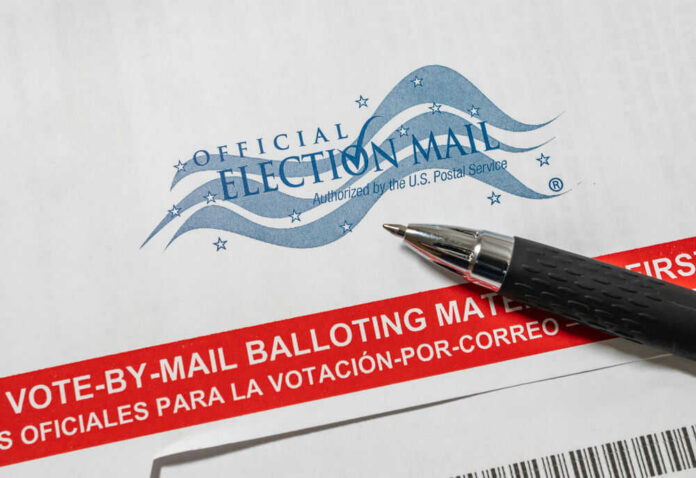
The March directive instructs the Postmaster General to start a rulemaking to set uniform standards for handling mail-in and absentee ballots. It also calls for better safeguards to ensure only eligible voters receive and return ballots.
The order directs federal agencies to support citizenship verification and mail integrity work, including data efforts to help match voter lists to federal records. Supporters see a clean chain of custody and fewer bad addresses.
The Supreme Court handed President Trump a victory, allowing his administration to enforce his "election integrity" executive order restricting mail-in voting ahead of the November midterms.
The ruling clears the way for the Trump administration to move forward with restrictions… pic.twitter.com/7dKrOV28i5
— Fox News (@FoxNews) August 24, 2026
Critics say the order goes further than process hygiene. They argue it pushes the United States Postal Service toward deciding who may vote by mail, not just how to deliver ballots.
Some reporting described planned limits on processing ballots for people not on new eligibility lists and a role for federal databases in building those lists. That approach moves beyond delivery norms into questions that state election codes usually answer.
Why Lower Courts Hit The Brakes
Federal judges in June and July blocked core parts of the program. One court concluded the president exceeded his authority by trying to reshape state-run election procedures and by tasking federal agencies with roles Congress never granted.
The same decisions said the United States Postal Service lacks clear statutory power to issue binding rules that control mail voting mechanics. Another court said the Postal Service’s proposed changes also conflicted with an earlier settlement on election mail handling.
Those findings align with a common-sense line most Americans recognize. Congress writes federal rules. States run their elections. The Postal Service delivers the mail. When the executive branch blurs those lines, courts ask hard questions fast.
Still, the Supreme Court’s stay signals that not every challenger can rush in at once. The justices said at least some states sued without a concrete injury, which narrows the field for now.
What Changes Now, And What Still Hangs In The Balance
Agencies can move ahead “for now,” which means the administration can start implementing parts of the plan that do not collide with existing orders or settlements.
News outlets report the lift affects two dozen jurisdictions and eases nationwide rollout because the mail network is uniform. But the merits fight is not over. The Supreme Court’s order did not bless the substance of the executive order. Further review in district courts and appeals courts continues.
🚨 Important context missing from the headlines: The Supreme Court has NOT ruled that Trump can ban or restrict mail-in voting nationwide.
It lifted an injunction in one lawsuit largely because the states’ challenge was considered premature. A separate nationwide injunction…
— Lance Lachlan ✌🏻 (@lancelachlan) August 25, 2026
Expect two tracks in the coming weeks. First, operational steps at the Postal Service aimed at standardizing ballot handling and tightening address controls.
Second, fast appeals on whether the president can direct citizenship verification work and define mail-ballot eligibility via agency rules.
If the administration sticks to delivery standards and chain-of-custody safeguards, it stands on firmer ground with clear lines of authority, secure processes, and respect for state prerogatives.
Sources:
apnews.com, supremecourt.gov, axios.com, cnn.com, theguardian.com, whitehouse.gov