
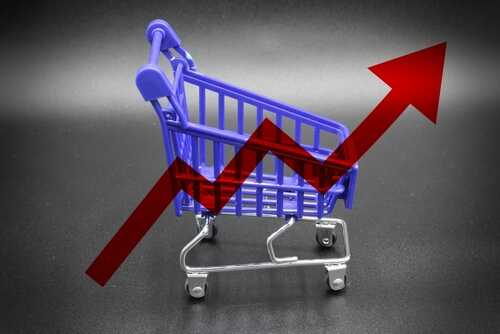
Americans are spending more at the grocery store and bringing home less food — and the data shows this is not a blip, but a pattern that has played out before in ways that hit ordinary families hardest.
Story Snapshot
- U.S. grocery sales rose 1.2% in 2025, but shoppers actually bought 1.0% fewer items — prices, not demand, drove the dollar increase
- Food-at-home prices rose 2.7% annually in May 2026, near a three-year high, squeezing household budgets further
- Shoppers are fighting back by buying store brands, skipping impulse purchases, and hunting for deals more than ever
- Food manufacturers are sounding alarms about a prolonged spending downturn as consumers appear tapped out after years of price hikes
You Are Paying More and Getting Less at the Grocery Store
The numbers tell a story your receipt already knows. McKinsey’s State of Grocery North America 2026 report found that grocery sales rose 1.2% last year, but that increase came entirely from higher prices — not from people buying more food.
Volume, meaning the actual count of items going into carts, fell 1.0%. You spent more. You got less. That is not a technicality. That is the definition of falling behind.
U.S. grocery slowdown deepens as shoppers buy fewer items, raising pressure on food companies https://t.co/F1jS89oACL
— CNBC (@CNBC) July 16, 2026
Food-at-home prices rose 2.7% annually in May 2026, sitting just below the three-year high of 2.9% recorded in April. Overall grocery spending dropped roughly 3% year over year as shoppers rethought where and how they buy food.
CoBank’s July 2026 quarterly report put it plainly: consumers are trading down, cutting discretionary purchases, and buying fewer groceries in response to higher food prices. These are not the behaviors of people who feel financially comfortable.
Shoppers Have Developed a New Set of Survival Skills
Grocery shoppers are not sitting still. McKinsey found that consumers are shopping more often but buying less each trip, skipping impulse buys, comparing prices more carefully, using more coupons and promotions, and switching to private-label store brands.
These are rational responses to a budget under pressure. But they also signal something deeper: trust in the value of branded food products is eroding, and that erosion is hard for food companies to reverse once it sets in.
Major food manufacturers are taking notice and not liking what they see. Food giants are warning of a prolonged spending downturn, describing shoppers as “tapped out” after years of inflation-driven price increases.
When the companies selling you cereal and chips say demand is weakening, that is worth paying attention to. They have every financial reason to paint a rosy picture, so pessimism from that corner carries real weight.
This Pattern Has a History — and It Rarely Ends Quickly
What is happening now rhymes with two prior episodes that economists have studied closely. During the 2007 to 2009 recession, inflation-adjusted food spending by U.S. households fell 5% — the largest drop in at least 25 years at that time.
After that recession ended, households still cut real grocery spending by more than 6% between 2005 to 2007 and 2010 to 2012, as spending simply failed to keep pace with prices. The current 1.0% volume decline mirrors the early stages of both those downturns, when shoppers quietly started buying less before the full picture became clear.
The honest counter-argument is worth acknowledging. Total U.S. food spending reached $2.51 trillion in 2025, and the U.S. Department of Agriculture’s Economic Research Service data shows food-at-home expenditures have grown substantially in inflation-adjusted terms since 1997. Per capita food spending rose 3.2% from 2023 to 2024, slightly outpacing price increases.
Those are real numbers. But aggregate dollar totals can mask unit volume declines — and unit volume is what tells you whether people are actually eating as well as they were before. The dollar figures look better than the item counts do.
What the Data Means for Your Household Budget
Weekly food and beverage unit sales fell 0.9% for the week ending May 31, 2026 compared to the same week the prior year, according to Circana data. That is a small number in isolation. But it is consistent across multiple data sources — McKinsey, Consumer Edge, CoBank, and Circana all point in the same direction.
When independent analysts using different methods land on the same conclusion, the signal is hard to dismiss. Shoppers are stretching dollars by buying fewer items, and the trend is not new.
The practical takeaway is straightforward. Store brands are no longer a compromise — they are a smart financial decision, and millions of Americans have already made that shift.
Buying in bulk on sale, reducing trips to the deli counter, and planning meals around weekly specials are not signs of hardship. They are signs of a household that is paying attention. The families doing those things right now are not imagining the pressure they feel. The data backs them up completely.
Sources:
bls.gov, consumeredge.com, mckinsey.com, ncoa.org, makemyreceipt.com, pewresearch.org