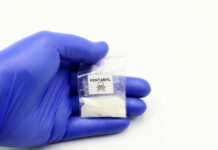


Prosecutors say a cocaine ring moved through two Penn State fraternities, roping in pledges as packers and turning college houses into hubs for drug sales.
Story Snapshot
- Pennsylvania’s attorney general charged 14 people tied to a campus cocaine network.
- State College police and a statewide grand jury outlined supply runs and house-based sales.
- Two fraternities were named as sites for cutting, packaging, and distribution.
- Pledges were allegedly told to bag cocaine as part of indoctrination into a chapter.
Prosecutors Detail A Campus Network, Not A One-Off Bust
Pennsylvania Attorney General Dave Sunday announced charges against 14 people after a long investigation into cocaine trafficking centered on Penn State students and two fraternity houses. The case description reads like a small business: suppliers, couriers, cutters, and sellers.
Investigators say members moved cocaine from source cities to State College, then cut and packaged it in fraternity spaces before sales spread across campus life. Authorities say 13 of the accused are students or were students during the conduct.
13 Penn State frat bros busted in cocaine trafficking ring-including LI student at 'top of the food chain' https://t.co/NHYGRE1SHw pic.twitter.com/beiQCMOClg
— New York Post (@nypost) August 18, 2026
State College police worked with the Fifty-Fourth Statewide Investigating Grand Jury to build the case, a sign that prosecutors saw an organized ring, not scattered users. The grand jury process often draws on controlled buys, wire messages, and cooperator accounts.
Local reporting says sales happened repeatedly inside or around the Delta Upsilon and Sigma Chi houses, with distribution moving to parties and private rooms like any convenient retail floor. That is why officials charged so many people at once.
Fraternity Houses Alleged As Workspaces For Cutting And Packaging
Prosecutors named two fraternities as operational sites. They say members brought in large amounts of cocaine from Philadelphia and New York, then cut and bagged it for sale, often inside off-campus chapter houses. The most disturbing detail for many parents and alumni is the pledge piece.
Authorities allege some pledges were told to help package cocaine as part of their indoctrination into the fraternity, blurring the line between hazing culture and criminal enterprise. If proven, that shows power used to force risky, illegal work.
The operation’s shape tracks with other campus cases. Federal prosecutors in North Carolina once outlined a multi-campus network that used fraternity houses as sale points with regular supply runs and app-based coordination.
When investigators see repeated trips, stock on hand, and set roles, they call it trafficking, not possession. That is the frame here. The attorney general’s office did not announce convictions at this stage. Charges are allegations, and each defendant has the right to contest them in court.
The Case Against Key Players And How Investigators Got There
Local coverage points to named individuals who allegedly acted as main suppliers and movers within the network, drawing on grand jury testimony, controlled buys, and seized communications to map who did what and where.
Earlier arrests, including a dealer tied to sales inside a fraternity house, helped investigators flip the lights on in back rooms where the packaging and handoffs allegedly happened. That is often how campus drug cases scale up: a small buy opens a door, and the supply chain walks through it.
Thirteen former or current Penn State University students were criminally charged Monday on allegations they participated in a cocaine-trafficking ring that involved two fraternities, authorities said.
Read more: https://t.co/gX7nPkiDMs
— ABC News (@ABC) August 18, 2026
Parents and donors will ask why a fraternity house could double as a distribution floor. The hard answer is access and trust. A chapter house gives private rooms, steady foot traffic, and a shield of social status. That is why strong oversight matters.
If prosecutors prove pledges were forced to bag cocaine, that mocks consent, exploits the weak, and spits on the rule of law. Universities should suspend implicated chapters fast. Courts should sort facts and impose real penalties where guilt is proven.
Sources:
foxnews.com, pennlive.com, attorneygeneral.gov, psu.edu, wjactv.com