

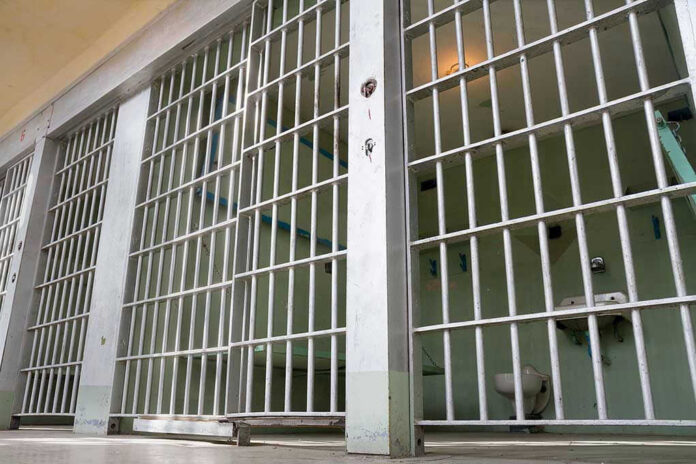
Florida’s “Alligator Alcatraz” cost taxpayers over $360 million in no-bid contracts in just three months — and now it’s gone, leaving behind a trail of lawsuits, torture allegations, and a governor claiming victory.
Story Snapshot
- Governor Ron DeSantis closed the Everglades detention facility in June 2026, calling it a mission success — but courts, advocacy groups, and federal investigators told a very different story.
- The facility was built in eight days on Everglades land, held roughly 1,400 detainees at its peak, and was the first state-owned immigration jail in U.S. history.
- Amnesty International documented conditions it called torture, including a 2×2-foot punishment box where detainees were shackled outdoors without food or water for hours.
- Federal courts repeatedly intervened — ordering legal access for detainees and halting expansion — while the state racked up hundreds of millions in costs.
Built in Eight Days, Gone in Less Than a Year
Florida erected the Everglades Detention Facility on July 3, 2025. Workers threw it together in just eight days at a remote airstrip deep in the Everglades. Governor DeSantis framed it as a bold strike against illegal immigration. Critics called it a stunt.
Within weeks, it had a nickname the whole country recognized: Alligator Alcatraz. And within a year, it was empty. DeSantis announced the closure in June 2026, saying the facility “fulfilled the role it was designed to serve” and had zero detainees remaining.
“Alligator Alcatraz,” the Florida immigration detention center, has shut down nearly a year after opening, Gov. Ron DeSantis said Thursday. MORE: https://t.co/MgyVA9EAig pic.twitter.com/7BFQ1AMUfh
— NEWSMAX (@NEWSMAX) June 25, 2026
DeSantis’s claim of mission success is worth examining against the facts. The facility cost Florida over $360 million in no-bid contracts between June and August 2025 alone, with annual operating costs projected to hit $450 million.
That’s a staggering price tag for a temporary tent facility in a swamp — especially while Florida cut billions from health care, food programs, and disaster relief.
Whether you support strict immigration enforcement or not, spending that kind of money with zero competitive bidding and zero federal oversight is hard to defend on fiscal grounds alone.
What Federal Courts Found Inside the Facility
The legal fights started almost immediately. On August 21, 2025, U.S. District Judge Kathleen Williams issued a preliminary injunction blocking any new detainees from being transferred to the site and ordering its infrastructure dismantled within 60 days. The judge found the state had skipped required environmental reviews before building.
The DeSantis administration appealed, and the 11th Circuit Court blocked the closure order while the appeal played out. A separate federal court ordered Immigration and Customs Enforcement (ICE) to provide detainees access to lawyers after testimony showed people were denied even paper and pencils.
The Punishment Box: Allegations That Triggered a Senate Investigation
The most disturbing allegations centered on what detainees called “the box.” Amnesty International described it as a 2×2-foot cage-like structure where people were shackled at the wrists and ankles, chained to the ground in direct Florida sun, and left without food or water for hours as punishment. Amnesty concluded the practice amounted to torture under international law.
U.S. Senators Jon Ossoff and Dick Durbin launched a formal investigation, writing that the conditions “appear to violate Department of Homeland Security detention standards and the United Nations Convention Against Torture.” Governor DeSantis called the Amnesty report fabricated and politically motivated.
DeSantis’s denial deserves scrutiny. Amnesty International’s findings were backed by direct testimony from former detainees and corroborated by a federal court that granted a legal-access injunction after hearing two days of witness accounts.
When multiple courts, two sitting U.S. senators, and an international human rights organization all reach similar conclusions based on independent evidence, dismissing it as political spin strains credibility.
The Department of Homeland Security denied the abuse claims, but offered no independent investigation to back that denial up.
The Bigger Problem No One Wants to Talk About
Alligator Alcatraz was the first state-owned immigration detention facility in U.S. history. That fact matters more than most people realize. Because it sat outside the federal Immigration and Customs Enforcement database, detainees were not formally tracked or registered. Families couldn’t find out where their relatives were being held.
Lawyers couldn’t locate their clients. Amnesty International called this “enforced disappearances” — a term that carries serious weight in international human rights law. The American Civil Liberties Union (ACLU) sued, arguing that no state has the legal authority to run its own immigration jail.
What Closing It Actually Means
The detainees didn’t go home. They moved to other federal detention facilities. The underlying immigration enforcement push continues. What closed was one very expensive, legally troubled, environmentally damaging experiment in state-run detention.
The real question going forward is whether other states will try to replicate the model — and whether Congress will close the legal gaps that made it possible in the first place.
Florida spent hundreds of millions of dollars, triggered years of litigation, drew international condemnation, and ended up with an empty field in the Everglades.
Sources:
[1] Web – Florida’s ‘Alligator Alcatraz’ immigration detention center has …
[2] Web – Florida Plans to Close ‘Alligator Alcatraz,’ Vendors Are Reportedly …
[3] Web – Federal Judge Orders Dismantling of Florida’s “Alligator Alcatraz …
[4] Web – ‘Alligator Alcatraz’ may shut down soon. Florida already has a … – …
[5] YouTube – Florida’s ‘Alligator Alcatraz’ immigration facility to close
[6] YouTube – ‘Alligator Alcatraz’ immigration detention center has …
[7] Web – Shut Down “Alligator Alcatraz” | American Civil Liberties Union
[8] Web – USA: Human Rights Violations at “Alligator Alcatraz” and Krome
[9] Web – [PDF] Torture-and-Enforced-Disappearances-in-the-Sunshine-State …
[10] Web – “Alligator Alcatraz”: A Case Study in State-Run Detention and the …
[11] Web – Sens. Ossoff, Durbin Launch Investigation into Abuse Allegations at …
[12] YouTube – Detainees at Alligator Alcatraz allege inhumane conditions at …
[13] YouTube – “Torture & Enforced Disappearances” at Florida’s ICE Jails “Alligator …
[14] Web – Federal Court Orders ICE to Provide People Detained at “Alligator …
[15] Web – Migrants face dire conditions and prolonged waits in U.S. detention …
[16] Web – Immigration Detention 101
[17] Web – An Analysis of Post-9/11 Immigration Enforcement and the Detention …
[18] Web – Understanding US Immigration Detention – PMC
[19] Web – [PDF] The Landscape of immigraTion deTenTion in The uniTed sTaTes
[20] Web – U.S. Immigrant Detention Grows to Record – Migration Policy Institute
[21] Web – Detention Timeline — Freedom for Immigrants
[22] Web – United States – Global Detention Project
[23] Web – The United States detention system for migrants – ScienceDirect.com
[24] Web – Immigration detention in the United States – Wikipedia