

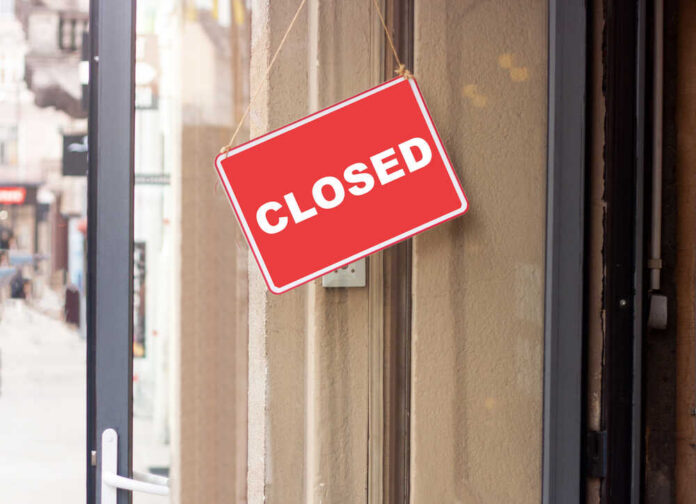
7-Eleven isn’t “dying” so much as admitting that the old idea of convenience—chips, soda, and a quick stop—isn’t convenient enough anymore.
Story Snapshot
- Seven & i Holdings plans to close 645 7-Eleven stores across North America in fiscal 2026, beginning March 2026.
- The company also plans 205 openings, shrinking the overall footprint to roughly 12,272 locations from more than 13,000 in 2024.
- Closures followed hundreds of closures in 2024 and 2025 as customer traffic softened and underperforming sites failed to justify their costs.
- Some sites will convert to wholesale fuel operations, signaling a sharper split between “gas” and “store.”
- The strategic center of gravity moves toward food-focused stores designed to compete with fast-casual, not just other convenience chains.
The 645-Store Number Is a Strategy Signal, Not a Panic Button
Seven & i Holdings laid out plans to close 645 North American 7-Eleven locations during its fiscal year 2026, which starts in March 2026.
The headline reads like a retreat, but the math tells a different story: the company expects to open 205 stores in the same period. That mix points to triage—cut weak sites, fund stronger formats—rather than abandoning the market.
The bigger context matters because this isn’t the first round. Store closures in 2024 and 2025 already pushed the chain into “reset” territory, driven by the unglamorous realities of retail: inflation squeezed shoppers, impulse trips softened, and marginal stores stopped making sense.
Why Customer Traffic Fell: The Convenience Model Got Outbid
Convenience stores used to win because they were fast and everywhere. Post-inflation behavior has changed the scoreboard. Many customers now plan stops more carefully, bundle purchases, and skip the extra run that used to end with a hot dog and a drink.
At the same time, quick-service restaurants have tightened drive-thru times and expanded late hours, stealing the “I’m hungry right now” moment.
7-Eleven’s problem isn’t that people stopped wanting convenience; it’s that “convenience” moved. A clean, well-lit store with decent prepared food can pull traffic back.
A tired store that smells like fryer oil and has a weak coffee setup won’t. That’s why this wave targets underperformers. Common sense says you don’t keep paying rent, utilities, and labor for a location that no longer earns its footprint.
7-ELEVEN CLOSING STORES | The shift reflects a broader trend in the convenience store industry.https://t.co/XvELdksBh2
— WPEC CBS12 News (@CBS12) April 15, 2026
The Quiet Pivot: From Snacks-and-Gas to Food-and-Frequency
The most important subtext is the shift toward food-forward locations—more like a compact restaurant and less like a candy aisle with a cash register.
Analysts have framed this as a transformation rather than an expansion: more closures than openings across multiple years, paired with new formats meant to lift per-store sales. That’s the key metric Wall Street cares about, especially with long-term corporate moves ahead.
Prepared meals change the economics of a convenience store. Food creates repeat visits and higher margins when operations are disciplined. It also exposes weakness fast: sloppy execution brings complaints, waste, and health risks.
For an iconic chain approaching its 100-year mark, the plan reads like a bet that Americans still want quick stops—just with better reasons to walk through the door than a bag of chips.
Fuel-Only Conversions Reveal a Hard Truth About Real Estate
Some closures include conversions to wholesale fuel sites. That’s a tell. The company appears willing to separate the profitable part of a location (fuel volume and traffic flow) from the less profitable part (the store that requires constant labor, merchandising, and shrink control).
When companies do this, they’re acknowledging a brutal reality: not every corner can support a modern convenience experience, but many corners can still pump gas.
This also hints at a local impact people will feel immediately. For many towns, a 7-Eleven isn’t just a place to buy a soda; it’s the fallback for milk after dinner, the late-night snack run, the informal meeting spot.
Converting a site to fuel-only keeps the lights on, but it removes a small piece of community infrastructure—especially in areas where alternatives aren’t close or safe after dark.
How to Read This as a Consumer and as a Citizen
The company hasn’t disclosed specific locations in these broad announcements, which means communities will learn the hard way: a sign on the door, a sudden liquidation, a “temporarily closed” that becomes permanent. Jobs will be eliminated at affected sites, and suppliers will adjust their routes.
At the same time, closures raise a legitimate question: what happens to underserved areas when profit optimization becomes the only organizing principle? No one should demand businesses operate at a loss.
Still, leaders who care about stable neighborhoods should notice when essential, everyday retail vanishes. The answer usually isn’t a bailout; it’s clearing barriers for new entrants—local operators, better zoning, less red tape—so replacement options can emerge.
Popular convenience store chain to close hundreds of stores https://t.co/UOCSukPkEm
— FOX Business (@FoxBusiness) April 15, 2026
The bottom line is straightforward: 7-Eleven is pruning to grow in a different direction. If the chain pulls off a cleaner, food-centered model, customers will see fewer locations but better ones.
If it doesn’t, the closures won’t look like optimization in hindsight—they’ll look like a warning shot that the definition of “convenient” has moved on without them.
Sources:
Popular convenience store chain to close hundreds of stores
7-Eleven closing 645 stores in 2026
7-Eleven closing stores in strategy shift