
The modern economy still runs on one narrow waterway, and April’s brief calm proved how fast that choke point can squeeze your wallet.
Story Snapshot
- U.S.-Israel strikes on Iran triggered retaliation aimed at the Strait of Hormuz, the route for roughly one-fifth of global oil transit.
- March disruptions removed an estimated 8–10 million barrels per day from the market, the kind of gap strategic stockpiles were built for.
- Oil executives described the chaos as the “worst” they’d seen, even as high prices boosted headline revenues.
- Pipeline bypasses in Saudi Arabia and the UAE helped, but they covered only a fraction of normal Strait volumes.
- A two-week ceasefire reopened the Strait under Iranian oversight, and markets immediately repriced risk downward.
The Strait of Hormuz: One Map Line That Can Move Every Price Tag
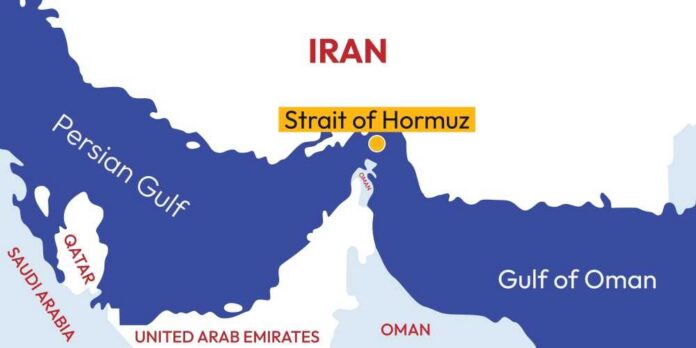
Iran’s pressure on the Strait of Hormuz turned a geography lesson into a global issue. About 20% of the world’s oil transits that corridor, so even partial disruption forces traders, refiners, airlines, and trucking fleets to bid against each other for fewer barrels. Markets don’t wait for perfect information; they price fear.
That’s why the shock traveled faster than tankers ever could, and why everyday costs jumped before pumps ran dry.
OPEC crude production registered a record plunge last month as conflict in the Middle East throttled exports from key members, the group’s data showed. https://t.co/T7GsUfgIJ7
— Bloomberg (@business) April 13, 2026
March brought the numbers that make policymakers sweat: a reported 8 million barrels per day knocked out globally as the Strait snarled, while Gulf producers cut at least 10 million barrels per day—roughly 10% of world demand—because exports and operations could not move normally.
The International Energy Agency responded by releasing record strategic stockpiles. That release wasn’t a victory lap; it was a fire extinguisher used because the kitchen was already burning.
Oil CEOs Didn’t Celebrate the Spike; They Hid From the Operations Mess
Conference stages normally fill with energy executives when prices rise, yet the period’s defining detail was who didn’t show. Reports described CEOs absent from industry gatherings while facilities, shipping schedules, and supply contracts fell into triage. Exxon later said the conflict cost it about 6% of its global first-quarter production.
That detail matters for readers who assume “Big Oil always wins” in a crisis: price gains can’t pump barrels that never get produced.
Damage across the Persian Gulf ecosystem multiplied the Strait problem. Refineries, oil fields, and gas plants operate as a chain; breaking one link backs up the entire system. A refinery outage forces crude to find another home, and gas-plant disruptions hit power generation and petrochemicals, not just heating.
The result looked less like a clean embargo and more like a jammed machine with missing parts, where restarting takes weeks even after headlines announce “reopening.”
Pipeline Bypasses Exposed a Hard Limit: You Can’t “Detour” a Fifth of World Oil
Saudi Arabia and the UAE leaned on pipelines designed for exactly this nightmare: Saudi’s East-West line and the UAE’s Abu Dhabi–Fujairah route. Those detours helped keep some exports flowing, but capacity covered only about a quarter of normal volumes that would otherwise pass through the Strait.
That shortfall explains why price volatility persisted even when alternative routes existed on paper. Infrastructure can reduce vulnerability, but it can’t repeal math or geography.
Chatham House analysis highlighted the uneven pain across the region: some exporters benefit from high prices, yet many face constraints, higher security costs, and long-lasting damage to infrastructure and investor confidence.
Qatar’s LNG exposure showed how quickly losses compound, with estimates running into billions per month when shipments slip. Iraq’s dependence on oil revenue raised a more human risk: when export income drops, governments struggle to pay salaries and pensions, and stability starts to fray.
Ceasefire Whiplash Proved the Market’s Real Judge Is Risk, Not Rhetoric
The April 8 ceasefire jolted prices lower and sparked a broader market rally, a clean demonstration that traders were paying for the possibility of worse, not simply the reality of less supply.
The Strait reopened under Iranian oversight, which itself raises the question investors can’t ignore: what happens when the same actor who can close the gate also gets a formal role in policing it? Temporary calm can be real and still be temporary.
The White House message leaned optimistic, promising that after military objectives, oil and gas would flow more freely and prices would drop. Americans should want secure sea lanes and a credible deterrent against attacks on commerce; that aligns with national interest and common sense.
Still, conservative instincts also respect incentives: regimes under pressure often reach for asymmetric leverage, and the Strait is the biggest lever on the planet. Betting your household budget on best-case diplomacy is not a plan.
What This Shock Revealed About Energy Security—and the Choices Voters Actually Control
The loudest lesson isn’t that war is expensive; everyone knows that. The sharper lesson is that energy independence is not a slogan but a buffer. Strategic stockpiles helped, but they are finite. Pipeline bypasses helped, but they are limited.
The durable answer looks boring because it is: diversified supply, reliable domestic production, resilient refining capacity, and permitting that lets infrastructure keep up with reality. A fragile Strait shouldn’t hold U.S. consumers hostage.
Middle East oil production plunges due to Iran war, OPEC data shows @CNBC https://t.co/bNcRjjCvyl
— Brianmsc 🔯 (@brianmsc) April 13, 2026
Two weeks of ceasefire can calm screens, but it can’t rebuild damaged plants, restore lost production instantly, or guarantee the next provocation won’t target shipping again.
Countless people have seen this movie: the first shock hits prices, the “resolution” hits prices again, and the hangover shows up later in inflation and slower growth. The open question now is simple and unsettling: did the world just get a warning, or a preview?
Sources:
“The worst I’ve seen’: Oil industry grapples with the fallout from Trump’s war with Iran”
Middle East oil production plunges due to Iran war, OPEC data shows
Iran war exacting heavy toll on Gulf oil and gas exporters and creating risk and opportunity