

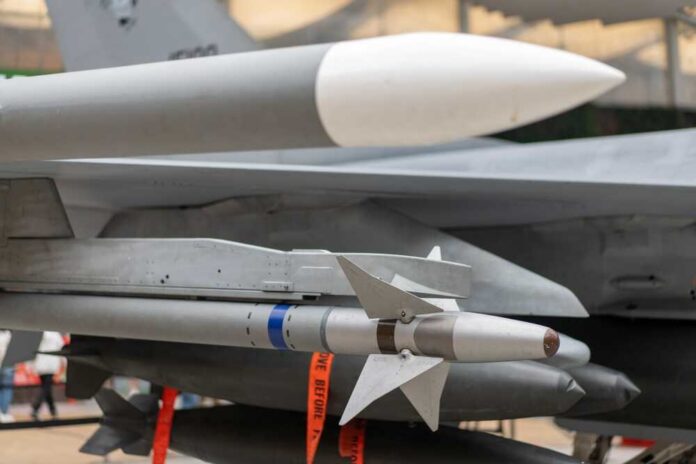
President Trump’s team greenlit a $2.8 billion package to Israel packed with 40,000 one-ton bomb bodies—and it signals a hard-edged policy with clear intent.
At a Glance
- The administration moved a $2.8 billion munitions sale to Israel through Congress’s review channel.
- The package centers on 20,000 MK 84 and 20,000 BLU-117 general-purpose 2,000-pound bomb bodies.
- The sale fits a long pattern of large U.S.-Israel transfers, often on tight timelines.
- Officials have also used emergency authorities for separate, faster shipments when needed.
What Was Approved And Why It Matters
Reuters reported the administration plans a $2.8 billion sale to Israel built on tens of thousands of 2,000-pound bomb bodies, including 20,000 MK 84 and 20,000 BLU-117 units, citing a United States official familiar with the package.
The Washington Examiner said the move revives a large bomb sale that stalled under the previous administration, underscoring a sharp policy reset. The package’s size and simplicity point to a core goal: keep Israel’s basic strike capacity stocked at scale and on schedule.
The Trump administration is preparing a $2.8 billion arms package for Israel, including several thousand 2,000-pound bombs, in what would be the largest single U.S. sale of the powerful munitions to Israel in recent years. https://t.co/ZSknqZIbEg
— NEWSMAX (@NEWSMAX) September 16, 2026
The choice of MK 84 and BLU-117 bodies matters. These are workhorse general-purpose bomb casings. They can be used as free-fall munitions or paired later with guidance kits. That keeps supply chains flexible while meeting urgent needs.
It also avoids the bottlenecks that come with more complex, finished weapons. For U.S. planners who value speed and volume, this is the cleanest path to mass resupply without tripping on manufacturing delays.
How The Sale Moves Through Washington
Large foreign military sales follow a well-defined track under the Arms Export Control Act. The administration notifies Congress, which then has a period to review and, if it chooses, challenge the deal. That process protects oversight while allowing the executive branch to act on national security priorities.
In separate cases this year and last year, officials have also invoked emergency authorities to bypass the full review period for smaller, time-sensitive shipments. That tool exists for crises; the $2.8 billion package uses the standard channel.
Some readers hear “bypass” and think something underhanded happened. That is not the case here. Congress wrote the emergency waiver into law for urgent cases, and administrations of both parties have used it.
The baseline remains the normal review clock. The big take-away is simpler: when the need is urgent, Washington can move fast; when it is large and long-term, Washington moves by the book.
Strategic Logic
Supporters of the sale argue it advances three aims. First, it backs a key ally who faces real threats across multiple fronts. Second, it sustains the deterrent that keeps wider war at bay. Third, it leverages American industry and standards rather than letting adversaries fill gaps.
Those points track with a clear-eyed conservative view: peace holds when allies are strong, when resupply is credible, and when U.S. leverage flows from capability, not speeches.
Critics often point to civilian risk from heavy bombs. That risk is real in urban fights. The policy answer is not to leave an ally short on ammunition. The answer is rules, training, and targeting discipline tied to U.S. support.
General-purpose bomb bodies can be paired with precision kits to shrink blast areas and reduce collateral harm. Oversight tied to delivery schedules can nudge behavior without draining an ally’s magazine.
The Pattern And The Stakes Ahead
This sale fits a steady pattern. Israel is a frequent recipient of large packages, and Congress wrestles with speed versus scrutiny during hot conflicts. The normal review clock guards accountability. The emergency waiver guards time. Both tools aim at the same end: keep U.S. strategy on track while preserving the power of the purse.
Reuters previously detailed how emergency authorities moved a separate 20,000-bomb tranche worth around $650 million. The $2.8 billion package now threads the standard needle.
#RWorldNews
US Approves Bomb Sale to Israel Trump administration approves $2.8B arms package: 40,000 bombs for Israel, raising civilian casualty concerns. #Israel #USArmsDeal #MiddleEast pic.twitter.com/LgIUmtJAvt— Triple R (@RaviRRana) September 16, 2026
Two questions will linger after paperwork clears. First, how fast can industry deliver? Bomb bodies are simple steel, but 40,000 units still strain lines. Second, how will the mix evolve?
If commanders ask for more guidance kits, expect follow-on cases to add them. The core bet is unchanged: front-load volume, add precision as needed, and keep Israel’s edge firm. That plan is cold, practical, and, in this town, very familiar.
Sources:
nbcnews.com, reuters.com, washingtonexaminer.com, fdd.org