
A war-damaged apartment block in Gaza City collapsed overnight, crushing families as they slept.
Story Snapshot
- A six- or seven-story residential building in Gaza City failed before dawn.
- Local medics and civil defense reported deaths and active rescues under rubble.
- Wire reports cite at least 11 to 19 killed, with more injured and missing.
- Weak structures, overcrowding, and scarce equipment worsened the toll.
The Collapse And The First Hours
Shortly after 2 a.m. local time, a battered residential block in southwest Gaza City gave way. Families who moved there for shelter woke to concrete and dust.
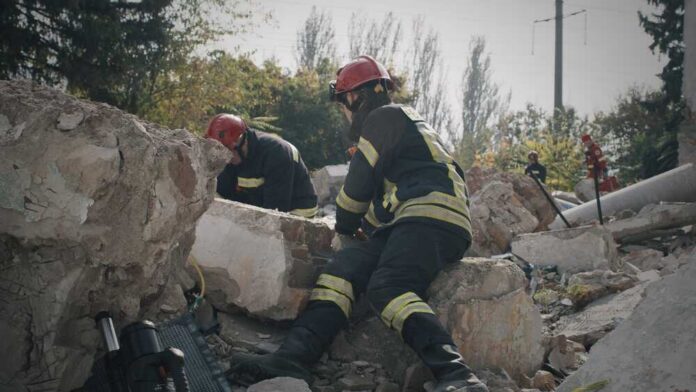
Local medical sources and the Palestinian Civil Defense said rescue teams pulled survivors from debris and searched for the missing under unstable slabs. They lacked heavy machinery and worked by hand and with small tools, which slowed every move and raised the risk of more collapse.
News desks moved fast, with numbers changing as daylight rose. A Connect alert reported 11 dead tied to the same event and location pattern. 19 people killed and 25 injured, with rescuers digging for dozens more still trapped below.
Xinhua described at least eight deaths and over 15 injured. All agreed on the same hard truth: a damaged building failed and people inside had no chance to run.
Why Casualty Counts Shift In War Zones
Rescue math in war zones is not neat. Crews often dig without power or cranes. Lists of residents do not exist. Families double up in units after prior strikes. Bodies are found in voids no one could reach at first light. These factors explain why the first death toll is rarely the last one.
Reports pointed to dozens missing, rising injury counts, and a long search window. That pattern matched prior Gaza recoveries under strain and restricted access.
At least 20 people killed and dozens missing after war-damaged building collapses in Gaza, local rescue teams say https://t.co/7kDFDGdrli
— BBC Breaking News (@BBCBreaking) September 16, 2026
Conflicting building details, such as six or seven floors, also fit these scenes. Repeated strikes can shear off levels. Stairwells disappear. Walls lean. What used to be a clear footprint becomes a stack of partial spans.
For a neighbor speaking to a reporter, that is hard to parse in the dark. The only constant across accounts was scale: a mid-rise, home to several families, fell in a single event and turned to a low mound of concrete and rebar.
The Structural Trap: Damage, Crowding, And Time
Prolonged conflict produces a slow, predictable trap. First, strikes and shock waves weaken columns and beams. Second, displaced families crowd into any building that still stands. Third, months pass with no engineering checks or repairs. Then gravity finishes the job.
Regional assessments show building damage at a massive scale across Gaza. That level of structural harm makes later collapses more likely even without fresh attacks, and makes rescues longer and deadlier.
Basic civil sense says communities deserve safe shelter, clear evacuation routes, and working gear for first responders. People slept in a structure that could not bear its own weight. Rescuers had heart and skill but not the heavy tools that save minutes and lives. The result was a race against dust and oxygen that many did not win.
What Matters Next On The Ground
Crews must stabilize nearby walls before more digging. Hospitals need blood, trauma supplies, and fuel. Neighbors must quickly provide lists of the missing so search teams can set priorities.
If safe access allows, engineers should mark cracked spans in adjacent blocks and clear them out. These steps do not settle blame or history. They save people today and lower the odds of a second collapse tomorrow in a city where too many buildings now stand on borrowed time.
Sources:
apnews.com, reutersconnect.com, abcnews4.com, en.abna24.com