
A battered U.S. Air Force colonel hid, crawled, and fought to stay alive for about 50 hours inside Iran before American forces plucked him out.
Story Snapshot
- Rescue followed the shootdown of a U.S. F-15E over Iran.
- President Trump announced success: “WE GOT HIM!”
- The rescued officer, a colonel and weapons system officer, was injured but is recovering.
- The colonel later recounted the ordeal in a televised interview.
A downed jet, a missing colonel, and the order to bring him home
U.S. officials confirmed that an F-15E Strike Eagle was shot down over Iran, leaving one crew member missing while the other made it out earlier.
President Trump announced the rescue of the missing airman with “WE GOT HIM!” and praised it as one of the most daring missions of its kind.
Multiple outlets matched the core facts: a U.S. aircrew shot down, a high-risk recovery inside hostile territory, and a wounded officer brought out alive.
White House monitoring drove tempo and focus. National leadership often directs rescue missions because they carry military, diplomatic, and moral weight. The classic playbook—report, locate, support, recover, reintegrate—kicked into gear.
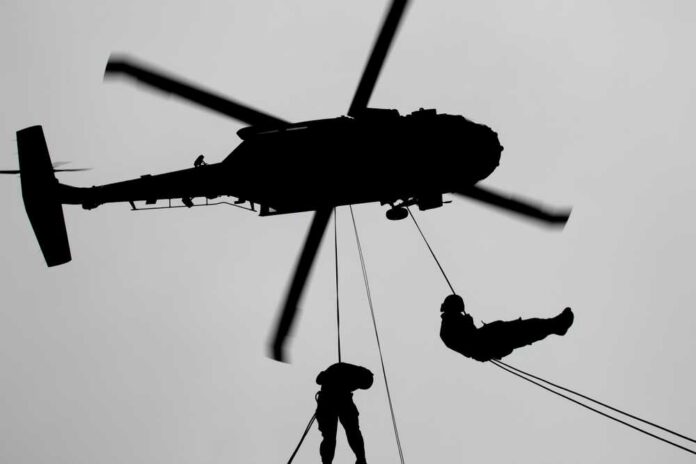
Fixed-wing cover, surveillance, and special operations teams formed a moving shield. Crews weighed weather, terrain, and enemy air defenses, then chose a narrow window to move. That approach aligns with established personnel recovery doctrine used in past wars and crises.
Newly declassified footage shows the events leading up to the rescue of Bravo, the U.S. Air Force officer who was shot down and survived behind enemy lines in Iran for two days. https://t.co/YUIzeTBpKt pic.twitter.com/0x2zDndgmC
— 60 Minutes (@60Minutes) September 14, 2026
Fifty hours on the run in rugged ground
The colonel later described a brutal start: a violent ejection, wrecked gear, and broken bones. He found concealment, rationed water, and used training to stay unpredictable—short moves, quick hides, strict noise and light control.
He dodged search parties and scanned the sky for friendly aircraft. Survival, evasion, resistance, and escape training exists for this exact grind, where small choices add up to staying free long enough for a rescue window to open.
Radio contact and signaling demanded patience and timing. The aircrew’s isolated-person beacons, if active, had to be managed with care. A ping at the wrong time can draw enemy patrols. A flare in the wrong valley can betray a hide site.
Crews in the air and teams on the ground had to match a faint signature to a living person, not a decoy. That step—positively identifying the survivor—often decides whether a recovery goes fast or not at all.
The recovery push: speed, firepower, and tight timing
Rescuers synced fires, aircraft, and ground movement to a clock measured in seconds. They needed to penetrate air defenses, confirm identity, and extract before enemy forces massed. Reporting described a large package of supporting aircraft and assets in the skies to shield the pickup.
That is standard for a high-threat recovery: stack the deck with surveillance, strike cover, and medical support to buy the team time and options. President Trump said the airman would be “just fine.”
⌚🇺🇸 THE WATCH OF THE NAMELESS COLONEL
We know his callsign: “Dude 44 Bravo.”
We know he is a U.S. Air Force O-6 Colonel and F-15E Weapons Systems Officer who was shot down over Iran.But we still don’t publicly know his name—or his actual billet.
Now we know another detail:… pic.twitter.com/MhO5yEFpWn
— Jesus Romero (@CommanderRomero) September 14, 2026
Iran’s military claimed it struck other U.S. aircraft during the operation. U.S. officials emphasized the successful rescue and did not match Iran’s details. Such split narratives are common in contested rescues, where each side stresses what fits its aims.
What remains solid here is the verified outcome: the colonel survived nearly two days behind enemy lines and made it out under U.S. control. Reuters, the British Broadcasting Corporation, and other outlets all affirmed the rescue.
What the ordeal says about U.S. rescue power and values
The mission underscores a core American promise: do not leave our people behind. That creed shapes budgets, training, and risk decisions. It also deters enemies. Adversaries know that if an American is isolated, the United States will send steel, skill, and will to get them.
That reputation grew from decades of combat search and rescue operations and from doctrine that treats personnel recovery as a standing obligation, not a public relations flourish.
The colonel’s account adds human truth to the headlines. Survival came down to training, grit, and trust in the team racing his way. The rescue came down to planning, coordination, and the resolve to act under fire.
Some commentators called the mission a message to Tehran and a reminder that the United States can reach deep and get out fast when lives are on the line.
Sources:
cbsnews.com, kurdistan24.net, reuters.com, nytimes.com, bits.de, airandspaceforces.com, tribuneindia.com