
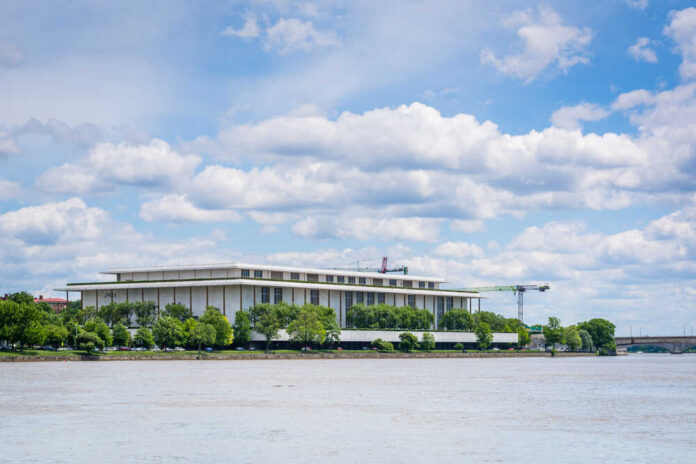
Washington’s biggest performing-arts venue is going dark for two years—right after Independence Day—after a White House-hosted board vote that exposes how quickly a “national cultural center” can become a political battleground.
Quick Take
- The Kennedy Center board voted March 16, 2026, to suspend operations for two years after the July 4 celebrations, citing needed repairs amid financial strain and artist backlash.
- The board also named Matt Floca as the new CEO and executive director, replacing Richard Grenell, who had warned of staff reductions.
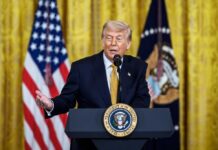
- President Trump, now chairing a hand-picked board, hosted the meeting at the White House and said repairs are needed to keep the venue “the finest performing arts facility.”
- High-profile withdrawals and resignations accelerated after programming and branding changes, including the venue being renamed “Trump Kennedy Center” with a physical facade change.
A two-year shutdown approved at the White House
The Kennedy Center’s board of directors voted Monday, March 16, 2026, to shut down operations for two years, with performances continuing only through the July 4 celebrations. The meeting took place at the White House, an unusual detail for an institution created by Congress to serve as the national cultural center.
The official rationale is repairs amid financial woes, with President Trump emphasizing the building’s condition and future quality.
The Kennedy Center’s board of directors voted on Monday to shut down operations for two years as President Trump calls for a major overhaul of the D.C.-based performing arts institution. Trump has cited the need for repairs as a reason for the closure, which will take effect… pic.twitter.com/s7WYExuAzv
— CBS News (@CBSNews) March 17, 2026
The timing matters. The shutdown comes after weeks of cancellations, artist withdrawals, and leadership turbulence that left gaps in programming and strained the institution’s finances.
The research available points to two parallel explanations being offered in public: Trump’s stated focus on “dilapidated” conditions and the visible fallout from political controversy surrounding leadership and branding changes. With only one primary news source available, the precise budget numbers and repair scope remain unclear.
Leadership change: Grenell out, Floca in, staff cuts looming
Alongside the shutdown vote, the board appointed Matt Floca as CEO and executive director, replacing Richard Grenell. Floca previously served as vice president of operations since January 2024 and has a facilities-focused background, including construction management training and roles tied to building operations and sustainability in the D.C. area.
Grenell, a Trump ally, had warned that staffing would be reduced to “skeletal teams” as the closure approaches.
Those staffing details are not minor. A two-year closure typically means ticket revenue drops to near zero, donor relations change, and many employees lose steady work. The reporting indicates major reductions are expected, with only a minimal workforce remaining to manage the building and oversee the repair period.
For taxpayers and patrons, the key question is whether the shutdown produces measurable, transparent improvements—or whether the institution emerges more politically branded but not meaningfully stronger.
Artist withdrawals highlight a deeper legitimacy fight
Multiple artists reportedly pulled out or resigned amid the Kennedy Center’s recent transformation. The list in available reporting includes Issa Rae, Bela Fleck, and Louise Penny withdrawing appearances, while Ben Folds and Renée Fleming resigned as consultants.
An executive tied to the National Symphony Orchestra, Jean Davidson, also departed. The pattern points to reputational damage that can hit arts institutions quickly: once cancellations stack up, empty dates compound financial stress.
Supporters of Trump’s approach can fairly argue that a national institution shouldn’t operate as a protected clubhouse for one ideological class, especially after years when many major cultural organizations leaned left and treated conservative Americans as outsiders.
Critics counter that the pace and symbolism of the changes—along with direct White House involvement—blur the line between public-serving stewardship and political messaging. The reporting does not provide independent financial audits or repair assessments to resolve the dispute.
The renaming controversy and congressional oversight questions
The Kennedy Center was established by Congress in 1964 and operates as a federally chartered nonprofit, which is why the renaming story created friction.
The research notes the venue was renamed “Trump Kennedy Center,” including a physical facade change, and that scholars cited in the reporting questioned whether congressional approval is required for such a change. That legal question is not resolved in the available materials, but it underscores how governance disputes can spill into operations.
Also shaping the boardroom dynamics, a federal judge ruled that Democratic Rep. Joyce Beatty could attend the meeting as an ex officio board member but could not vote. That decision allowed presence without power, a telling snapshot of the broader struggle over who gets a say in a congressionally linked cultural institution.
For Americans wary of government-adjacent entities drifting into ideological activism, the case shows how structural rules can decide outcomes before any debate begins.
What to watch: repairs, transparency, and the cultural vacuum in D.C.
The near-term reality is straightforward: after July 4, the Kennedy Center is expected to go dark, Washington loses a major venue, and the staff footprint shrinks dramatically.
Trump said he wants to ensure the facility remains “the finest performing arts facility,” and the selection of an operations-focused executive aligns with a renovation narrative. Still, only limited reporting is available, with no detailed public plan for timelines, costs, or benchmarks tied to reopening.
The Kennedy Center's board of directors voted on Monday to shut down operations for two years as President Trump calls for a major overhaul of the D.C.-based performing arts institution. https://t.co/Vp2qHe7puQ
— CBS News Texas (@CBSNewsTexas) March 17, 2026
The long-term test will be whether the institution returns with broader public trust and a mission that respects taxpayers, patrons, and the pluralism of American culture—without becoming a propaganda stage for any side.
A two-year closure is a high-stakes reset. If repairs are real and managed well, the center could reopen stronger. If governance fights dominate, the closure may be remembered less as renovation and more as a cautionary tale about politics swallowing a public institution.
Sources:
Kennedy Center votes to shut down operations for 2 years and names a new president