

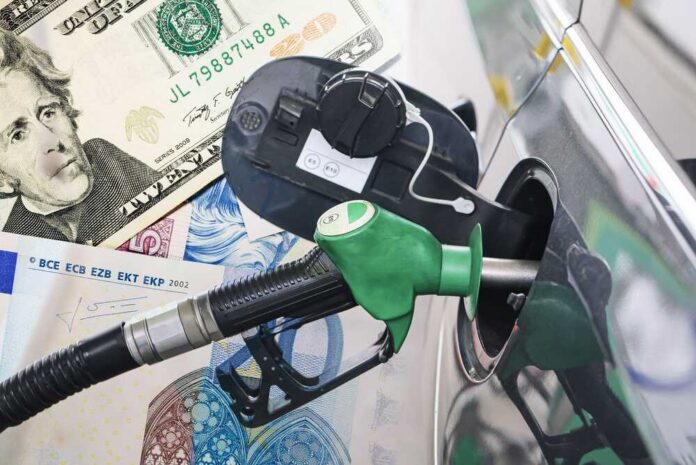
An 18.4-cent promise at the pump sounds like instant relief—until you follow the money trail straight to America’s roads.
Quick Take
- President Donald Trump proposed temporarily suspending the federal gasoline and diesel taxes as fuel prices spike during the U.S.-Iran war.
- The federal gas tax equals 18.4 cents per gallon for gasoline and 24.4 cents for diesel, and Trump suggested phasing it back in once conditions “stabilize.”
- Congressional Republicans moved quickly toward legislation, but the president cannot suspend the tax without Congress.
- Drivers would see modest per-tank savings, while the Highway Trust Fund faces an immediate revenue hit tied to road and bridge spending.
Trump’s pitch: a “gas tax holiday” in a war-driven price spike
President Donald Trump floated a temporary suspension of the federal gas tax as Americans absorb a sharp run-up in fuel prices tied to the war with Iran. The core sales pitch is simple: remove 18.4 cents per gallon on gasoline and 24.4 cents on diesel “for a period of time,” then phase the tax back in when prices cool. The policy reality is less simple, because Congress must approve it.
Trump Says He Supports Suspending Gas Tax
With gas prices surging 50 percent since the start of the war in Iran, Trump told CBS News on May 11 that stopping excise taxes would be a "great idea."
"Yup, we're going to take off the gas tax for a period of time, and when gas goes… pic.twitter.com/FVV2fdkcU7
— NTD (@NTD_Live) May 11, 2026
Pump prices provide the emotional fuel for the proposal. Reports described prices jumping roughly 50% from pre-war levels near $3 a gallon to $4.50 and above in parts of the country, with some local reporting putting certain areas around the mid-$4 range. When a family feels that jump twice a week, policy nuance dies fast. That’s why “holiday” polls better than “offset” and “appropriation.”
Congress holds the switch, and Republicans moved fast
The most important civics lesson in this story: a president can advocate, pressure, and negotiate, but cannot unilaterally turn off the federal gas tax. That requires legislation.
Republicans in Congress signaled they would introduce or support a bill quickly after Trump’s remarks, with Sen. Josh Hawley among the names associated with a suspension proposal. Translation: this becomes a test of party alignment and legislative follow-through, not just a soundbite.
That alignment also exposes a political about-face that older voters will remember. Republicans criticized a similar idea when President Biden floated a gas tax holiday during the Ukraine-war era, arguing the move would drain infrastructure funding and offer limited consumer benefit.
Now the same argument sits on the other foot. Consistency matters in politics because it telegraphs seriousness, and voters can smell when principles change with the zip code of the White House.
The part everyone skips: the Highway Trust Fund is the hidden bill
The federal gas tax feeds the Highway Trust Fund, the workhorse funding pipeline for roads and bridges. Suspending the tax means the Trust Fund takes the hit first, not some abstract “government.”
That matters because road spending doesn’t pause when cable news moves on; contractors, state departments of transportation, and multi-year projects run on predictable funding. A tax holiday without an offset behaves like a credit-card swipe for today’s relief, billed to tomorrow’s repairs.
The gas tax holiday sells as “letting people keep their money,” which aligns with common-sense household budgeting. The catch is that the same households drive on the same bridges, and deferred maintenance doesn’t get cheaper with time.
How much would drivers really save, and who benefits most?
At 18.4 cents per gallon, the savings are real but modest. Fill a 15-gallon tank and the federal piece is about $2.76; fill it twice a week and it adds up, but it doesn’t erase a war-driven jump from $3 to $4.50. Diesel users would see a larger per-gallon reduction, which matters for trucking and shipping, yet those savings also depend on whether retailers pass through the full cut.
The uncomfortable possibility is that consumers feel only part of the “holiday” if market prices keep climbing or if margins expand elsewhere in the chain. Some critics argue oil companies post strong profits while families eat the increase, and they frame the suspension as a distraction from the war’s cost.
That accusation may match the frustration people feel, but the more provable point is simpler: a tax cut cannot outmuscle a supply shock. It can only soften the edges.
The war question critics raise, and the policy question voters should ask
Critics on the left have attacked the underlying war itself, calling it illegal and arguing that ending the conflict would deliver larger, more durable relief than shaving pennies off each gallon.
The legality and strategy of the conflict sit beyond a gas-tax bill, but the critique lands emotionally because it points to root cause. Voters should separate two questions: does the tax holiday help next week, and does it avoid making next year worse?
The practical question is what happens after the headline. If the suspension passes, does Congress replace lost Highway Trust Fund revenue, tighten timelines so “temporary” doesn’t become a habit, and set conditions for phasing the tax back in?
If the suspension fails, do lawmakers offer alternatives that don’t raid infrastructure—targeted relief, regulatory flexibility, or faster domestic supply responses? Adults don’t just demand relief; they demand a plan that doesn’t boomerang.
#Trump, congressional #Republicans float suspending federal #gas #tax amid #Iran #war @CNBC https://t.co/oneRbd2zGR
— Crypto Charts, Targets, & Updates 🚀💰 (@Want_Pride_Back) May 12, 2026
Trump’s proposal thrives because it speaks the language of daily life: a number on a sign, a card swipe, a receipt. The political risk is that a gas tax holiday becomes a substitute for solving the crisis that caused the spike, while also starving the very infrastructure that keeps commerce moving.
The policy win would be a narrowly tailored suspension with a firm end date and a clean offset—real relief without pretending roads repair themselves.
Sources:
https://www.commondreams.org/news/federal-gas-tax-holiday