

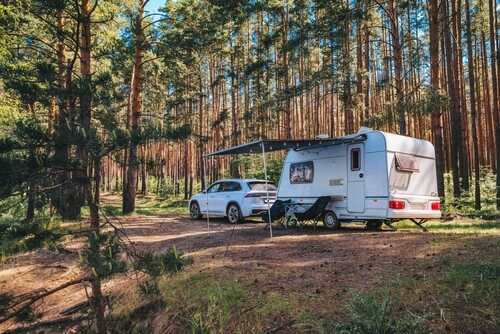
A quiet RV campground job meant to simplify life ended with two gunshots that shattered a family’s picture of a loving marriage.
Story Snapshot
- Deputies found Anesa Osborne, 56, and Christopher Osborne, 51, dead inside their RV at Ocean Pond Campground in Baker County, Florida.
- Investigators ruled the deaths a murder-suicide, alleging Christopher shot Anesa and then himself.
- The couple began hosting at the campground on December 8, 2025, after embracing “RV life” and a simpler, smaller routine.
- A welfare check began after neighbors noticed the hosts were missing, turning a serene forest campground into a crime scene.
Ocean Pond Campground: When a “Tiny Life” Turns Into a Locked-RV Mystery
Deputies from the Baker County Sheriff’s Office discovered the couple inside their RV at Ocean Pond Campground, a public recreation area in Florida’s Osceola National Forest.
The timeline that emerged sounded like the beginning of a routine welfare check: a last known visit from family, then an uncomfortable quiet, then someone deciding they couldn’t ignore it.
That final decision matters because many tragedies linger longer when people hesitate to “bother” authorities.
Family members said the Osbornes had leaned into a low-key version of RV living, not a reckless one.
Hosting can look like a dream gig to older Americans who want purpose without a boss hovering over them: greet campers, keep an eye on sites, help with basic issues, live close to nature, and keep costs down.
Ocean Pond draws people precisely because it feels buffered from the chaos of city life. That contrast made the outcome feel even more surreal to those who knew them.
The Timeline That Haunts: A Visit, a Silence, and a Welfare Check
The last reported in-person contact came on Thursday, April 30, when Anesa’s cousin, Laura Curry, saw her and delivered soaps to their campsite.
By Saturday, May 2, a fellow campground host noticed something was off: no sign of the Osbornes, no routine movement, no normal check-ins.
The host called law enforcement. Deputies arrived Sunday morning, May 3, and found both Anesa and Christopher dead from gunshot wounds inside the RV.
'RV life' influencer couple found dead in suspected murder-suicide at Florida campground https://t.co/LX2D1rR2Yr pic.twitter.com/wDzTcZVCWJ
— New York Post (@nypost) May 5, 2026
Authorities ruled the case a murder-suicide, alleging Christopher shot Anesa before turning the gun on himself. That conclusion, while common in domestic murder-suicide patterns, rarely feels “settled” to the people left behind, because motive often dies with the perpetrator.
Families ask what every sane person asks: What changed? What warning did we miss? The public, scanning the same sparse facts, reaches for explanations that fit modern life—stress, isolation, money, health—without any confirmed answers available.
The Public Love Story Problem: Social Media Can Sell a Marriage That Doesn’t Exist
Relatives told reporters they felt blindsided, pointing to Christopher’s social media posts professing love for Anesa. That detail sticks because it collides with a particularly modern trap: the belief that public affection equals private stability.
For an audience over 40, this reads like a grim reminder that the internet doesn’t just exaggerate vacations; it can disguise a relationship’s real temperature. A man can post devotion at noon and still spiral by midnight. Posts prove performance, not peace.
Another media layer added confusion: some coverage labeled the Osbornes “RV influencers.” The available reporting did not verify specific influencer accounts or the size of any following, which matters because “influencer” implies income, public scrutiny, and constant content pressure.
They did appear to be known locally as hosts and neighbors in a campground community, where trust forms quickly and people notice patterns. Inflating that into celebrity can distract from the real issue: domestic violence can occur without fame, followers, or a camera lens.
Why Campground Hosting Can Intensify Domestic Tension Instead of Easing It
RV hosting can compress life in ways suburban living does not. The home is small, privacy is limited, and escape valves shrink. Jobs and hobbies that once separated two adults—work commutes, friend circles, separate rooms—disappear.
When conflict shows up, it echoes. That does not “cause” violence, but it can accelerate volatility in a relationship already carrying unspoken resentment, mental health strain, or substance abuse. People who sell the dream often skip the claustrophobia.
In this case, adults own their decisions, and no lifestyle trend gets to blame-shift responsibility away from violence.
At the same time, a practical takeaway remains: environments that isolate couples can hide warning signs from family and friends, making it harder for loved ones to intervene early.
RV life also adds distance—physical and emotional—from churches, longtime neighbors, and extended family who used to notice changes. Community oversight weakens, and secrecy gets easier.
What This Case Signals for the RV Community: Safety Starts With Unromantic Habits
This tragedy will ripple through RV circles because it punctures a comforting story: that leaving the rat race automatically heals what’s broken at home. It doesn’t. People bring their problems with them, and a remote campground can amplify them.
The practical response shouldn’t be fearmongering about RV parks; it should be a renewed commitment to unromantic habits that prevent disasters: regular check-ins, clear boundaries, and the willingness to ask blunt questions when someone disappears from routine.
Campground communities already practice a quiet form of mutual aid—watching for the older camper who hasn’t opened a door, checking on the couple whose lights haven’t come on.
The host who called the police modeled the best of that ethic. When something feels wrong, acting fast is not nosiness; it’s neighborliness. That attitude aligns with traditional American values: look out for each other, don’t outsource conscience, and don’t let politeness become an excuse for inaction.
'RV life' influencer couple found dead in suspected murder-suicide at Florida campground https://t.co/LX2D1rR2Yr pic.twitter.com/wDzTcZVCWJ
— New York Post (@nypost) May 5, 2026
As of the latest reporting, the motive remains unknown, and that uncertainty is the final open loop families must live with. The hardest part may be accepting that a public image of devotion cannot compete with the private facts known only to two people in a small RV.
The lesson for everyone else is simple and sobering: pay more attention to patterns than posts, and treat sudden silence—especially in tight-knit places—as a reason to check, not a reason to wait.
Sources:
RV Influencer Couple Found Dead at Florida Campground.