

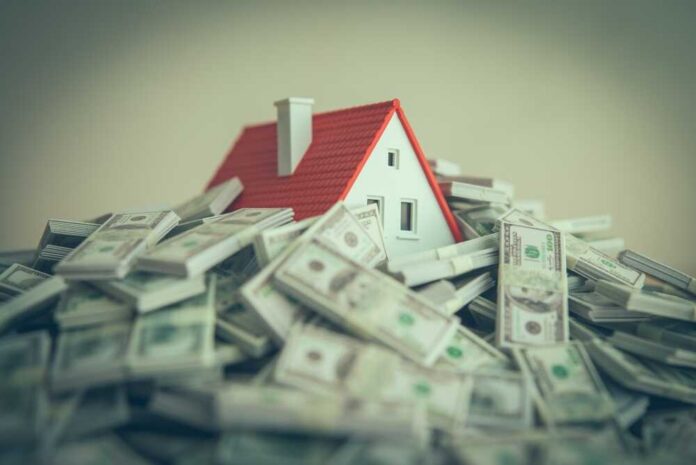
After years of soaring prices and punishing rates, the housing crunch is no longer just blocking first-time buyers—it’s starting to push existing homeowners behind on their mortgage payments.
Story Snapshot
- Mortgage delinquency is rising as the affordability squeeze hits not only shoppers but also households already in their homes.
- Home prices climbed more than 50% from 2020 to late 2025, creating payment pressure and shrinking mobility in a “lock-in” market.
- Consumer sentiment has cratered, with a large share of Americans saying buying in 2026 feels unrealistic and many abandoning the homeownership dream.
- Analysts expect flat national home-price growth in 2026, but regional weakness and inventory gluts could widen the gap between winners and losers.
Delinquencies Rising as Affordability Turns Into a Household Budget Crisis
Mortgage distress is showing up in the data as affordability pressures move from “future buyers” to “current owners.” Reporting on late-2025 and early-2026 conditions indicates more borrowers are slipping behind on payments, while the market remains expensive and rates remain elevated compared with the ultra-low era.
Home prices surged more than 50% between 2020 and late 2025, outpacing income growth and leaving less room for error when household costs jump.
That shift matters because it changes the risk profile of the entire market. A buyer who can’t afford a home simply stays a renter; a homeowner who falls behind can become a forced seller or a delinquency statistic.
Data-driven analysts have also tied today’s pain to a post-COVID low in affordability measures, meaning even stable families can get squeezed when insurance, taxes, repairs, and everyday inflation stack up against a fixed paycheck.
Housing affordability isn't just hurting buyers: More homeowners are falling behind on their mortgages https://t.co/rS5dpECLAU
— CNBC (@CNBC) February 2, 2026
The “Lock-In Effect” Keeps Supply Tight and Families Stuck
Wall Street housing research has emphasized a structural trap: the “lock-in effect” created by millions of homeowners holding mortgages from the pre-rate-hike period.
When policy rates rose, many owners stopped moving because selling would mean giving up a low fixed rate and taking on a much higher payment for a comparable home. That reduces listings, props up prices, and limits family mobility—especially when job hiring slows, and households hesitate to relocate.
Limited mobility is not just an economic inconvenience; it’s a pressure valve that stops working. When people can’t easily move for work, downsize, or trade up, local markets get distorted and financial stress lasts longer.
Analysts have also noted that supply conditions vary sharply by region, with some areas seeing more construction and softer prices, while others remain tight. That unevenness can hide trouble until a weak labor market or rising household costs make delinquencies harder to ignore.
Public Confidence in Homeownership Is Eroding—And That Has Political Consequences
Survey data shows the affordability crisis is crushing the “American Dream” narrative that anchored middle-class expectations for decades. A national survey released in late 2025 found a growing share of Americans saying buying a home in 2026 is unrealistic, and a large group reporting they no longer view homeownership as achievable.
The same data underscored that affordability math—prices and overall living costs—has become a larger barrier than rate headlines alone.
For conservative voters, that shift lands in a familiar place: families feel punished for playing by the rules while policy elites keep pushing the same old answers.
The research does not place blame on a single program or party, but it does show a broad affordability breakdown after years in which prices rose far faster than incomes.
When homeownership becomes a luxury, community stability weakens, household formation slows, and families become more dependent on volatile rents and government programs.
What 2026 Signals: Flat Prices Nationally, Regional Weak Spots, and Watch-The-Data Risks
Forecasts for 2026 point to a market that is “resilient” on the surface but stagnant underneath. Major research outlooks expect roughly flat national price growth, with demand supported at the margins by tactics like mortgage buydowns and the possibility of lower adjustable-rate costs.
At the same time, real-time price models and regional reporting suggest certain metros are cooling, with slower sales and longer time on market in some areas.
That combination—flat prices plus rising delinquencies—creates a situation where families can’t count on easy equity gains to bail out a tight budget. If delinquencies climb meaningfully, it can spill into forced selling and localized price drops, even if the national number looks calm.
Policy ideas in circulation include measures targeting institutional buyers and broader housing initiatives, but research summaries caution that some moves may have limited reach given the small share of purchases by large investors.
For homeowners watching this unfold, the practical takeaway is simple: the risk is no longer theoretical and no longer confined to “other people.” Families should track local inventory, insurance, and tax changes, and labor-market conditions because those factors often determine who gets squeezed first.
The available research points to a fragile balancing act in 2026—one where improved applications and “resilience” headlines coexist with real payment stress and a public losing faith in attainable homeownership.
Sources:
https://www.jpmorgan.com/insights/global-research/real-estate/us-housing-market-outlook
https://www.scotsmanguide.com/news/62-percent-of-americans-say-buying-a-home-in-2026-is-unrealistic/
https://www.dallasfed.org/research/economics/2026/0115
https://www.redfin.com/news/housing-market-predictions-2026/
https://www.housingwire.com/articles/housing-market-resilient-2026/