

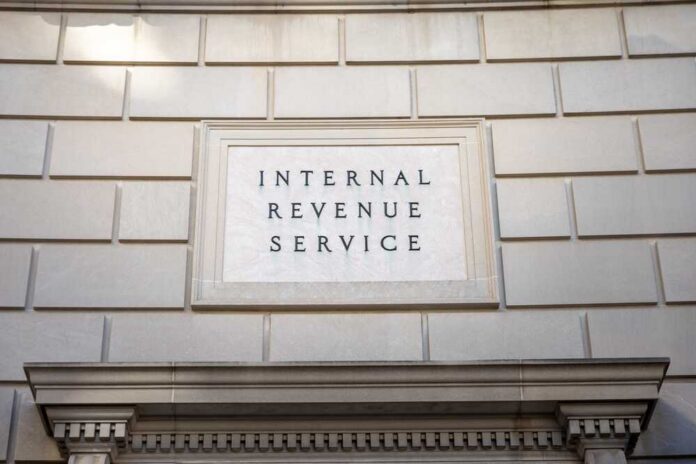
The American tax system now forces some identity theft victims to live in financial limbo for nearly two years before the government returns money that already belongs to them.
Story Snapshot
- Average IRS identity theft victim waits about 22 months for a refund, far beyond agency goals [1].
- Backlog hovers around 500,000 cases, despite new funding and claims of “improved service” [1][8].
- National Taxpayer Advocate calls these delays “unconscionable” and “unacceptable” for ordinary Americans [1][2].
- IRS blames fraud prevention and legacy systems, while victims struggle with rent, bills, and basic stability [5].
Identity theft turns tax season into a two-year waiting game
Identity theft used to mean a stolen credit card and a phone call to the bank. Now it can mean the federal government holds your tax refund for almost two years while you wait and worry.
The National Taxpayer Advocate reports that victims of tax-related identity theft waited an average of 676 days for the Internal Revenue Service to resolve their cases and release refunds in fiscal year 2024, up from 556 days in 2023 [1]. That is not a glitch. That is the new normal.
Identity theft victims face 'unconscionable' IRS delays, report says https://t.co/Cr9SmTBeou
— CNBC (@CNBC) June 24, 2026
These are not edge cases buried in some niche corner of the system. The report says almost half a million taxpayers were impacted in 2024 alone [2].
Another analysis describing the 2024 filing season notes about 500,000 identity theft victim assistance cases still sitting in inventory as of April, with cycle times beyond 22 months [8].
When an oversight office inside the Internal Revenue Service uses words like “unprecedented delays” and “unconscionable,” it signals that this is systemic failure, not bad luck [1].
How a stolen Social Security number traps you in IRS purgatory
Tax identity theft starts when someone files a false return using your Social Security number, grabbing the refund before you even file. When you send in your real return with an identity theft affidavit, it does not trigger a rapid rescue.
Instead, your paperwork joins a slow-moving queue inside the Identity Theft Victim Assistance unit. Average resolution time has exploded from about 117 days in 2019 to well over a year and a half, and now more than 22 months [1][4]. During that entire time, the government sits on your money.
The Taxpayer Advocate explains that once victims submit the required form and a paper return, they may not hear from the Internal Revenue Service again for “many, many months” [1]. Meanwhile, the agency still tells taxpayers the goal is to resolve these cases within 120 days.
Internal guidance recently raised the official expectation to about 640 days, yet the actual average is even worse at 676 days [1]. When the government quietly shifts its standard from four months to nearly two years, that is not customer service. That is moving the goalposts.
Legacy systems, manual work, and a convenient excuse
The Internal Revenue Service blames much of this on “legacy systems” and pandemic disruptions, and there is some truth there. The Taxpayer Advocate documents about 60 different case management systems that cannot easily talk to one another, forcing staff to jump between platforms and manually piece together a taxpayer’s story [1].
The agency still transcribes paper returns digit by digit, a 20th-century process trying to keep up with 21st-century fraud volume [4]. This is not what a modern, well-funded federal agency should look like.
During the pandemic, the Internal Revenue Service shifted employees to phone lines and other priorities, which pushed identity theft cases to the back burner and stretched cycle times from months to years [4].
That explains how the problem started. It does not justify why it continues, even after the agency received a major funding boost and now touts broad improvements in service.
When a core function like paying law-abiding citizens their own money breaks this badly, “legacy” is not a defense. It is an admission.
Fraud prevention or quiet war on the honest taxpayer?
The agency and its allies push another narrative: long delays are the price of stopping fraud. Reports highlight billions in fake refunds blocked and hundreds of thousands of suspicious returns resolved without ever contacting taxpayers [6][8].
No reasonable person wants fraudsters looting the treasury. Yet that claim hides a key fact. The people stuck in the Identity Theft Victim Assistance backlog are not question marks. They are confirmed victims, the very taxpayers the fraud system is supposed to protect.
Unconscionable is doing heavy lifting in that headline. IRS identity theft backlog has been broken for years
— Volodymyr Pavlenko (@mindinpanic) June 24, 2026
The Taxpayer Advocate flatly states that delays of nearly two years “make a mockery of the right to quality service” promised in the Taxpayer Bill of Rights [8]. For many low and middle-income families, a refund is not bonus money. It pays rent, keeps the lights on, fixes the car so they can get to work [5].
When Washington holds those dollars for 22 months while citing “security measures,” it crosses the line between prudence and punishment. Common sense says you do not fight fraud by harming the people who already got robbed.
What reform would look like if taxpayers truly came first
The National Taxpayer Advocate is not simply complaining. She is calling for a hard reset. Recent reports urge the Internal Revenue Service to cut identity theft case resolution to 90 days or less and to keep staff in the victim assistance program instead of reassigning them every filing season [2].
She also recommends Congress require the agency to act on refund claims within one year and face consequences when it fails [2]. That is one way to push the bureaucracy to remember that taxpayers are not the enemy.
The path forward is clear: fix the systems, digitize the paper, collapse the tangle of case platforms into one coherent view, and track cycle times in weeks, not years. Fraud prevention matters, but it cannot become a permanent excuse for grinding honest Americans through a maze they did not create.
Identity theft may be the crime, yet the drawn-out response has become its own kind of injury. When a government takes nearly two years to admit you are you and return your money, the word “unconscionable” is not hyperbole. It is plain English.
Sources:
[1] Web – Identity theft victims face ‘unconscionable’ IRS delays, report says
[2] Web – Identity Theft Victims Are Waiting Nearly Two Years to Receive Their …
[4] Web – NTA Issues Mid-Year Report to Congress 2026 – TAS
[5] Web – [PDF] PROBLEM TITLE IDENTITY THEFT – Taxpayer Advocate Service – IRS
[6] Web – Identity Theft Awareness and Update on IRS Processing of Identity …
[8] Web – IRS delays in resolving identity theft cases are ‘unconscionable,’ an …