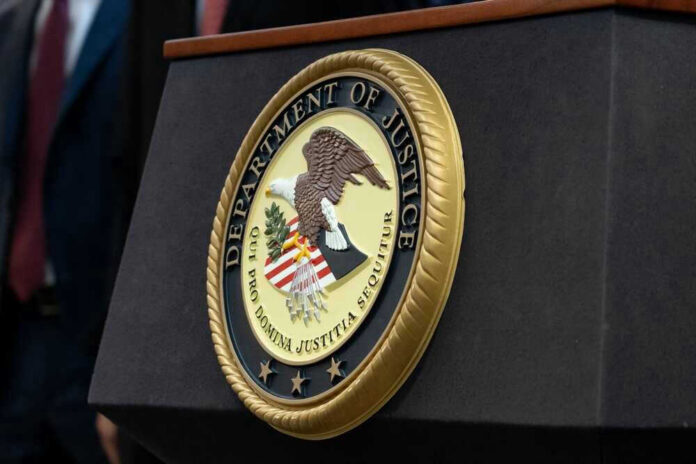
One federal judge just turned the Trump administration’s Minnesota subpoena fight into a lesson on power, restraint, and what counts as a real investigation.
Quick Take
- A federal judge blocked subpoenas sent to Governor Tim Walz and other Minnesota officials.
- The court said the subpoenas looked more like pressure than a criminal probe.
- The dispute grew out of a broader immigration crackdown in the Minneapolis-St. Paul area.
- The ruling sharpened a bigger fight over how far Washington can push states on immigration.
Why the Judge Said No
U.S. District Judge Patrick Schiltz ruled that the Justice Department’s subpoenas had the “dominant purpose” of coercing state officials and retaliating against them for not helping federal immigration enforcement[2].
He said the links between the records sought and any crime were “extremely weak to nonexistent,” and he wrote that the department had failed to identify a single plausible investigatory reason for the demand[2].
That is the heart of the story. The government said it was investigating obstruction. The judge said the paperwork looked like a tool for pressure, not proof. He also said the subpoenas targeted conduct the Constitution protects, including public criticism and decisions about how a state uses its own resources[2].
How the Fight Started
The subpoenas were issued in January as part of an investigation into whether Walz, Minneapolis Mayor Jacob Frey, Attorney General Keith Ellison, St. Paul Mayor Kaohly Her, and county officials obstructed immigration enforcement[9].
Federal prosecutors tied the probe to a sweeping operation in the Minneapolis-St. Paul area, where Border Patrol Commander Gregory Bovino said more than 3,000 arrests came in six weeks and more than 10,000 arrests came in the past year[9].
That detail matters because it shows the administration wanted the public to see an active enforcement campaign that needed help, not resistance. But the judge did not buy the leap from broad enforcement to a criminal case against elected officials. He drew a sharp line between lawful disagreement over policy and evidence of a real conspiracy[2].
Why the Ruling Hits Hard
The ruling lands on a sensitive point in American politics: states do not have to volunteer their own manpower to enforce federal civil immigration law. The judge said Minnesota had the legal right not to devote state resources to that mission[2]. That matters because the subpoenas reached into speech, policy choices, and local priorities, not just secret records or obvious criminal acts.
The case also fits a larger pattern. Immigration scholars have long argued that federal agencies use subpoena power to pry into sanctuary-style resistance and make state and local governments act like “unwilling partners” in federal arrests and detention[17]. That history gave this dispute a wider meaning than one fight over Minnesota records. It turned a local clash into a test of federal pressure tactics.
Federal judge has halted the Trump administration effort to subpoena Minnesota Gov. Tim Walz and others in an immigration enforcement probe.https://t.co/gekujqp1MM
— Gary Buckley™ (@myrddenbuckley) June 22, 2026
There is also a political reality here. A ruling from a conservative judge is harder for the administration to dismiss as partisan theater. When a George W. Bush appointee says the grand jury process is being used for “other unlawful purposes,” the argument stops sounding like a cable-news slogan and starts sounding like a serious constitutional problem[2].
What Comes Next
The immediate effect is simple: the subpoenas are blocked. The larger question is harder. If the Justice Department wants to keep digging, it will need a cleaner legal theory and stronger facts. The court’s opinion suggests that public criticism of federal policy is not enough, and that a real criminal case must show something far more concrete than political defiance[2].
That is why the next round of evidence matters so much. If federal officials have documents showing a real obstruction conspiracy, they will need to put them on the table. If they do not, the case will keep looking like an attempt to punish state leaders for refusing to help Washington do the job itself[2][9].
Sources:
[2] Web – DOJ subpoenas Walz amid immigration enforcement crackdown in …
[9] Web – Justice Department subpoenas Walz and others in immigration …
[17] Web – Federal judge rules subpoenas linked to immigration crackdown …