

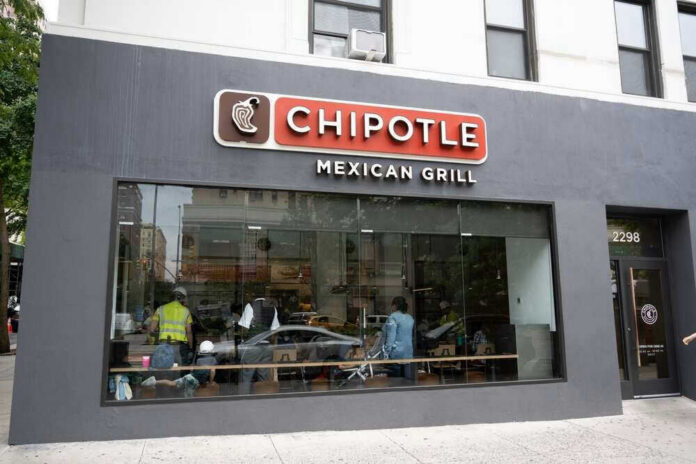
One lunch at a Roseville Chipotle turned into a hospital stay, a sepsis diagnosis, and now a lawsuit that reaches far beyond one Minnesota woman.
Quick Take
- Kristen Behne says she got sick after eating a Chipotle chicken burrito bowl in Roseville, Minnesota, on June 24, 2026.
- Her lawsuit says she later developed salmonella and sepsis, then lost consciousness and needed hospital care.
- Health officials linked the broader outbreak to jalapeño peppers served at Chipotle and other quick-service restaurants.
- The case shows how foodborne illness claims often move from public health tracing into civil court.
A Meal, a Collapse, and a Lawsuit
Behne filed suit in federal court in Minnesota, accusing Chipotle Mexican Grill of serving contaminated jalapeño peppers that caused her infection.
Reporting on the complaint says she ate the burrito bowl at the Roseville location and became ill about 76 hours later, which fits the timing health officials often see in salmonella cases.
That timing matters because the lawsuit does more than tell a sick-day story. It tries to connect a single meal to a wider outbreak already under public health review.
Chipotle has said it removed jalapeños from restaurants after they were suspected in the outbreak, a move that signals a problem serious enough to act on quickly.
How the Outbreak Became a Court Case
Public health investigators had already been tracking a salmonella cluster in Minnesota before Behne’s suit reached the headlines. Minnesota health officials had identified more than 100 Salmonella Javiana cases tied to the outbreak, and later reporting placed the broader count even higher.
That kind of outbreak work usually starts with shared exposure patterns, then adds lab and traceback evidence to narrow the source.
Minnesota woman hospitalized with sepsis sues Chipotle over salmonella outbreak tied to jalapeño peppers https://t.co/Xxqre0TKmX
— CBS Mornings (@CBSMornings) August 6, 2026
Those details help explain why this case will matter to both lawyers and food safety experts. In this kind of lawsuit, the plaintiff argues that the timing, symptoms, and outbreak link point to one contaminated meal.
The defense usually focuses on whether the plaintiff can prove the exact food item and the exact source with courtroom-level certainty. That tension is common in foodborne illness cases.
Why This Case Resonates Beyond One Plaintiff
Food poisoning cases often sound simple until the stakes get real. A stomach illness can end at home with a few bad hours, or it can turn into dehydration, organ stress, or sepsis. Behne’s case sits on the severe end of that scale, which is why it has drawn attention well beyond Minnesota.
The lawsuit also arrives in a climate where consumers expect chains to control ingredient risk across many stores at once. Jalapeños are small, but they move through a large supply chain, and one weak link can spread trouble fast.
When a restaurant responds by pulling a produce item nationwide or across multiple stores, it usually tells you the chain sees the danger as real, not theoretical.
Behne is seeking damages, but the bigger story is the collision between a personal injury claim and a public health event. If the outbreak evidence holds, her case could become one more example of how a single customer’s bad meal can expose a much larger supply chain failure.
If it does not, the lawsuit still shows how quickly outbreak fears can move from the dinner table to federal court.
Sources:
cbsnews.com, fox9.com, globalnews.ca, kstp.com, nbcnews.com, bloomberg.com, wsj.com, usatoday.com