

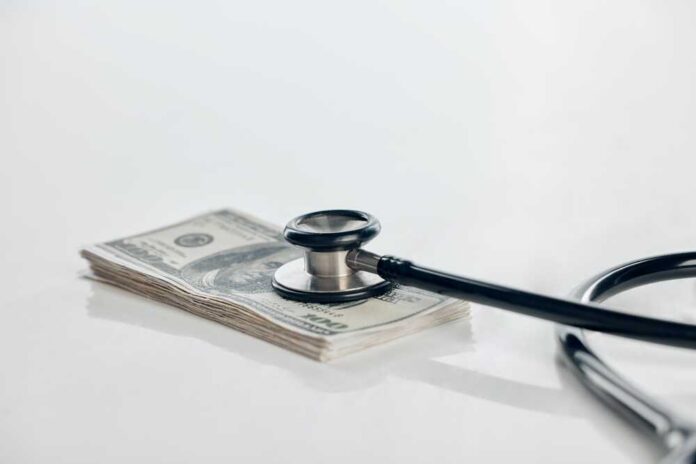
Hospitals across the country now ask patients to pay before they even see a doctor, and the reason comes down to simple math: collecting money after treatment has become a losing bet.
Story Snapshot
- Hospitals increasingly require patients to pay deductibles or estimated costs before scheduled procedures, not just after care is billed.
- Rising high-deductible health plans mean patients now owe thousands more out of pocket, making post-service collection slower and less reliable.
- Roughly three in four hospital and health systems already use “point-of-service” collection practices, according to an industry trade group estimate.
- Federal law still bars hospitals from demanding payment before stabilizing true emergencies, even as prepay rules expand for elective care.
Why Hospitals Are Changing How They Collect
Hospital finance teams have shifted their approach because the old system no longer works. For decades, providers billed insurance first and chased patients for leftover balances later. Now that leftover balance is often the biggest piece of the bill, and hospitals say waiting to collect it invites losses they can no longer absorb.
Wall Street Journal healthcare reporter Melanie Evans put it plainly: collecting money after treatment costs hospitals time and staff resources, while collecting it beforehand is faster and cheaper. That basic cost calculation is driving more facilities to ask patients to settle their full deductible before a scheduled surgery even happens.
The trend of hospitals asking for money up front represents a double whammy for patients. https://t.co/fzo3BqGvs7
— CBS Miami (@CBSMiami) August 12, 2026
This is not a fringe practice anymore. Richard Gundling, a senior vice president at the Healthcare Financial Management Association, has estimated that about three-quarters of hospital and health systems now ask for payment at the time care is delivered, a method the industry calls point-of-service collection.
What was once reserved for uninsured patients now applies broadly to people with coverage, because their coverage no longer means small bills.
Deductibles Have Quietly Exploded
The driving force behind this shift is the spread of high-deductible health plans. These plans often carry deductibles between fifteen hundred and eight thousand dollars per person before insurance pays a dime, leaving patients responsible for a much larger slice of any hospital bill.
That growth turned patient balances from an afterthought into a major revenue category hospitals actively manage.
Hospital collection data shows why providers are nervous. Once a patient’s owed balance climbs into the thousands of dollars, the odds of actually collecting it drop sharply, with one industry analysis identifying $7,500 as a “vanishing point” where recovery becomes unlikely.
Hospitals see that pattern and respond by trying to lock in payment before care begins, rather than chase it afterward.
Research also shows the money hospitals are owed keeps growing while what they actually recover keeps shrinking.
A recent cross-sectional study found patient cost-sharing repayments have become less complete in recent years, creating both mounting medical debt for families and real collection shortfalls for hospitals and clinics. That squeeze cuts both directions, and it explains why finance departments are rewriting their playbooks.
What This Means for Patients Walking Into the Hospital
For patients, the change means a new conversation happens before treatment, not after. Front-desk staff now ask for deductible payments, estimated procedure costs, or a portion of expected charges before scheduling surgery or even before discharge.
Some providers frame this as a courtesy that prevents surprise bills later, while patients often experience it as a financial hurdle layered on top of an already stressful medical decision.
Federal protections still apply in true emergencies. The Emergency Medical Treatment and Labor Act requires hospitals to stabilize and treat anyone arriving with an urgent medical crisis, regardless of ability to pay upfront.
That law has not changed. What has changed is everything outside the emergency room door, where scheduled and elective care increasingly comes with a price tag due at check-in.
Patient advocacy groups argue the real fix is transparency, not just faster collection. Polling cited by patient advocates found strong public support, with eighty-one percent of voters backing rules that force providers to disclose facility fees before a patient is even seen.
That kind of upfront clarity, supporters argue, would let families plan and shop for care instead of being blindsided at the counter.
A Trend Two Decades in the Making
None of this happened overnight. Reporting on hospitals pushing for payment before treatment stretches back to the mid-2000s, and the pattern has only deepened as deductibles climbed year after year.
What used to be an occasional request has become standard operating procedure across most of the hospital industry, reshaping how Americans experience the moment before they receive care.
Hospitals push for upfront payments as patient deductibles and out-of-pocket costs rise – CBS News https://t.co/R8ADcliL6R
— lycangal29 (@lycangal29) August 12, 2026
The underlying tension is not going away. Patients are carrying more financial risk than ever before, and hospitals are structuring their business around collecting that risk as early as possible.
Until deductibles shrink or transparency rules force clearer pricing, expect the request for payment to keep moving earlier in the process, right up to the moment a patient walks through the door.
Sources:
cbsnews.com, pnhp.org, wsj.com, fiercehealthcare.com, abc15.com, pmc.ncbi.nlm.nih.gov, unitedstatesofcare.org