Social Security’s main trust fund is set to run low in 2032, and a top Senate Republican says the program was never the personal investment account generations of Americans were told it was.
Story Snapshot
- Senate Budget Committee Chairman Ron Johnson released a memo calling Social Security “a legal Ponzi scheme” ahead of a budget hearing.
- The Social Security Trustees project the Old-Age and Survivors Insurance Trust Fund will pay full benefits only until the fourth quarter of 2032.
- After that date, payroll tax revenue alone would cover roughly 78 percent of scheduled benefits, not zero.
- The Social Security Administration’s own actuaries have scored legislative fixes, including one that would extend full solvency for decades.
A Senator’s Blunt Warning Lands With A Thud
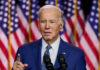
Johnson did not soften his language. His hearing memo, titled “Social Security: The Reality… a Legal Ponzi Scheme,” argues that politicians sold the public on “the fiction that their entire payroll deduction for Social Security was being invested in a real asset.” He wrote plainly that nothing could be further from the truth. The memo frames decades of official messaging as a deliberate misdirection, not a financing quirk.
FIRST ON FOX: Senate Budget Committee Chair Ron Johnson rips Social Security in an explosive new report, warning Americans have been "scammed" for decades by how the government handles the program.
Johnson's report, first obtained by Fox News Digital, lays out a blunt case: the… pic.twitter.com/2wKTGWzvrR
— Fox News Politics (@foxnewspolitics) November 18, 2026
That framing matters because most workers assume their payroll taxes sit somewhere earning interest, waiting for them. They do not. Trust fund balances are Treasury securities, meaning the government owes itself money backed by future tax collections, not a pile of invested cash sitting in an account with your name on it. That is a legitimate structural point, even if “Ponzi scheme” is Johnson’s own characterization rather than a legal finding.
What The Trustees Actually Project
The Social Security Trustees’ 2026 summary says the Old-Age and Survivors Insurance Trust Fund can pay 100 percent of scheduled benefits only through the fourth quarter of 2032. After that, continuing payroll tax income would still fund about 78 percent of scheduled benefits, according to reporting on the same projection. That is a serious cut for retirees living on fixed incomes, but it is not the complete shutdown some headlines imply.
The American Academy of Actuaries reached a similar conclusion in its review of the 2025 report, projecting that combined Social Security reserves would support about 81 percent of scheduled benefits once depletion hits. The exact depletion year has moved before. The 2026 estimate shifted one quarter earlier than the prior year’s forecast, and separate actuarial materials use 2034 when looking at the combined trust funds rather than the retirement fund alone. The date is a moving target built on economic assumptions, not a fixed deadline carved in stone.
Washington Has Faced This Cliff Before
This is not the first time Social Security stared down a deadline. In 1981, officials warned the retirement trust fund could run dry by August 1983. President Reagan convened a bipartisan commission chaired by Alan Greenspan, and Congress passed a 1983 law combining tax increases, delayed cost-of-living adjustments, new taxation of benefits, and a gradually rising retirement age. The fix held for decades, proving the program’s problems have historically been solvable through legislation, not inevitable collapse.
The Social Security Administration’s own Office of the Chief Actuary has kept scoring similar options ever since. One proposal from Representative Steny Hoyer and policy advisor Wendell Primus was estimated to restore full 75-year solvency by raising the taxable maximum, redirecting benefit-tax revenue back into the trust funds, and adjusting the retirement age for higher earners. A separate option applying payroll taxes to earnings above $400,000 was projected to push depletion out to 2066, adding 32 years of full solvency on its own.
Why The Fight Over Language Matters
Calling the program a “Ponzi scheme” is a political analogy, not a court ruling or statutory finding. No judge or regulator has determined Social Security meets the legal definition of fraud. Critics on the left seized on the phrase quickly, and social media reaction split along predictable lines, with some users noting that classic Ponzi schemes require someone profiting from the deception, which does not cleanly describe a public pension system.
Still, Johnson’s underlying argument deserves a fair hearing stripped of the loaded label. Americans were told for decades that their payroll deductions functioned like a retirement account. That was never accurate, and the trust fund math backs him up on the core financing structure. The real debate conservatives should press is not whether the phrase is perfectly precise, but whether Congress will act before 2032 the way it acted in 1983, instead of letting a fixable problem turn into a forced benefit cut for seniors who paid in their whole working lives.
Sources:
spectrumlocalnews.com, cbs8.com, pbs.org