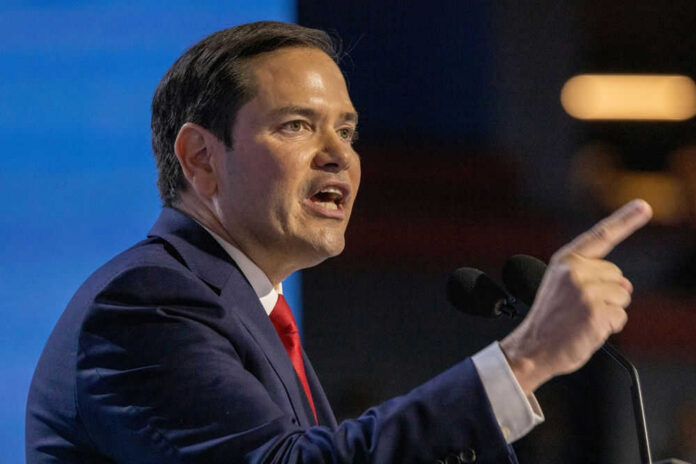
Secretary of State Marco Rubio is drawing a line in the sand over María Corina Machado’s return to Venezuela, insisting she has every right to enter her own country as questions swirl over alleged efforts to block her journey.
Story Snapshot
- Machado returned after reported blocked entries and route denials across the Caribbean.
- Opposition precinct tallies claim Edmundo González Urrutia won by a wide margin in 2024.
- Venezuela’s electoral body announced a different winner and never published full polling-station data.
- U.S. Secretary of State Marco Rubio affirmed Machado’s right to enter and denied U.S. interference.
A Return That Reopens The Core Dispute
Machado’s arrival forces the central question back into view: who holds the public mandate? The opposition cites precinct-level tally sheets that show Edmundo González Urrutia with about two-thirds of the vote and Nicolás Maduro near thirty percent. Venezuela’s electoral authority announced the opposite outcome and did not release complete polling-station results. That clash explains why her return matters. It is not a mere homecoming; it is a walking reminder of a contested ledger and an unfinished count.
Her team documented repeated attempts to return across months. Reports describe flight plans through Caribbean islands, denied landing permits, and blocked routes. One plan used Curaçao as a gateway, but the aircraft did not receive required permissions. Venezuelan authorities publicly rejected claims that they blocked her entry, even as separate accounts detailed three failed attempts within twenty-four hours in late September. Those efforts built pressure for a definitive break in the stalemate.
What The Tallies Say Versus What The State Declared
The opposition’s data-driven claim is simple: election-day precinct tallies show González Urrutia clearly ahead. The numbers they published point to a landslide, not a squeaker. Venezuela’s National Electoral Council announced a different winner and a much tighter race. It also withheld the full station-by-station results that would let the public compare sheets to totals. That choice left voters with two stories and no shared spreadsheet to settle the argument.
The Carter Center added weight to the governance critique. Its mission concluded the 2024 vote did not meet international standards and could not be considered democratic. It also noted the failure to publish the granular returns that allow independent checks. That finding fits a broader pattern seen in stressed democracies: the fight shifts from ballots to control of the paperwork after the vote. In that vacuum, a return by a high-profile opposition leader becomes a test of will and process.
Rubio’s Message And The Foreign-Pressure Rumors
United States Secretary of State Marco Rubio said Machado, a Venezuelan citizen, has every right to enter her country and added that the United States wanted her safety guaranteed. He also directly rejected claims that Washington asked any government to stop her flights or block her entry. His denial closed a loop of rumor that had spread as flights stalled and permits lapsed. The policy signal was clear: support her legal right, do not own the logistics.
That stance squares with basic conservative sense: borders belong to the nation, but citizens have the right to come home. The state’s job is to protect that right, not play games with routes and paperwork. If leaders claim order and safety, they should publish the records that prove orderly conduct. Sunlight should be easy for anyone with nothing to hide. When gatekeepers hold the data hostage, they invite doubt and breed more conflict than they prevent.
After more than 10 months in exile, Venezuelan opposition leader and Nobel laureate María Corina Machado has returned home.
"I am here. With you," Machado announced on X Sunday morning shortly before other members of the opposition confirmed her arrival without providing… pic.twitter.com/TGDEIErXrg
— CNN (@CNN) October 25, 2026
Why Machado’s Presence Now Matters On The Ground
Her return compresses politics into real life. It challenges the use of administrative hurdles to manage dissent. It stresses a security narrative that has often justified arrests, bans, and selective access. It also offers a rally point for millions who read the precinct sheets one way while hearing the nightly news say another. Even those who differ with her strategy can see the principle at stake: a citizen’s right to reenter, speak, and compete in the open.
The weakest link in her claim is not moral; it is structural. The tallies point to González Urrutia’s win, not a vote count for Machado herself. She stands as the face and organizer of that mandate, not its direct ballot measure. That gap does not erase the data; it does set the legal chessboard. Resolving it requires transparent records, lawful venues, and credible referees. None of those steps work without the country’s doors open and its opposition leaders present.
What To Watch Next
Three things now matter most. First, whether authorities allow Machado and her team to move, meet, and speak normally. Second, whether any institution finally releases the full polling-station results that can be checked against opposition sheets. Third, whether airlines and airports handle her travel without mysterious permit snags; if those basics hold, the political contest returns to the public square. If not, the story returns to tarmacs, denials, and locked files.
The blunt truth remains the same. Publish the data, let citizens assemble, and let leaders return. Countries grow stronger when the scoreboard is visible, and the gates are open.
Sources:
youtube.com, inquirer.com, congress.gov, efe.com, kansas.com