
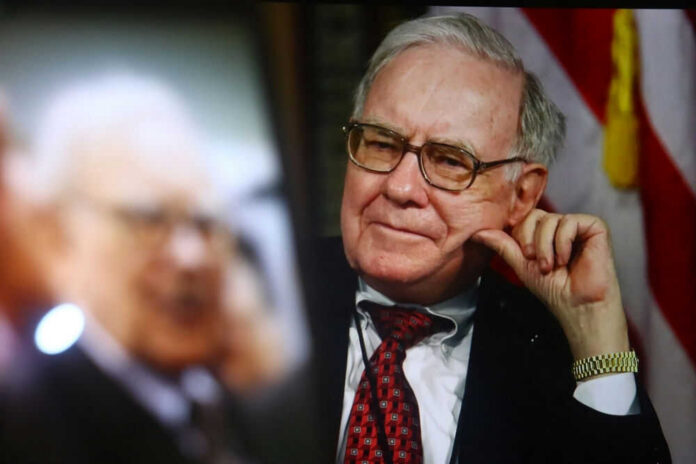
Warren Buffett ended a six-decade run as Berkshire Hathaway’s chair and moved to chairman emeritus, locking in the final step of a long-planned handoff.
Story Snapshot
- Buffett stepped down as Berkshire Hathaway chair, effective immediately.
- He becomes chairman emeritus and stays on the board as a director.
- Howard G. Buffett succeeds him as non-executive chair.
- Greg Abel continues as chief executive, completing the split roles plan.
What Changed At The Top And Why It Matters
Berkshire Hathaway said Buffett stepped down as chair and became chairman emeritus, effective right away. The board elected his son, Howard G. Buffett, to serve as non-executive chair. Buffett remains a director.
The move caps a drawn-out plan that the company and Buffett have flagged for years. It keeps decision power in clear lanes: Greg Abel runs operations as chief executive, while the board chair oversees governance and culture. That clarity reduces uncertainty and protects Berkshire’s model.
Buffett told shareholders the timing is right to complete the transition and that he will continue to advise from the board. He framed the shift as part of a steady march, not a shock. Markets dislike drama; Berkshire avoided it.
The structure fits a common playbook for founder-led giants: move responsibility in stages, reveal successors earlier, and cement roles only when the bench has proven itself. Berkshire now matches that textbook.
How The New Lineup Works Day To Day
Greg Abel, already running most noninsurance operations for years, remains chief executive. He leads capital allocation with input from the board and the investment team. Howard Buffett’s chair role centers on board leadership and preserving Berkshire’s owner-oriented culture.
Susan Decker remains lead independent director. This setup separates management from oversight. It also mirrors prior guidance that the chief executive and the chief investment officer functions would be split to avoid key-person risk at the top.
Warren Buffett stepping down as chairman of Berkshire Hathaway: 'Father Time always wins' https://t.co/dVEq7iNXDL
— CNBC (@CNBC) September 18, 2026
Buffett stays on the board as chairman emeritus. That title signals respect and access without muddling lines of authority. Shareholders still gain from his judgment, but the team charged with today’s calls owns them.
Berkshire has tested this model in public for several years, first by elevating Abel and by broadening the voices in investment. The new stage makes the implicit explicit and gives the market a stable map of who does what, and when.
What Stays The Same: Culture, Cash, And Common Sense
Berkshire’s engine—insurance float, disciplined deals, and decentralized autonomy—remains in place. The company will still prize simple rules: keep ample cash, avoid forced selling, and buy only when price and quality meet.
Shareholders care less about slogans and more about whether leaders say no when a deal fails the test. The structure aims to keep that spine straight even as the legend steps back.
Warren Buffett stepped down as Berkshire Hathaway chairman at 96, ending 56 years in the role. He's now chairman emeritus. Son Howard takes the chair, Greg Abel stays CEO.
Buffett called it: Father Time always wins.
Succession planned this carefully isn't retirement. It's…
— The Nomadic Goat (@thenomadicgoat) September 20, 2026
Some will say only Buffett could steer Berkshire. The record suggests a different lesson. Systems beat slogans. When a company separates duties, grooms leaders in public, and explains its rules, it earns trust the old-fashioned way—by being predictable when it counts.
Sources:
wsj.com, nbcnews.com, bbc.com, reuters.com, nypost.com