
Dairy Queen didn’t go bankrupt — a single Texas franchise operator lost its contract, and the fallout closed roughly 25 to 30 stores almost overnight.
Story Snapshot
- American Dairy Queen Corporation revoked the franchise rights of Texas-based operator Project Lone Star for failing to remodel and modernize its stores.
- About 25 to 30 Dairy Queen locations in Texas closed in early 2025 as a direct result — not because the chain itself is failing.
- Dairy Queen is actually offering franchisees up to $200,000 in cash bonuses to open new modernized stores, showing the brand is expanding, not collapsing.
- The closures fit a wider pattern of franchisors cutting ties with operators who won’t upgrade aging locations, a trend hitting chains across the fast food industry.
One Operator’s Failure Triggered Dozens of Closures
When Dairy Queen locations started going dark across Texas in early 2025, social media erupted with claims the beloved chain was dying. The real story is far less dramatic — but it reveals something important about how the franchise business actually works.
American Dairy Queen Corporation, known as ADQ, revoked the franchise rights of a Texas operator, Project Lone Star. The reason: Project Lone Star failed to meet its contractual obligation to remodel and modernize its stores.
Dozens of Dairy Queen locations have closed across the United States as some franchise operators face financial challenges and corporate compliance disputes. https://t.co/WvcBupHQt4
— FOX 9 (@FOX9) July 11, 2026
This wasn’t a surprise attack. Franchise agreements spell out remodeling timelines in detail. When an operator signs on, they agree to keep their stores up to brand standards — or risk losing the right to operate under the name.
Project Lone Star apparently didn’t hold up its end of that deal. No public statement from Project Lone Star has challenged ADQ’s account, which leaves the corporate version of events standing without a credible rebuttal.
Dairy Queen Is Not Shrinking — It’s Pruning
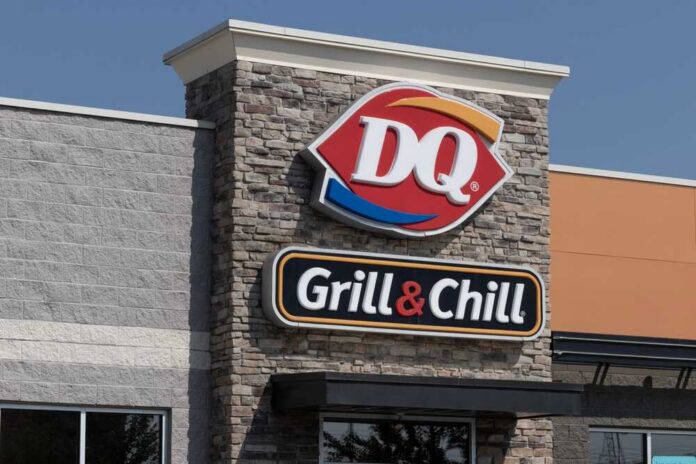
Here’s what the alarming headlines left out: Dairy Queen is actively trying to grow. The company is offering franchisees up to $200,000 in lump-sum cash payments to open new Grill and Chill prototype locations in the United States and Canada.
That is not the behavior of a chain in collapse. It’s the behavior of a brand cutting dead weight and replacing it with upgraded locations that match its current image and standards.
Starting a new Dairy Queen franchise today requires a total investment of $1.5 million to $2.5 million, including a $45,000 franchise fee and a 4% royalty on sales.
Those numbers reflect a brand that still attracts serious investors. The closures in Texas were a compliance enforcement action — a corporate clean-up — not a sign of systemic failure.
This Pattern Is Playing Out Across Fast Food Right Now
Dairy Queen is not alone in cracking down on operators who won’t modernize. Across the fast food industry, franchisors are enforcing renovation clauses more aggressively than ever. Applebee’s and IHOP closed more locations than they opened in the first half of 2025.
Rising labor and food costs, along with the pressure to fund expensive upgrades, are squeezing franchise owners who bought in during easier economic times. Some can adapt. Some can’t.
For generations of Americans, Dairy Queen wasn’t just a place to grab a Blizzard. It was where Little League teams celebrated championships, grandparents treated grandchildren after church, teenagers worked their first jobs, and small-town communities gathered on summer nights.…
— Common Sense with Chad Law (@chadparkerlaw) July 10, 2026
The math is brutal for older operators. A franchisee running a dated location faces the same royalty fees and advertising costs as a modern one, but pulls in less revenue because the store looks worn out.
When corporate demands a full remodel — which can run into the hundreds of thousands of dollars — operators with thin margins have nowhere to turn. Some negotiate. Some sell. Some, like Project Lone Star, lose their contracts entirely.
What This Means for Customers and Investors
If you live near a Dairy Queen that just closed, that’s a real loss — especially in smaller Texas towns where these stores were community fixtures for decades.
But the closure of those 25 to 30 stores does not mean your nearest Dairy Queen is next to close. It means ADQ is enforcing standards that protect the brand’s long-term value. From a business standpoint, that’s the right call, even if it stings locally.
The franchise model only works when the brand holds its value. A run-down store with a Dairy Queen sign out front hurts every other franchisee in the system.
ADQ’s enforcement action, while painful for affected communities, is exactly what a well-run franchisor is supposed to do. The chain isn’t melting. It’s just cleaning up its own house.
Sources:
franchisedirect.com, dairyqueenfranchising.com, franchising.com, restfinance.com, dol.gov, govinfo.gov