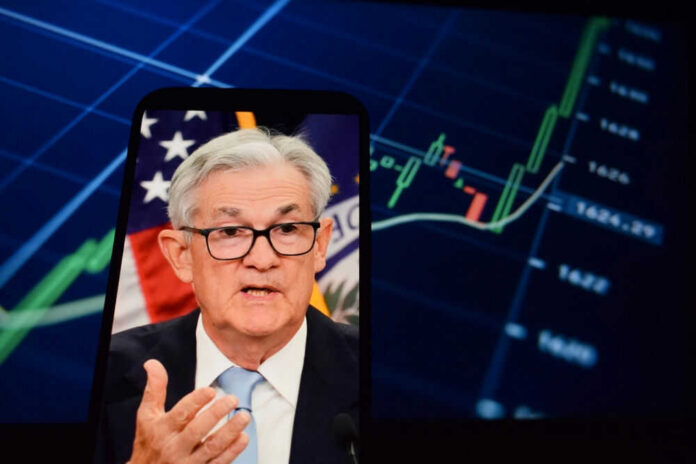
President Trump’s warning that he may “fire” Fed Chair Jerome Powell is turning a dispute over interest rates into a test of whether Washington’s most powerful institutions answer to voters or to themselves.
Quick Take
- Trump said he would remove Jerome Powell if Powell refuses to leave as his term as chair ends May 15, 2026, escalating a long-running clash over interest rates.
- Powell says he intends to stay on the Federal Reserve Board until a Justice Department investigation ends “with transparency and finality.”
- A federal judge previously blocked subpoenas tied to the probe, citing a lack of evidence presented to justify them.
- Trump’s nominee to replace Powell, Kevin Warsh, still needs Senate confirmation and faces resistance from Sen. Thom Tillis.
Trump-Powell fight shifts from rate policy to institutional power
President Trump raised the stakes in his standoff with Federal Reserve Chair Jerome Powell during a Fox Business interview with Maria Bartiromo, saying he would fire Powell if Powell does not step aside as his term as chair ends on May 15, 2026.
The dispute has simmered for months as Trump pushes for lower interest rates and Powell resists. This week, the rhetoric moved from policy disagreement to who ultimately controls key economic levers.
President Trump says he will fire Fed Chair Jerome Powell if Mr. Powell doesn't leave by May 15. A criminal probe and a defiant senator are making that easier said than done. https://t.co/9o267TvQX6
— The Washington Times (@WashTimes) April 15, 2026
Powell, for his part, has tied his decision to remain to a Justice Department investigation into his conduct related to testimony about the Federal Reserve’s multibillion-dollar headquarters renovation project. Powell has publicly stated he has “no intention of leaving the Board” until the investigation concludes.
That posture sets up a collision between an elected president’s authority and the Fed’s statutory independence—exactly the kind of governance gray area that tends to spook markets and infuriate voters.
The Powell investigation has produced legal pushback, not clear proof
The most concrete public development in the investigation so far has been judicial skepticism. Chief Judge James Boasberg blocked subpoenas served on the Federal Reserve, writing that the government produced “essentially zero evidence” of a crime and “no evidence whatsoever” that Powell did anything wrong other than “displeasing the President.”
The Justice Department also lost a bid earlier this month to revive the subpoenas, adding to questions about the probe’s foundation.
Prosecutors have continued to press forward in ways that add to the sense of an escalating institutional struggle. Federal prosecutors reportedly made an unannounced visit to the Fed’s headquarters seeking access to the renovation site but were turned away by staff.
That kind of confrontation may play two very different ways politically: many conservatives see a bureaucracy closing ranks against scrutiny, while many liberals fear executive pressure is being used to intimidate an independent central bank.
Warsh nomination and GOP friction complicate the succession plan
The succession picture is not clean. Trump has nominated Kevin Warsh to replace Powell, but Warsh has not yet been confirmed, with a Senate Banking Committee hearing scheduled for April 21. Republican Sen. Thom Tillis is publicly opposing Warsh’s confirmation unless Trump ends the Powell investigation.
With the GOP controlling Congress, internal party objections matter: they can slow confirmations, widen uncertainty, and potentially leave the Fed in a leadership limbo right when the White House wants a clear handoff.
What the dispute means for debt, rates, and “deep state” distrust
Harvard Kennedy School analysis argues Trump’s drive to remove Powell is fundamentally fiscal—aimed at lowering borrowing costs as the administration adds roughly $4 trillion to the federal debt—rather than purely about the Fed’s day-to-day rate decisions.
If that reading is correct, it underscores why this clash resonates beyond Wall Street: interest rates translate directly into mortgage payments, small-business credit, and the government’s cost to finance spending already baked into federal obligations.
What’s knowable now—and what remains unresolved
Limited public information makes it hard to assess the investigation’s merits beyond the court’s prior criticism of the subpoena effort. What is clear is that a threatened removal, a contested investigation, and an unconfirmed successor combine into a recipe for instability.
For voters already convinced Washington is run by insulated “elites,” the optics are damaging no matter the outcome: either an independent Fed appears untouchable, or law enforcement appears politicized—two failures that deepen distrust in federal institutions.
The immediate next milestones are straightforward: Powell’s May 15 end date as chair, Warsh’s confirmation hearing, and any further court actions tied to the investigation.
Until those pieces settle, Americans should expect continued political heat around the Fed—an agency that tries to operate above politics but cannot escape it when inflation, debt, and the cost of living dominate national life. The outcome will shape not only monetary policy messaging, but public confidence in who governs.
Sources:
https://newrepublic.com/post/209076/trump-threatens-fire-fed-chair-jerome-powell-time
https://san.com/cc/doj-surprise-visit-to-fed-deepens-clash-over-powell-probe/
https://www.foxbusiness.com/video/6393151484112