

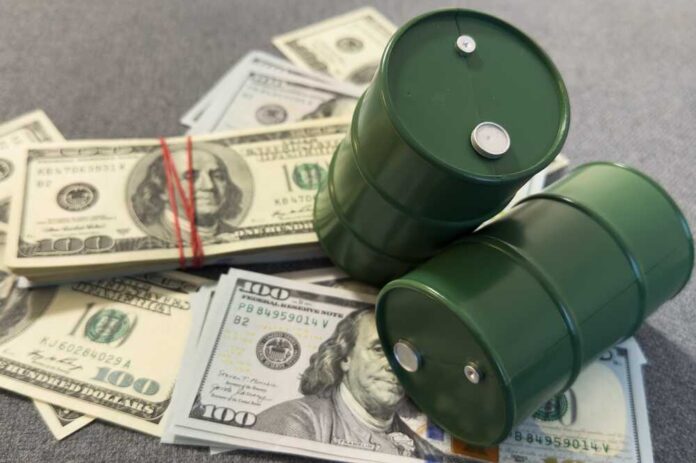
Iran’s effective chokehold on the Strait of Hormuz is now forcing U.S. allies to shut in oil they can’t even ship—pushing global prices higher and reminding Americans how fragile “energy security” really is.
Quick Take
- Kuwait Petroleum Corporation has made temporary cuts to crude production and refinery throughput amid the Strait of Hormuz disruption, which is blocking exports.
- Roughly one-fifth of the world’s oil normally transits Hormuz, so even “precautionary” cuts can ripple into U.S. fuel prices and inflation.
- Regional disruptions have piled up, including reported tanker incidents and damage to key refining infrastructure, intensifying market volatility.
- The Trump administration is moving to backstop maritime trade with political-risk insurance and potential U.S. Navy escorts.
- Experts disagree on recovery time: some warn shutdowns can permanently damage output, while others say many fields can restart in days or weeks.
Kuwait’s “Temporary” Cut Shows How a Chokepoint Can Shut Down an Oil State
Kuwait Petroleum Corporation has reduced crude output and refining throughput after escalating threats and disruptions tied to the Strait of Hormuz, the critical shipping lane through which much of the Gulf exports its energy.
Kuwait typically produces around 2.5 million barrels per day, but officials have not disclosed the volume of the reduction or a restart date. The key issue is logistics: when exports can’t move, storage fills, and producers must cut back.
The Strait’s importance is not theoretical. About one-fifth of the world’s oil normally moves through Hormuz, meaning even a partial, functional closure can become an immediate global problem.
In this episode, the disruption is driving a cascade: Qatar reportedly curtailed liquefied natural gas output first, followed by Iraq and Kuwait scaling back oil operations as the export route became unreliable. That dynamic turns a maritime crisis into a production crisis.
Attacks and Spillover Risk Are Reshaping What “Normal Operations” Means
Reports of incidents at sea and strikes on energy infrastructure have amplified the market’s fear that the disruption won’t remain contained. The research summary describes an Iranian drone targeting a tanker near Iraq’s port of Khor al Zubair and an explosion reported off Kuwait while a tanker was anchored.
It also notes a missile strike hitting Bahrain’s only oil refinery and continued closure of Saudi Arabia’s largest refinery after damage. The full damage picture remains unclear.
OIL MARKETS FACE DEEPER DISRUPTION AS PRODUCERS INCLUDING THE UNITED ARAB EMIRATES AND KUWAIT CUT OUTPUT WHILE TANKER TRAFFIC AVOIDS THE STRAIT OF HORMUZ AMID THE ESCALATING CONFLICT INVOLVING THE UNITED STATES, ISRAEL AND IRAN, PUSHING CRUDE PRICES CLOSER TO $100 A BARREL.
— First Squawk (@FirstSquawk) March 8, 2026
What stands out is how dependency differs across producers. The research cites analysis indicating Iran, Kuwait, and Qatar ship 100% of their energy exports through Hormuz, while Iraq ships 97% and Saudi Arabia 89%. The UAE is described as somewhat less exposed at 66% due to alternative pipeline capacity.
Saudi Arabia can route some cargo through the Red Sea, but those volumes are characterized as modest—insufficient to replace what normally moves through Hormuz.
Trump Administration Response: Insurance, Escorts, and Deterrence
With energy markets reacting sharply, the Trump administration has ordered the U.S. Department of Finance & Commerce to provide political-risk insurance and guarantees for maritime trade tied to Hormuz, according to the research summary. The U.S. Navy is also positioned to escort tankers if necessary.
President Trump’s demand for “unconditional surrender” from Iran on March 6 is cited as a catalyst for an additional spike in oil prices, underscoring how fast geopolitics transmits into costs.
For Americans already weary of inflation and the economic fallout of policy mistakes from the prior era, the takeaway is straightforward: energy shocks don’t stay overseas. When global crude spikes, U.S. consumers feel it at the pump, businesses see higher transport and input costs, and families get squeezed again.
The research does not quantify the full price impact on U.S. gasoline, but it does describe significant oil price volatility tied to the escalation.
Shutdowns Aren’t Just a Pause Button—And That’s the Long-Term Risk
Two expert views in the research show why this episode matters beyond the week’s headlines. Petroleum engineering professor Sid Misra warns that shutting in wells can cause irreversible loss because water can rush into pore space and trap oil, leaving some barrels permanently unrecoverable even after operations resume.
Energy analyst Pavel Molchanov counters that many Middle Eastern fields have a history of modulating output and could return in days or weeks, depending on the field.
*KUWAIT CUTS OIL PRODUCTION AS STRAIT OF HORMUZ CLOSURE DISRUPTS GLOBAL ENERGY MARKET pic.twitter.com/VKGimtkKQI
— Investing.com (@Investingcom) March 8, 2026
The honest conclusion from the available reporting is uncertainty: Kuwait hasn’t provided cut volumes or a resumption timeline, and longer-term outcomes hinge on whether shipping can be secured and whether infrastructure damage expands.
What is clear is the America-first lesson for 2026: the U.S. remains exposed when hostile actors can threaten a single maritime chokepoint that the world’s energy system still depends on, and credible deterrence is not optional.
Sources:
Kuwait Cuts Oil Production Amid Iran Threats to Strait of Hormuz
Iran wear energy prices Iraq Kuwait shut oil production