

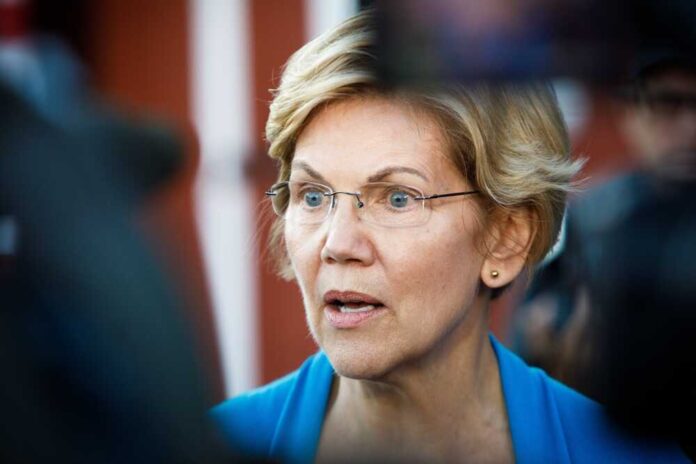
President Trump’s unexpected alliance with Elizabeth Warren on capping credit card rates at 10% has sent shockwaves through Wall Street and exposed deep divisions within the Republican Party over financial regulation.
Story Highlights
- Trump personally called Warren after her speech criticizing his affordability record to discuss bipartisan credit card rate caps
- The President’s 10% interest rate proposal caused immediate bank stock declines, signaling serious market concern
- House Republicans face pressure to support populist financial regulation that contradicts their traditional pro-business stance
- Warren leveraged public criticism to secure direct presidential engagement on consumer protection legislation
Trump’s Populist Financial Gambit
President Trump’s Friday proposal to cap credit card interest rates at 10% for one year represents a dramatic shift from traditional Republican economic philosophy. The announcement immediately triggered declines in banking stocks, demonstrating Wall Street’s alarm over potential government intervention in private lending markets.
Trump’s willingness to challenge financial sector profits signals his commitment to populist messaging that resonates with working-class Americans struggling under crushing debt burdens.
Sen. Elizabeth Warren says Trump called her(!) after her speech at @PressClubDC and they talked about capping credit card interest rates and her housing bill. pic.twitter.com/L9LPMzOPCH
— bryan metzger (@metzgov) January 12, 2026
Warren’s Strategic Political Maneuvering
Senator Warren’s Monday morning speech criticizing Trump’s affordability record proved strategically effective in securing presidential attention. Her direct challenge prompted Trump to personally call her that same day, creating an unprecedented dialogue between two historically antagonistic political figures.
Warren confirmed she told Trump that “Congress can pass legislation to cap credit card rates if he will actually fight for it,” demonstrating her ability to leverage public pressure into meaningful political engagement.
Republican Congressional Dilemma
The credit card rate cap proposal places House Republicans in an uncomfortable position between supporting their president and maintaining traditional pro-business principles. Banking industry opposition runs deep, with financial sector allies expressing concern over regulatory intervention that could reduce profit margins significantly.
Republican lawmakers must now choose between populist appeal and long-standing relationships with financial institutions that have historically supported conservative candidates and causes.
Consumer Protection Versus Free Market Principles
This bipartisan convergence highlights the tension between conservative free-market ideology and populist consumer protection. While rate caps would provide immediate relief to millions of Americans carrying credit card debt, they represent government interference in private contract negotiations.
The proposal’s potential to save consumers billions annually appeals to Trump’s working-class base, even as it challenges fundamental conservative principles about market-driven pricing mechanisms and limited government intervention.
Warren’s success in drawing Trump into this discussion demonstrates the political potency of cost-of-living issues that transcend traditional party divisions. The ultimate test will be whether Republican congressional leadership prioritizes presidential loyalty over financial sector relationships in determining the proposal’s legislative fate.
Sources:
Sen. Elizabeth Warren says Congress could work with Trump to cap credit card rates
Trump proposes capping credit card interest rates at 10%
S.381 – 10 Percent Credit Card Interest Rate Cap Act