

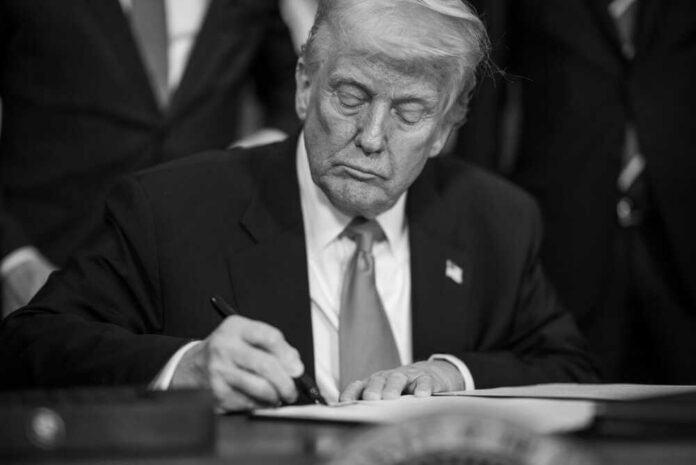
President Trump signed an executive order directing federal agencies to accelerate research and potential approval of psychedelic drugs, including ibogaine, a controversial substance linked to at least 27 deaths that remains classified alongside heroin as having no accepted medical use.
Story Snapshot
- Trump allocates $50 million in federal funding to match state investments in psychedelic research, with special focus on ibogaine for PTSD and addiction treatment
- The order establishes a Right to Try pathway for terminally ill patients to access investigational psychedelic drugs despite ibogaine’s Schedule I classification
- Medical experts warn of serious cardiac toxicity risks, with the drug capable of causing potentially fatal heart arrhythmias
- The directive removes legal barriers preventing American researchers from studying psychedelics, coordinating with Texas and other state-level initiatives
Federal Push to Fast-Track Controversial Treatment
President Trump signed an executive order on April 18, 2026, directing the Department of Health and Human Services to allocate $50 million through the Advanced Research Projects for Health program to accelerate psychedelic drug research.
The order specifically mentions ibogaine twice, a naturally occurring compound derived from an African shrub that remains classified as a Schedule I controlled substance by the DEA.
Administration officials framed the action as addressing America’s mental health crisis affecting over 14 million citizens with serious mental illness, particularly targeting veterans suffering from PTSD and traumatic brain injuries.
The directive instructs the FDA and DEA to establish pathways for eligible patients to access investigational psychedelic drugs under the Right to Try Act, despite ibogaine not being legally available for medical use in the United States.
The order removes legal impediments blocking researchers, physicians, and clinicians from properly studying these medicines and establishing therapeutic protocols. Trump administration officials acknowledged the research remains in early phases, stating they want to determine whether ibogaine represents legitimate treatment or “snake oil” before broader implementation.
Serious Safety Concerns Overshadow Therapeutic Promise
Medical professionals have raised significant concerns about ibogaine’s cardiac toxicity profile, with the drug capable of prolonging the QT interval in heartbeats and triggering potentially fatal arrhythmias or heart attacks.
A 2023 review of 24 studies involving 705 participants found these toxicity risks “worrying,” documenting at least 27 deaths following ibogaine use.
Nora Volkow, Director of the National Institute on Drug Abuse, publicly identified cardiac toxicity in 2024 as a major obstacle that might prevent FDA approval, noting the agency has historically resisted ibogaine research due to these heart-related dangers.
Trump signs order to speed review of psychedelics, including the controversial drug ibogainehttps://t.co/1ndcZ6JYjv pic.twitter.com/QRget6qwpP
— 1010 WINS on 92.3 FM (@1010WINS) April 18, 2026
Legal experts at Harvard Law School argue that ibogaine arguably has not met the “basic safety requirements” necessary for Right to Try Act eligibility, as most research has been conducted abroad in unregulated clinics operating without U.S. oversight, standardized heart screening, or required monitoring protocols.
Americans seeking ibogaine treatment have traveled to facilities in Mexico and the Caribbean where cardiac protection measures remain inconsistent.
A Stanford Medicine study published in July 2025 found the drug safely reduces PTSD, anxiety, and depression in veterans when combined with magnesium for cardiac protection, suggesting mitigation strategies exist but requiring further validation through rigorous clinical trials.
State Coordination and Implementation Questions
The executive order builds on state-level initiatives, particularly Texas’s 2025 legislation requiring publicly-funded ibogaine research and establishing a research consortium to accelerate clinical trials. The federal funding will match state government investments in psychedelic research programs, creating coordination between federal agencies and local efforts.
The FDA has already granted Breakthrough Therapy designation to some psychedelic drugs showing preliminary clinical evidence, which the order directs the agency to prioritize during review processes.
Implementation details remained uncertain as administration officials were “still hammering out” specific mechanisms for federal research facilitation at the time of signing.
The order does not immediately reclassify ibogaine from Schedule I status, though successful clinical trials establishing safety protocols could eventually support medical reclassification.
The directive covers multiple psychedelics, including psilocybin, LSD, and MDMA, potentially establishing a regulatory template for other controlled substances with therapeutic potential. Whether this approach can balance accelerated access with adequate safety protections remains the critical question facing federal agencies tasked with implementation.
Sources:
CBS News – Psychedelic Drug Ibogaine PTSD Trump Executive Order
Harvard Law School Petrie-Flom Center – A New Executive Order on Psychedelics Q&A
Fox News – Trump-Backed Plan Could Fast-Track Psychedelic Therapies
White House Presidential Actions – Accelerating Medical Treatments for Serious Mental Illness