

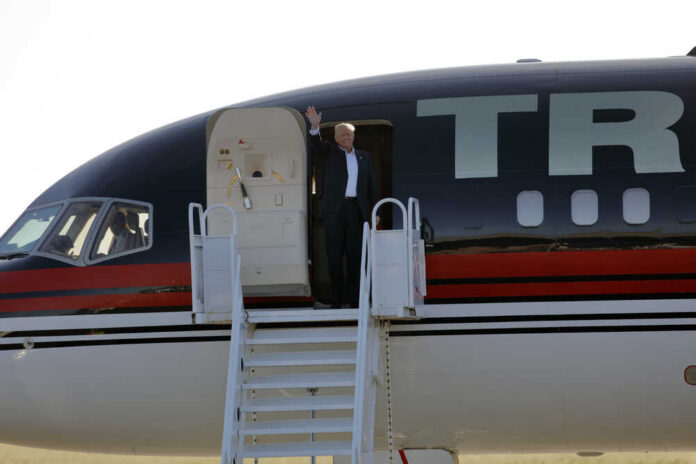
A private trademark filing tied to President Trump is now colliding with a Florida push to rename a public airport—raising a basic question: who controls the name once taxpayers put it on the sign?
Quick Take
- A Trump family-associated company, DTTM Operations, filed trademark applications for “President Donald J. Trump International Airport” and “Donald J. Trump International Airport.”
- The filings landed as Florida lawmakers advanced a proposal to rename Palm Beach International Airport near Mar-a-Lago.
- The Trump Organization says the move is defensive—meant to block “bad actors”—and claims it will not seek royalties or licensing fees.
- Trademark experts and watchdog groups say the situation is unusual and could complicate how a publicly owned airport uses the name.
Trademark Filings Arrive as Florida Debates an Airport Rename
DTTM Operations, an entity associated with the Trump family’s business operations, filed trademark applications, seeking rights to two names: “President Donald J. Trump International Airport” and “Donald J. Trump International Airport.”
The timing matters because Florida’s GOP-led legislature has been considering renaming Palm Beach International Airport, located near President Trump’s Mar-a-Lago residence. The applications are pending and will be reviewed by the U.S. Patent and Trademark Office.
Trump company seeks to trademark his name on airports https://t.co/PEFRXaRYHj
— Daniel Lopez (@4danlopez) February 19, 2026
Trademark attorney Josh Gerben highlighted the filings publicly after spotting them in the federal trademark system, describing the move as “completely unprecedented” in modern practice for a sitting president’s private company.
Around a dozen U.S. presidents have had airports named for them over time, but the reported distinction here is preemptive brand protection by a private entity while an active naming debate is unfolding. The USPTO has not issued any decision on the applications.
What the Trump Organization Says It’s Doing—and Why
The Trump Organization’s public explanation is straightforward: the filings are intended to prevent misuse of the president’s name by “bad actors,” not to generate profit.
A spokesperson said no royalty, licensing fee, or other financial consideration would be sought. In brand-management terms, that position treats the trademark application as a protective barrier—an attempt to keep opportunists from selling merchandise, services, or promotions tied to an “official-sounding” airport name without authorization.
That rationale aligns with the broader context in which DTTM Operations exists to manage and protect Trump-related intellectual property across categories, and the Trump name has long been trademarked in many areas.
The new wrinkle is the proximity to a live public-policy decision: a legislature considering a formal renaming of a publicly owned facility. Even if the intent is defensive, the practical effect could still be that a public airport and its vendors must think about trademark clearance and usage rules in everyday operations.
Public Infrastructure, Private Marks: The Licensing Question
The key policy friction comes down to control. If a public airport is renamed and uses a trademarked phrase on signs, websites, uniforms, souvenirs, and third-party concessions, the trademark holder can potentially argue it has rights over commercial use in certain contexts.
Gerben raised the question of whether a public airport would need to negotiate permissions to use the name without legal risk.
The Trump Organization disputes the idea that it would demand money, but the legal and administrative uncertainty remains until the process is clarified.
For conservative voters who have watched years of bureaucratic overreach and politically motivated “naming and shaming,” the instinct may be to dismiss the uproar as another media-fueled ethics panic.
Still, the issue is worth separating into two lanes: the honor itself (a legislature naming a public facility) versus the mechanics of intellectual property (a private entity seeking trademark protection).
The research available does not include the text of the Florida bill or any USPTO rulings, so firm conclusions about real-world enforcement limits are premature.
Ethics Critiques, Oversight Gaps, and What’s Actually Verified
Watchdog criticism is focused less on Florida’s political tribute and more on the optics and governance structure: a president’s family business pursuing private intellectual-property rights while he is in office.
The Project on Government Oversight argued the episode underscores the need for stricter, binding conflict-of-interest rules for presidents.
Supporters counter that trademarking is routine brand defense and that the organization explicitly stated it is not pursuing licensing revenue. The provided research does not report evidence of fees being demanded.
Trump company seeks to trademark his name on airports – ABC News https://t.co/vxQcJSuEaq
— Michael F Ozaki MD (@brontyman) February 19, 2026
What is verified is narrow but important: the February 13 applications were filed; they were identified and publicized by a trademark attorney; Florida lawmakers were weighing a Palm Beach airport rename; and the Trump Organization stated it is not seeking royalties or licensing fees.
What remains unresolved is how a public airport would operationalize the new name—especially in commercial settings—if a private trademark is granted.
Until the USPTO acts and Florida’s legislature finishes its process, the story is mostly about timing, precedent, and the boundaries between public honor and private brand control.
Sources:
Trump company seeks to trademark his name on airports
Trump’s private company files trademark for “President Donald J. Trump International Airport”
Trump company files to trademark name for airports as Florida weighs renaming