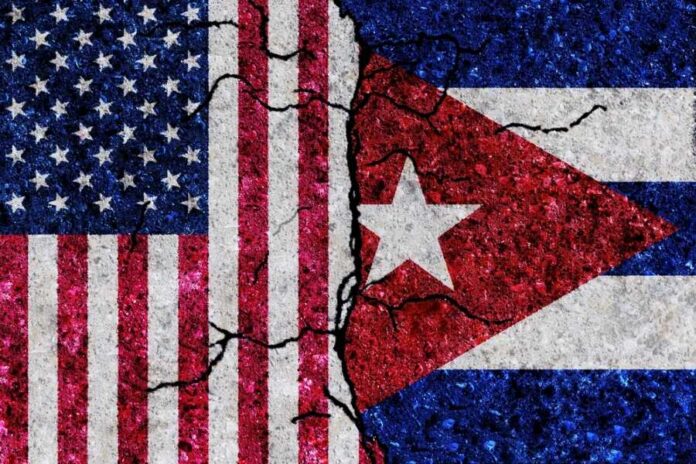
President Trump’s talk of a “friendly takeover” of Cuba is colliding with a fast-worsening fuel shortage that’s turning daily life on the island into a blackout-and-rationing grind.
Story Snapshot
- Trump reiterated his “friendly takeover” language on March 9, 2026, after first raising it publicly on Feb. 28.
- The White House energy blockade and pressure on suppliers have coincided with Cuba going roughly two months without oil shipments.
- UN officials say fuel rationing is now constraining humanitarian operations and raising the risk of broader human suffering.
- Cuba denies formal high-level talks, while leaving open the possibility of informal channels.
Trump’s ‘Friendly Takeover’ Line Reappears as Cuba Runs on Fumes
President Donald Trump revived his “friendly takeover” phrasing during a March 9 news conference in Doral, Florida, describing Cuba as being in “deep trouble” and suggesting discussions handled by Secretary of State Marco Rubio could “may or may not” lead there.
The remark landed amid a widening energy emergency on the island, where shortages have disrupted electricity, transportation, and basic commerce. Details of any “takeover” concept remain vague, with no public plan released.
Trump’s comments sit on top of a January 2026 energy blockade policy aimed at pressuring Cuba’s communist leadership. The immediate mechanism described in reporting is leverage over fuel supply lines: Cuba depends heavily on imported oil, and external deliveries reportedly slowed after U.S. threats of trade consequences for suppliers.
By early March, Cuba’s grid and transport system were absorbing the shock, with fuel rationing and service cutbacks becoming part of ordinary life.
How the Fuel Crunch Is Rippling Through Power, Farms, and Transportation
Cuba’s fuel shortage has been described as severe enough to immobilize key sectors at once. With shipments halted for weeks, power plants face interrupted operations that translate into endemic blackouts.
Transportation disruptions have compounded the problem, with curtailed bus routes and reduced flights limiting movement for workers and goods. Agricultural production has also been hit as farms struggle to access diesel for equipment and distribution, tightening the squeeze on food availability and local economic activity.
NOW – Trump: "We could very well end up having a friendly takeover of Cuba." pic.twitter.com/xByy596J1j
— Disclose.tv (@disclosetv) February 27, 2026
Cuban authorities have responded with emergency conservation measures and rationing, signaling a government bracing for a prolonged shortage rather than a short dip.
President Miguel Díaz-Canel has framed the crisis as externally driven “economic strangulation,” while implementing restrictions intended to keep essential services afloat. At the same time, reporting indicates Cuba produces only a portion of its fuel needs domestically, leaving Havana structurally vulnerable when outside suppliers back away under pressure.
The UN Pushes for Humanitarian Fuel Access While Washington Presses the Regime
United Nations officials have moved to negotiate fuel access specifically for humanitarian work, describing the shortage as evolving from a technical supply problem into a direct risk to vulnerable populations.
UN coordination efforts have emphasized practical constraints: without fuel, aid retrieval, field work, and support to health centers can stall, particularly affecting the elderly and pregnant women. The UN has confirmed “exchanges” with the Trump administration as it seeks carve-outs that keep relief operations running.
Unconfirmed Backchannels, High Stakes, and What We Actually Know
Publicly, Cuba has denied formal high-level talks with Washington, while not fully dismissing informal contacts. Reporting has pointed to the possibility of backchannel discussions involving figures connected to Cuba’s ruling elite, but specifics remain unverified in public.
The takeaway for Americans is that the situation is being driven by policy leverage and messaging, not a clearly defined, congressionally debated framework. For constitutional-minded voters, that distinction matters when rhetoric begins to sound like regime change.
Trump reiterates threat of a 'friendly takeover' of Cuba as fuel crisis deepens https://t.co/gpkLeUA7kZ
— CNBC Politics (@CNBCPolitics) March 10, 2026
Trump’s remarks also land in a wider regional context after Venezuela’s political upheaval earlier in 2026 shifted U.S. attention back toward Havana.
Cuba has cited security incidents as well, including a reported February coastal shootout tied by Cuban authorities to an alleged infiltration attempt—an episode that raises tensions but remains difficult to independently confirm from limited sourcing.
With only a small set of public reports available, the most solid facts remain the timeline of statements, the blockade’s stated purpose, and the visible humanitarian strain.
Sources:
Trump mulls ‘friendly takeover’ of Cuba