

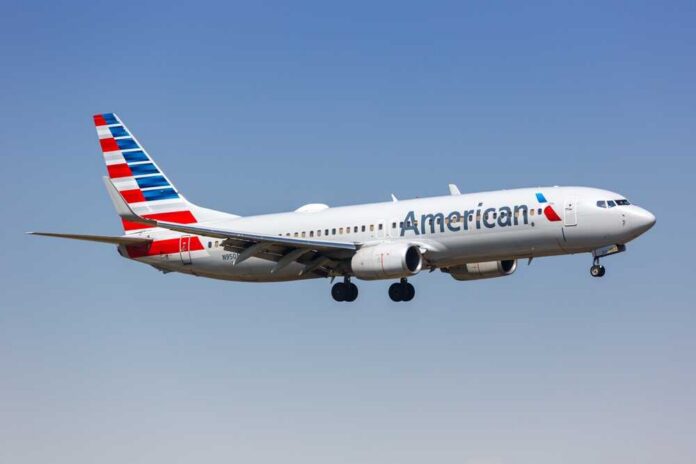
Six flight attendants on a jumbo jet cruising over the open Atlantic suddenly felt sick from a smell nobody could name, and the pilots had only one real option: turn toward the closest land they could reach.
Quick Take
- American Airlines Flight 719 diverted to Dublin on July 25 after a reported odor onboard.
- Six of the nine flight attendants on the Boeing 787 reported feeling ill mid-flight.
- American Airlines told Fox Business the smell was linked to an onboard oven.
- Paramedics checked passengers and crew in Dublin, and everyone was released.
A Transatlantic Flight Turns Around Over Open Water
Flight 719 left Rome’s Fiumicino Airport bound for Philadelphia on July 25, carrying 281 passengers and 12 crew members on a Boeing 787-9, registration N840AN.
About three hours in, while cruising at 39,000 feet roughly 400 nautical miles from the Azores, something in the cabin started making people sick. The captain turned north toward Dublin instead of pushing on across the ocean.
An American Airlines flight from Rome to Philadelphia diverted to Dublin after a mysterious odor onboard caused six flight attendants to become ill. https://t.co/H2Lm6Ag3nK
— PennLive.com (@PennLive) July 29, 2026
Six of the nine flight attendants working the cabin reported feeling unwell during the flight, according to reporting on the incident. That is two-thirds of the working crew struggling at the same time, which is exactly the kind of detail that turns a routine smell complaint into a full diversion decision.
What The Airline Says Caused It
American Airlines gave a simple explanation once the plane landed safely. A spokesperson told Fox Business the odor traced back to an onboard oven, the same kind of galley equipment flight attendants use to heat meals during long flights.
USA Today confirmed the airline’s statement described the diversion as caused by “a reported odor onboard caused by an oven”.
Paramedics met the aircraft in Dublin and evaluated both crew members and passengers who reported symptoms. Everyone was assessed and released, and American Airlines arranged overnight lodging for those affected while the plane was checked out before continuing the trip.
Why Dublin Keeps Showing Up In These Stories
This is not the first time an American Airlines jet has bent its route toward Dublin over a cabin odor. In 2019, a London-to-Philadelphia flight diverted there after reports of a “chemical spillage” sent two crew members and a passenger to the hospital for evaluation.
That earlier case shows why Dublin sits in so many of these headlines: it is one of the closest usable airports for transatlantic flights crossing the North Atlantic corridor.
That same 2019 incident also shows why airlines are careful about locking in a cause too fast. American Airlines first blamed a spilled cleaning product for that odor, then walked it back after its own maintenance team determined the cleaning solution was not actually responsible. It is a fair reminder that a first public explanation is not always the final technical answer, even when it comes straight from the company.
What Still Needs Answering
None of the current reporting includes a maintenance log, an engineering teardown, or a regulator’s finding confirming the oven theory beyond the airline’s own statement.
Aviation.direct noted that identifying the exact source of the smell was still part of an ongoing technical review after the plane landed. That does not mean the airline is wrong. It means the public record right now rests on a company statement, not an independent inspection report.
For passengers, the bigger takeaway is less about ovens and more about how airlines handle uncertainty at 39,000 feet. Crews trained to treat any unexplained smell as a potential hazard made the call, diverted early, and got people checked out on the ground rather than risking it over open water. That is the system working the way it should, whatever the maintenance report eventually confirms.
American Airlines has not released a follow-up statement updating or confirming the oven finding as a final root cause, and no aviation regulator has published a separate technical determination on the record so far.
Sources:
foxbusiness.com, usatoday.com, nypost.com, bbc.co.uk, aeroinside.com, facebook.com, aviation.direct, insideflyer.com