
A teenager’s joke Bluetooth name reportedly turned a routine trip to Spain into a full-blown federal case, a midair U-turn, and a lesson in how brittle modern air travel really is.
Story Snapshot
- A United Airlines flight to Spain turned back to Newark after a Bluetooth device name triggered a security scare.
- The alert led to an aircraft sweep, passenger evacuation, and full re-screening by law enforcement and federal agencies.
- Reports say the device belonged to a 16-year-old whose gadget name referenced a bomb or four-letter word.
- The incident highlights a system wired to overreact rather than risk underreacting to possible threats.
How a routine transatlantic flight turned into a rolling security operation
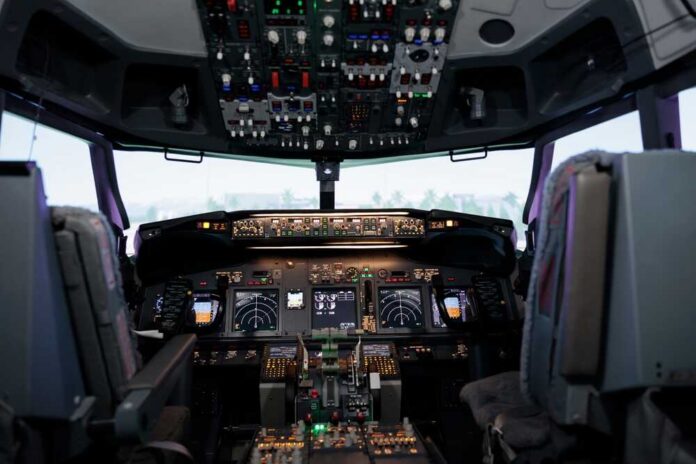
United Airlines Flight 236 left Newark Liberty International Airport for Palma de Mallorca with 190 passengers and 12 crew on board, a standard evening departure to Spain that should have faded into the background hum of global aviation.[2]
Somewhere over the Atlantic, that routine unraveled when the crew became concerned about a Bluetooth device identified on board, whose name reportedly contained a bomb reference or an offensive four-letter word.[1][2] What started as a digital label on a wearable escalated into a declared security concern.[1]
Federal authorities are investigating an apparent prank that forced a United Airlines flight to turn around mid-air after a passenger’s Bluetooth device was reportedly named “bomb.” pic.twitter.com/9Lycpf236Q
— Breaking911 (@Breaking911) June 2, 2026
Crew members began repeatedly instructing passengers to turn off all Bluetooth devices, pressing the cabin to help isolate the unknown signal.[2]
A passenger later reported that even after multiple announcements, two devices still showed as active, amplifying the crew’s uncertainty about who or what sat behind the offending name.[2]
In that moment, the pilots and airline dispatch had to decide: trust that it was a prank, or treat it like the real thing. They chose to divert, and the aircraft turned back toward Newark.[2]
What authorities actually did once the plane came back
Once Flight 236 landed back at Newark at about 9:37 p.m., the response left no doubt that officials treated the incident as more than a mild inconvenience.[2]
Air traffic control audio captured instructions that security had to inspect the entire aircraft, “including the cargo area,” signalling a full threat-assessment posture rather than a cursory check.[2]
Port Authority police evacuated the passengers, moved them by bus on the tarmac, and initiated a sweep of the Boeing 767 from the cabin to the hold, looking for any sign that the Bluetooth name hinted at something physical.[2]
The security chain did not end with a walk-through and a shrug. Passengers were required to undergo Transportation Security Administration and Customs and Border Protection screening all over again before they could re-board.[2]
This meant travelers who had done nothing wrong effectively lived through a duplicate airport experience in the same night, strictly because an unidentified device name raised suspicion.
From offensive gadget name to federal scrutiny
Subsequent reporting filled in the human piece missing from the initial scare: investigators traced the problematic Bluetooth identity to a wearable fitness device used by a 16-year-old passenger.[1]
According to those reports, the teenager had named the device “bomb,” a decision that might have earned an eye-roll in a bedroom but became a serious problem when transmitted into a sealed aluminum tube at 30,000 feet.[1]
Officials later determined there was no actual threat to the aircraft or its occupants; the issue was the name, not a hidden explosive or hacking device.[1]
The absence of a real bomb did not mean the response was performative. Reports indicate federal investigators, including the Federal Bureau of Investigation, opened an inquiry to review exactly what happened, even though local charges had not been filed against the teen at the time of reporting.[1]
From a rule-of-law viewpoint, this step aligns with a security culture shaped by past attacks: when anything labeled “bomb” interrupts a commercial flight, federal scrutiny follows, regardless of whether the perpetrator meant harm or simply lacked judgment.
Why the system is designed to overreact, and what that means for passengers
The Federal Aviation Administration later characterized the matter publicly as a “passenger disturbance,” language that underscored how officials ultimately categorized the event: not a discovered plot, but disruptive behavior that forced an operational reset.[2]
Airlines have already reported more than 640 unruly passenger incidents in 2026, a number that pressures carriers and crews to clamp down swiftly on anything that could escalate.[2]
Add the word “bomb” into that environment, even buried in a Bluetooth menu, and the margin for casual humor evaporates.
A Bluetooth Device Name Sparks Security Scare on United Flight 236 https://t.co/omADJ78nxE
— Small Business Today (@small_today) June 1, 2026
The deeper reality is that, since September 11, aviation security has been intentionally wired to prioritize false alarms over missed threats. Authorities know the downside of overreaction is a long night, some rerouted planes, and a pile of annoyed travelers. The downside of underreaction is unthinkable.
This incident also exposes a softer cultural problem: a teenager could casually label a device in a way that weaponizes fear because adults and institutions have trained society to live permanently on edge.
Sources:
[1] Web – United flight returns midair after Bluetooth device name reportedly …
[2] Web – United Airlines flight to Spain returns to U.S. after Bluetooth device …