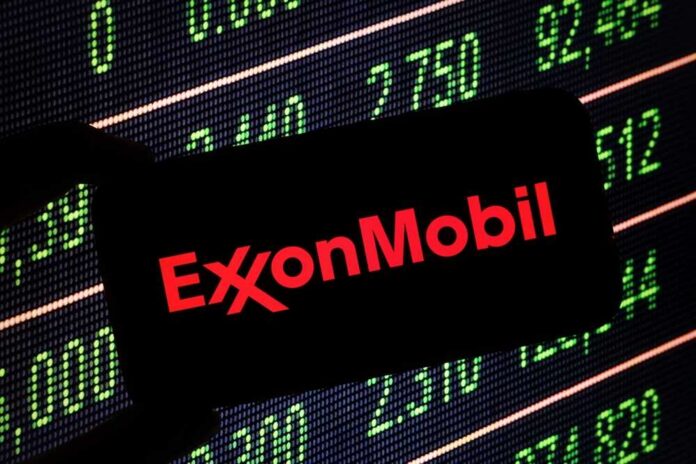
When an Exxon boss quietly says oil could rip to $160 a barrel “in weeks,” he is not just talking about prices at the pump—he is hinting that the entire political story we have been told about energy is starting to snap.
Story Snapshot
- Exxon executive Neil Chapman warned crude could spike to $150–$160 a barrel once “unheard of” low inventories are hit, on a weeks-long timeline, not years.
- He tied the calm of recent prices to the artificial crutch of draining reserves and inventories that “cannot last forever.”
- The warning came the same day Exxon shareholders approved shifting the company’s legal home from New Jersey to Texas.
- The clash between blue-state hostility to fossil fuels and the physical reality of energy is now colliding in full view.
Why An Exxon Warning About $160 Oil Hits Different
Neil Chapman did not float his $150–$160 crude oil warning from a television studio or a think tank panel; he delivered it at the Bernstein Conference in New York, the kind of venue where money managers quietly adjust billions of dollars based on a few sentences.[1][2]
Chapman told that room, “We’re approaching unheard of inventory levels,” describing stocks as “really, really low,” and said the only debate was whether they hit bottom in “two weeks or three weeks.”[1][2] Once that point arrives, he said, prices “will shoot up.”[1][2]
That is not the language of a long-range macro forecast; it is a short-fuse description of a market that has been papering over real scarcity.[1][2]
Chapman pointed out that crude had been trading in the $90 to $110 range for roughly six weeks only because governments and companies were running down inventories and tapping emergency reserves.[2]
He stressed that this “cannot last forever,” and when inventories finally bottom, the dated Brent benchmark could lurch to $150 or even $160 a barrel.[1][2] For anyone who buys gasoline, flies, heats a home, or runs a small business, that number means pain.
Exxon chief warns of skyrocketing energy prices as shareholders approved plan to exit blue state https://t.co/2zeF8WpeLU
— FOX Business (@FoxBusiness) May 31, 2026
The Inventory Trap That Politicians Do Not Want To Talk About
Chapman’s core claim is simple: the world has been living off the pantry instead of restocking the shelves.[2][3] Commercial stocks of crude oil, gasoline, diesel, and jet fuel have all been drawn down, while Western governments have leaned on strategic petroleum reserves to disguise the strain.[2][3]
From a distance, that looks like “stable” prices. Up close, it looks like selling the spare tire to brag that you have not had a flat. This situation says you do not burn the emergency reserve to win a news cycle, but that is precisely what many leaders have done.[2][3]
The warning from Exxon’s executive effectively exposes that strategy.[1][2] As inventories approach what he called “unheard of” lows, the cushion against a refinery outage, a shipping disruption, or a geopolitical shock gets razor-thin.[1][2][3]
In tight markets, tiny disruptions can trigger outsize price spikes because there is no buffer to absorb the shock.
That is why he framed the timeline as “weeks, not months” for the risk to show up.[1][2] The math of barrels, not the rhetoric of press conferences, drives this outcome.
Exiting A Blue State While The Bill Comes Due
On the same day Chapman issued his warning, Exxon’s shareholders approved moving the company’s legal home from New Jersey to Texas.[1][2][3]
That coincidence is more than paperwork. It symbolizes an energy producer voting with its feet against a blue-state political climate that treats oil and gas as villains to be punished rather than as essential inputs to modern life.
Texas, for all its flaws, at least understands that reliable energy and a functioning economy are joined at the hip.[1][2][3]
The move underscores a larger tension: many progressive jurisdictions demand ever-tighter climate pledges while still depending on cheap, abundant fuel they no longer wish to permit, refine, or transport.[1][3]
When companies respond by moving capital and legal domicile to more predictable, pro-development states, politicians in high-regulation areas act shocked at higher prices and supply vulnerabilities.
Yet that is the foreseeable consequence of years of signaling that investment in traditional energy is unwelcome.[1][3] Physical barrels do not care about slogans.
Media Hype, Real Risk, And What Comes Next
Some commentators frame Chapman’s $160 figure as sensational or alarmist, and to be fair, broadcasters and online writers know a dramatic number makes a stickier headline than a careful conditional scenario.[1][2][3]
The public often hears “oil will hit $160,” where Chapman was really saying “if inventories collapse to this extreme, prices could shoot to that range.”[1][2] That nuance matters. Yet dismissing the warning outright because it is stark would be just as unserious as blindly assuming it is guaranteed.
That warning from Exxon definitely turns the stomach. Senior VP Neil Chapman dropped that number at the Bernstein conference, and Chevron backed him up with a similar forecast. They're pointing directly at global oil reserves hitting an absolute floor due to the ongoing…
— Bluegrass AI Distractions (@AkBluegrass3) June 2, 2026
Chapman’s remarks are a stress test of a system already strained by underinvestment, political hostility to fossil fuels, and overuse of emergency stockpiles.[1][2][3]
If policymakers keep blocking infrastructure, discouraging drilling, and treating strategic reserves as a campaign tool, the path to a painful price shock remains wide open.
Households will not care which talking point failed; they will see it every time they fill up. Reality, not ideology, will settle this argument at the checkout counter.
Sources:
[1] Web – Exxon chief warns of skyrocketing energy prices as shareholders …
[2] Web – ExxonMobil VP issues stark warning on energy prices in coming …
[3] YouTube – Exxon Sounds the Alarm on Low Oil Inventory | World Business Watch