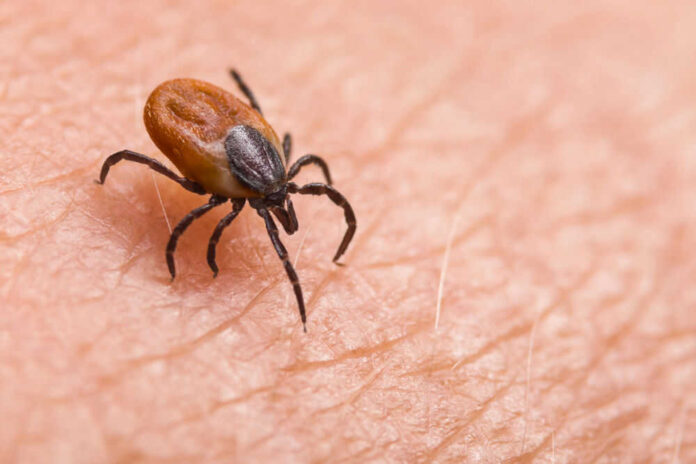
A tick the size of a sesame seed is quietly changing summer as we know it—spreading to at least 23 states and leaving public health officials racing to keep up.
Story Snapshot
- Two states newly confirmed the invasive longhorned tick’s presence in 2025, reflecting a broader surge in tick activity across America.
- Shifting land use drives the tick’s expansion, with both cities and rural areas now at risk.
- Pest management data and CDC surveillance highlight record-breaking tick populations and growing disease threats.
- The pest control industry, public health agencies, and families face mounting costs and challenges as tick risks escalate.
Tick Invasions Redraw the American Map
Spring 2025 brought a jolt: state health departments in at least two U.S. states confirmed the arrival of the invasive longhorned tick, Haemaphysalis longicornis.
This is not merely a new insect in the neighborhood. It’s a signpost of a deeper trend—a surge in tick populations and an expansion of their geographic range.
The CDC’s fresh distribution maps, updated in April 2025, show ticks creeping into unexpected places, while proprietary reports from pest management firms reveal that both major cities and once-immune rural counties are now on alert.
California, Florida, Texas, Pennsylvania, and New York sit atop the list of most tick-infested states, but the problem is spreading fast, blurring the old boundaries between “safe” and “at risk.”
Tick activity is no longer just a rural or wilderness issue. New York City, Los Angeles, and Philadelphia have been flagged for record tick incidents. Urban parks, backyards, and dog runs now join hiking trails as danger zones.
The pest control industry, led by data-rich companies like Terminix, has released 2024 and 2025 reports ranking the top 25 risk states and highlighting a jump in calls for tick-related services.
Meanwhile, state health officials warn that the tick season is starting earlier and lasting longer, a pattern aligned with milder winters and wet springs—conditions ideal for ticks to thrive and reproduce. Outdoor workers, pet owners, and anyone who enjoys a backyard barbecue are now part of the frontline.
Invasive tick spreads to 23 states, including TN and KY: Should you be concerned? https://t.co/xLmcRCmTYp
— WKRN News 2 (@WKRN) September 21, 2025
Climate, Urbanization, and the Rise of the Invasive Tick
Longhorned ticks, detected in the U.S. since 2017, are now firmly established, their spread accelerated by environmental shifts. Milder winters mean fewer ticks die off; longer warm seasons give them more time to feed and reproduce. Urban sprawl and changes in land use create new habitats, allowing ticks to thrive in places once considered inhospitable.
Researchers and entomologists point to climate change as a primary engine, but also emphasize the role of increased human-wildlife contact and fragmented landscapes.
The CDC and state agencies confirm a clear, upward trajectory in tick-borne disease risk, with Lyme disease, ehrlichiosis, and Rocky Mountain spotted fever topping the list of threats. Surveillance and public education campaigns are running at full tilt, but uncertainty remains: How far, and how fast, will this trend go?
The pest management industry has become an unexpected source of critical data, supplementing public health surveillance. Their real-time tracking of tick infestations offers an early warning system for communities.
Yet, even as industry and public health authorities race to inform and protect the public, the sheer adaptability of ticks—and the complexity of their interactions with local ecosystems—means there is no quick fix.
Prevention, vigilance, and early detection are the watchwords, as CDC experts stress. For the consumer, this means long pants, tick checks, and a sharp eye for new advisories.
Economic and Social Costs Mount as Ticks Go Mainstream
The explosion in tick activity comes with a growing price tag. Healthcare providers brace for more cases of tick-borne illness, with diagnosis and treatment costs climbing.
Pest control companies see booming business, but public health budgets strain under the need for expanded surveillance and prevention efforts.
Outdoor recreation and pet ownership come with new anxiety—families weigh the risks of summer hikes, and pet owners reconsider how to protect their animals.
The political conversation has also shifted, with climate adaptation, vector control, and healthcare funding rising on local and national agendas. The debate is no longer about whether tick threats are real, but how to respond to them at scale.
For now, tick activity shows no sign of abating. Experts warn that the longhorned tick’s expansion is only the latest chapter in a broader story—one in which Americans must adapt to a changing landscape of health risks.
The challenge is daunting, but the convergence of public health, industry, and personal vigilance offers hope that the worst outcomes can be avoided. Surveillance will continue, research efforts will intensify, and the search for effective prevention will shape summers for years to come.
Sources:
Terminix 2024 Tick Activity Report
The Derm Digest: 25 High-Risk States for Tick Activity
PestWorld: Cities Facing Increased Ticks in 2025
CDC: Geographic Distribution of Tickborne Disease Cases