

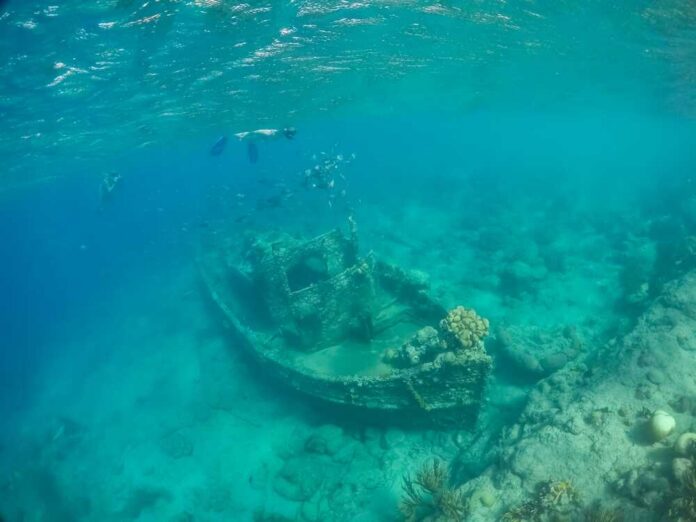
A 150-year-old Lake Michigan “palace steamer” has been found remarkably intact—while invasive mussels keep chewing away at America’s underwater history.
Story Snapshot
- The luxury passenger steamer Lac La Belle, lost in a 1872 gale, was located upright about 20 miles offshore between Racine and Kenosha, Wisconsin.
- Illinois diver Paul Ehorn found the wreck using side-scan sonar in October 2022 after a decades-long search, and dives and filming were completed in summer 2025.
- The ship sank stern-first after a leak and worsening weather disabled the boilers; lifeboats launched around 5 a.m., and one capsized, killing eight.
- Researchers say the wreck still shows framing, cargo, and interior wood, but quagga mussels are already covering and degrading the site.
A decades-long hunt ends with a hard-to-believe find
Paul Ehorn, an 80-year-old diver from Illinois who has searched since his teens, located the Lac La Belle in October 2022 using side-scan sonar, later confirming it through additional work and dives.
Reporting indicates the wreck sits upright and largely intact in Lake Michigan, roughly 20 miles offshore between Racine and Kenosha. The public announcement came in February 2026, after weather and logistics delayed deeper documentation and filming until summer 2025.
Luxury steamer that sunk in Lake Michigan more than 150 years ago has been found | CBS https://t.co/jIXGyFmS1D Shipwreck World, a group that works to locate shipwrecks around the world, revealed Friday that a team led by Illinois shipwreck hunter Paul Ehron found the wreck of the… pic.twitter.com/ZqKocCXJKC
— Igor Os (@igor_os777) February 15, 2026
According to the discovery accounts, Ehorn partnered with Bruce Bittner on the sonar work and later brought in divers John Janzen and John Scoles to help capture video.
Ehorn has said he intends to create a 3D photogrammetry model before releasing precise coordinates. That decision reflects a practical reality in shipwreck circles: once locations are widely known, sites can face heavier visitation and risks to fragile structure and artifacts.
What happened in 1872—and why eight never made it home
The Lac La Belle was a 217-foot luxury passenger steamer built in 1864, part of a Great Lakes era when “palace steamers” offered high-end travel alongside cargo hauling.
On the night of October 13, 1872, the ship departed Milwaukee in roughening conditions with 53 people aboard and cargo that included staples and spirits—barley, flour, pork, and whiskey among them. About two hours into the voyage, it developed a serious leak that could not be controlled.
Reports say the captain tried to turn back, but heavy waves and worsening weather extinguished the boilers, leaving the steamer without power and at the mercy of the lake.
The vessel was driven south, and lifeboats were launched around 5 a.m. as conditions deteriorated. Survivors reached shore in the Racine-to-Kenosha area, but one lifeboat capsized, resulting in eight deaths. The exact cause of the leak has remained unresolved, leaving historians with a lingering question.
Why this wreck matters: preservation, not politics
This story is not a Washington fight, but it does underline something conservatives routinely warn about: when government and institutions neglect basics, real heritage gets lost.
The Great Lakes contain thousands of shipwrecks, and researchers warn that invasive quagga mussels accelerate the degradation of wooden and metal structures.
Discoverers describe the Lac La Belle as unusually intact for its age, with visible framing and interior wood, even as mussels blanket parts of the wreck and some upper structures are missing.
The planned 3D model is significant because it preserves the wreck’s current condition in detail, even if the physical site continues to degrade. That type of documentation also helps keep the public conversation anchored in evidence—what is actually there, what condition it is in, and how quickly it is changing.
With only limited public detail on exact coordinates and ongoing monitoring, the most verifiable near-term outcome is digital preservation and a clearer historical record.
Secrecy, competition, and the fight to document before it vanishes
One tension running through the discovery is how much to reveal and when to reveal it. The research summary notes a narrow clue from 2022 by maritime historian Ross Richardson that helped narrow the search grid after decades of uncertainty.
Richardson has reportedly kept key details close in a competitive field, while Ehorn has chosen to delay releasing the location until after modeling. Those choices may frustrate curious onlookers, but they also reduce the risk of uncontrolled disturbance before proper documentation is complete.
For communities along the Wisconsin shoreline, the find could feed legitimate heritage tourism through museums, festivals, and local storytelling—without turning the site into a free-for-all.
The discoverers have indicated public presentations are planned, including a March 2026 event with video and interviews. For families of victims and historians, the wreck’s confirmation offers closure and a chance to learn more about Great Lakes travel and trade during a pivotal period of American growth.
Sources:
Luxury steamer that sunk in Lake Michigan more than 150 years ago has been found
Pioneer wreckhunter finds Lake Michigan passenger steamer lost for 130 years