Two teenagers just turned America’s fears about hate, mental health, and government failure into a single horrifying morning outside a San Diego mosque.
Story Snapshot
- Police say two teens killed three men outside the Islamic Center of San Diego before taking their own lives.
- Law enforcement sources have identified the suspects as 17-year-old Cain Clark and 18-year-old Caleb Vazquez/Velasquez.
- Agents reportedly found anti-Islamic writings, hate messages on weapons, and a “racial pride” suicide note.
- The attack is under investigation as a hate crime amid rising distrust of both extremists and federal authorities.
What Police Say Happened Outside San Diego’s Largest Mosque
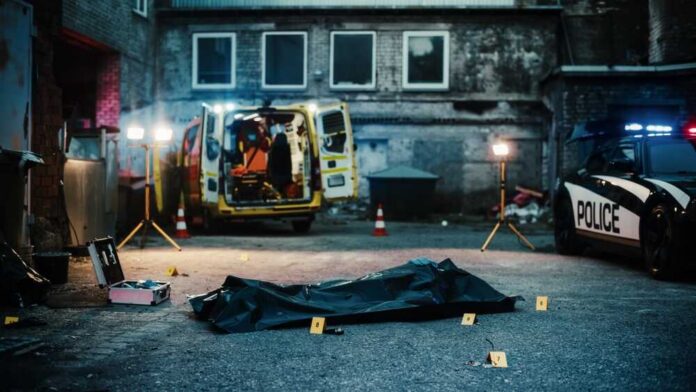
San Diego police say that late Monday morning, two teenagers opened fire outside the Islamic Center of San Diego, the region’s largest mosque, killing three adult men before fleeing the scene in a vehicle.[1][3] Officers responding around 11:45 a.m. found the victims’ bodies in front of the building, including a security guard later identified as Amin Abdullah, who authorities believe helped prevent even greater loss of life.[1][3] Minutes later, officers discovered two deceased suspects nearby with apparent self-inflicted gunshot wounds.[1][3]
Federal Bureau of Investigation (FBI) agents and local police quickly treated the incident as an active shooter and potential hate crime, locking down the surrounding Clairemont Mesa neighborhood and canvassing multiple crime scenes.[1][3][4]
A landscaper several blocks away reported being shot at but was not injured, underscoring how chaotic the situation became before officers located the suspects’ vehicle.[3][4] Authorities have emphasized that the timeline and precise sequence of shots will be clarified as forensic reports and body-worn camera footage are reviewed.[3]
Who The Suspects Are And How They Were Identified
Law enforcement sources quoted by several outlets identified the suspected gunmen as 17-year-old Cain Clark, a San Diego high school student and former wrestler, and 18-year-old Caleb Vazquez or Velasquez.[1][3][4] Because one suspect is a minor, officials have moved cautiously in publicly confirming names, which partly explains spelling discrepancies across reports.[3][4] Multiple sources nonetheless converge on the same two individuals, describing them as the teens found dead in the vehicle near the mosque after the shooting.[1][3]
Hours before the attack, Clark’s mother reportedly called police to report that her son was missing, suicidal, and possibly armed with weapons taken from her home.[3][4] San Diego’s police chief said officers were interviewing her about missing guns and camouflage clothing when the first calls about an active shooter at the Islamic Center came in.[3][4] That warning helped officers connect the welfare call to the mosque gunfire, but it also raises painful questions about why the system could not intervene in time to prevent three deaths.
Evidence Of Hate Motive And The Limits Of What We Know
San Diego police and federal investigators are treating the case as a possible hate crime based on early physical and written evidence, though no court has yet weighed that evidence.[1][3][4] Sources told reporters that at least one firearm bore hate speech, and that anti-Islamic writings were found inside the suspects’ vehicle.[1][3][4]
One summary describes a gas can marked with “SS,” a symbol associated with Nazi Germany’s Schutzstaffel, recovered where the suspects’ bodies were found.[4] These details, if confirmed, would fit a pattern of ideologically motivated violence.
Two alleged shooters in the deadly attack outside the Islamic Center of San Diego have been identified as Cain Clark and Caleb Velasquez.
The suspects were reportedly found dead nearby after the shooting, as investigators examine anti-Islamic writings and possible hate-crime…
— Erik Hoffmann (@TheErikHoffmann) May 19, 2026
Unnamed law enforcement sources also described a suicide note that referenced “racial pride” and suggested at least one suspect removed a weapon from a parent’s home before the attack.[3] However, neither the note nor the alleged hate writings have been released as public exhibits, meaning the exact wording and authorship remain unverified outside official channels.[3]
Broken Systems: Mental Health, Security, And Public Trust
Neighbors and acquaintances have described at least one suspect as quiet, sometimes helpful to older residents, which clashes with the image of a hate-fueled killer and deepens the sense that something important was missed.[1][3]
The reported timeline—an anguished mother calling for help about a suicidal son and missing guns, followed shortly by a mass shooting—highlights a national pattern where warning signs reach authorities but intervention comes too late or not at all.[3][4] Families, worshipers, and ordinary citizens are left wondering what exactly the sprawling security state delivers in return for its power.
For Muslims in San Diego, the shooting reinforces long-standing fears about being targeted at their place of worship, even as officials insist that “hate has no home” in the city.[3] The case points to a different grievance: a government that can surveil, leak, and posture on cable news yet still fails to protect people at church, mosque, school, or grocery store.
The early narrative, driven by unnamed officials and recycled through secondary outlets, fits a broader pattern where the public is asked to trust institutions that have repeatedly squandered that trust.[3]
Where The Investigation Goes From Here
Key questions now center on what investigators will actually release: the 911 calls, dispatch logs, body-camera footage, autopsy reports, and ballistics that show how the attack unfolded and how firmly the evidence ties Clark and Vazquez or Velasquez to every element of the crime.[3][4]
Digital forensics on phones and computers may reveal whether the teens were radicalized online, acting out personal despair, or both.[3] Until those records are public, both the hate-crime narrative and any deeper understanding of the suspects’ path to violence will remain incomplete.
Americans watching this case from across the political spectrum are justified in holding two thoughts at once: that three men praying or working outside a mosque appear to have been murdered in an attack rooted in contempt for their faith, and that the same government asking for deference in this investigation has routinely failed to prevent violence or tell the full truth quickly.
Demanding a transparent release of evidence is not disrespect for the victims; it is the minimum standard for a system that claims to serve the people rather than rule over them.[3]
Sources:
[1] YouTube – Green-Haired Mosque Shooting Suspect Would Help …
[3] Web – 2026 Islamic Center of San Diego shooting – Wikipedia
[4] Web – Who were Cain Clark and Caleb Vazquez? San Diego mosque …