
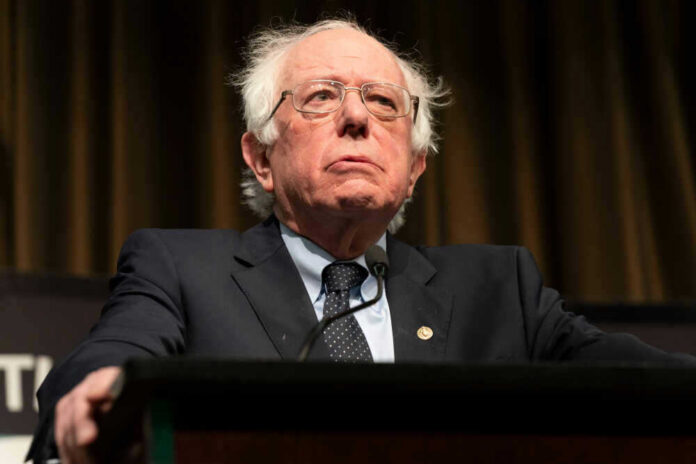
Bernie Sanders is moving real money into battleground races, and the checks are already in motion.
Story Snapshot
- Sanders is transferring campaign cash to key 2026 Democratic candidates.
- Nearly $23 million on hand gives him unusual power to shape races.
- Minnesota’s Peggy Flanagan is getting hundreds of thousands of dollars.
- All of this fits long-standing, legal campaign finance pathways.
Sanders Turns Cash Pile Into Battleground Muscle
Senator Bernie Sanders’ campaign is deploying money to support Democrats in high-stakes midterm contests. His team had nearly $23 million as of July 1.
It is sending hundreds of thousands of dollars to help Minnesota Lieutenant Governor Peggy Flanagan in a Senate bid, according to Sanders’ campaign and a second source who described the transfer. The money adds to his endorsements and travel, turning his email list and brand into fuel for contested states.
EXCLUSIVE: Bernie Sanders is cracking open his war chest.
The Vermont senator is putting hundreds of thousands of dollars toward key campaigns and has raised $2.8 million for his preferred candidates this cycle.https://t.co/rtKlmhEVgN
— POLITICO (@politico) September 30, 2026
Reporting also points to planned help for Florida Democrat Angie Nixon, a state lawmaker running with progressive backing. The Florida Playbook newsletter detailed how Sanders is preparing to lean in with both cash and attention.
That support signals a focus on states where margins are thin and turnout swings matter. The strategy is simple: add hard dollars now, then layer rallies and fundraising later, when the final weeks demand speed and scale.
Why These Transfers Matter Under the Rules
Federal rules allow campaign funds to move to other committees and party arms. The Federal Election Commission explains that campaigns can make disbursements for efforts that influence federal elections, and transfers can be executed by check or electronic means.
A candidate’s authorized committee may also send unlimited funds to party committees, which can then support broader efforts around the map. These pathways make Sanders’ cash push routine in structure, if striking in size.
That legality does not dull the impact. Money this early can buy field staff, data, and ads that shape a race’s frame before voters lock in. Early cash can also attract more cash, since donors track momentum.
Sanders’ list-driven network helps translate national attention into small-dollar fuel for state contests. That flywheel is why campaigns chase big-name surrogates. The surrogate provides a story and a stamp; the local candidate captures the lift when it counts.
The Stakes: Michigan, Minnesota, Florida, And A Wider Proxy Fight
Sanders has said he wants Democrats to win Senate races in Michigan, Minnesota, and Florida, and he is backing multiple statewide and congressional contenders this year. Outlets have reported seven endorsements so far, with more possible. Allies credit these moves with early energy and name recognition.
Detractors inside the party have argued that primary season efforts drained resources. But the current push targets general election battlegrounds and aims to close the money gap fast.
Broader fundraising currents cut in both directions. Democrats have dominated some key Senate race hauls this year. Yet outside money and super political action committees continue to reshape spending, often with sums beyond any one campaign’s reach.
Sanders has condemned super PAC power and warned about tech-aligned spending. His answer here is not a speech. It is a wire transfer that tries to counter big checks with earlier, wider grassroots firepower.
What To Watch: Timing, Scale, And Down-Ballot Ripples
Watch the timing of disbursements and follow-on events. If transfers land now and rallies follow, the combined effect could lock in media markets before late ad wars heat up.
Also track whether state parties report bumps after Sanders’ moves, since legal transfers to party committees can multiply reach. Finally, watch Florida, where state legislative and federal targets often share volunteers and voter files. A cash bump there can spill across districts in the final sprint.
Money does not win on its own. Message, messengers, and ground game still decide close races. But money arrives before canvassers, pays for their gear, and books the airtime that frames each choice.
Sanders is betting that early dollars, tied to a national brand, will widen the map for Democrats. If those checks unlock more small donors and sharper turnout programs, this could be the moment his movement politics cashes its biggest receipt yet.
Sources:
politico.com, politicalwire.com, nbcnews.com, washingtonexaminer.com, cnn.com, cbsnews.com, abcnews.com